Chawal ki Roti
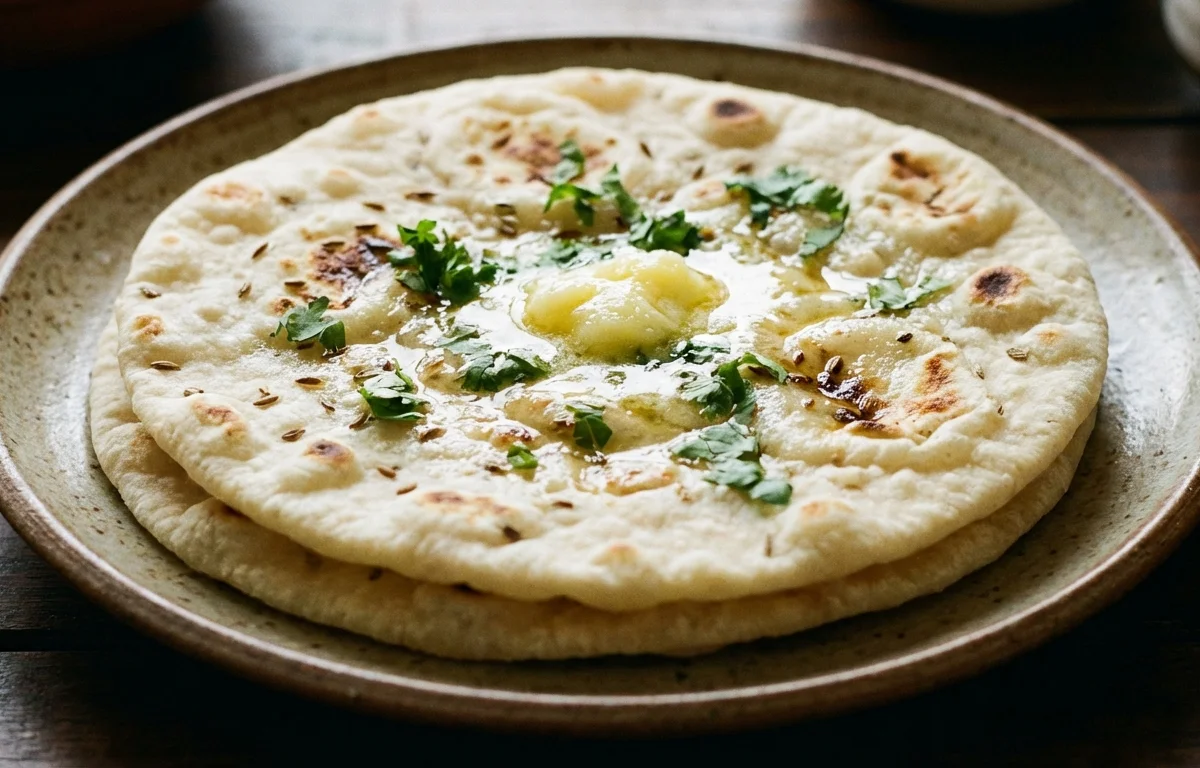
Soft, chewy flatbreads made entirely from rice flour. This traditional North Indian roti is a lifesaver for those avoiding wheat, with a nutty flavor that pairs beautifully with dal, sabzi, or pickles. Rolled between sheets to prevent tearing and cooked until speckled with golden spots, these rotis are a pantry staple turned into something special.
For 4 servings
- prep · ~10 min
Prepare the rice flour dough.
1.Place 2 cups rice flour and ½ tsp salt in a large bowl. Mix well.2.Bring 1½ cups water to a rolling boil. Add 1 tbsp oil to the hot water.3.Pour the boiling water a little at a time into the flour, mixing with a wooden spoon.4.Once cool enough to handle, knead for 3-4 minutes into a smooth, pliable dough.TIPThe dough must be hot when kneaded. If it cracks, sprinkle a few drops of warm water. - rest · ~10 min
Rest the dough.
Cover the dough with a damp cloth and let it rest for 10 minutes. This helps the flour hydrate fully.
- prep · ~2 min
Divide and shape the dough balls.
1.Knead the rested dough once more for a minute.2.Divide into 8 equal portions and roll each into a smooth ball.3.Keep the balls covered with a damp cloth to prevent drying. - prep · ~2 min
Roll the rotis between parchment paper.
1.Place one dough ball between two sheets of parchment paper.2.Gently press with your palm to flatten slightly.3.Roll out into a thin 6-inch disc with a rolling pin, applying even pressure.4.Peel off the top parchment paper carefully.TIPRice flour has no gluten, so it tears easily. Rolling between parchment is the easiest way to get a thin, even roti. - fry · ~2 min
Cook the roti on a hot tawa.
1.Heat a tawa or flat skillet over medium-high heat until hot.2.Lift the roti with the bottom parchment and flip it onto the tawa, peeling off the paper.3.Cook for 30-45 seconds until small bubbles appear and the underside has light brown spots.4.Flip the roti and cook the other side for another 30 seconds.5.Drizzle a few drops of oil around the edges and press gently with a spatula to encourage puffing.TIPThe tawa must be hot before the roti goes on, or the dough will stick and tear. - garnish
Brush with ghee and keep warm.
Remove the roti from the tawa and brush lightly with ghee if using. Wrap in a clean kitchen towel to keep soft while you cook the remaining rotis.
- serve
Serve the rotis hot.
Stack the rotis and serve immediately with dal, aloo sabzi, or pickle. Chawal ki roti tastes best fresh off the tawa.
What to keep in mind.
6 tips from the recipe — small details that make a real difference to the final dish.
- 1Knead the dough while it is still hot to ensure a smooth, pliable texture.
- 2If the dough cracks while rolling, dab a little warm water on the crack and press gently.
- 3Always roll between parchment sheets; rice flour dough tears easily on a dry surface.
- 4Cook on a preheated tawa or skillet to prevent sticking and ensure even browning.
- 5Press gently with a spatula while cooking to help the roti puff up.
- 6Stack cooked rotis in a clean kitchen towel to keep them soft and warm until serving.
Adapt it for your goals.
Vegan
Skip the ghee and use only vegetable oil for brushing to keep the rotis completely plant-based.
herbedHerbed
Mix 2 tablespoons of finely chopped cilantro or mint into the dough for a fragrant, herby twist.
spicedSpiced
Add 1/2 teaspoon of carom seeds (ajwain) or cumin seeds to the dough for extra warmth and digestibility.
low oilLow-oil
Cook the rotis without any oil or ghee on a non-stick tawa for a lighter, lower-fat version.
Why this is on our healthy list.
Gluten-Free
Made entirely from rice flour, these rotis are naturally gluten-free, making them safe for those with celiac disease or gluten sensitivity.
Easy to Digest
Rice flour is light on the stomach and easy to digest, especially when cooked fresh, making these rotis ideal for a gentle meal.
Low in Fat
With minimal oil in the dough and optional ghee for brushing, this recipe keeps fat content low and customizable.
Frequently asked questions
The dough may be too dry. Sprinkle a few drops of warm water and knead again until smooth. Also ensure the dough is still warm when rolling.



.webp)