
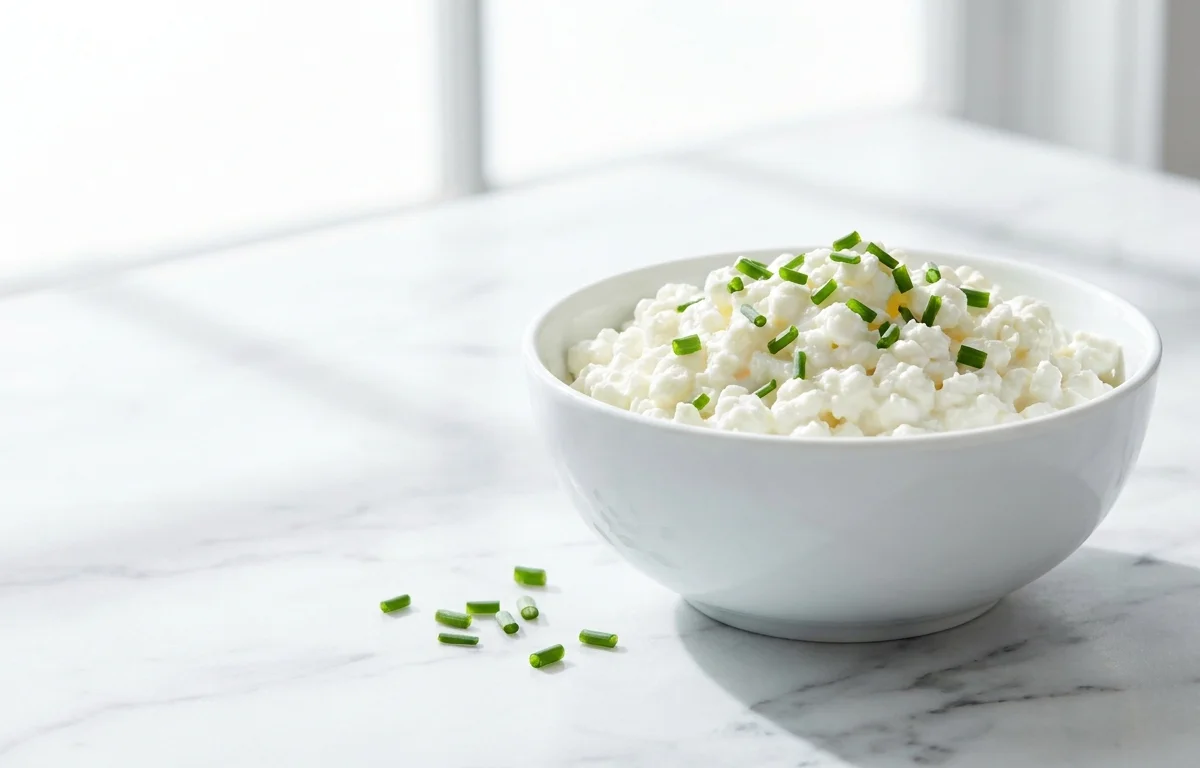
Cottage Cheese
Creamy, soft curds with a mild and slightly milky flavor, made with just two or three simple ingredients. This homemade cottage cheese is ready in under an hour, offering a fresh, wholesome alternative to store-bought versions. Perfect in salads, breakfast bowls, or spread on toast.
For 4 servings
- prep
Line a colander with cheesecloth.
Set a large colander over a deep bowl or in the sink. Line it with a double layer of cheesecloth, letting the edges drape over the sides.
- boil · ~15 min
Heat the milk slowly.
Pour 8 cups of whole milk into a heavy-bottomed pot. Place over medium-low heat and warm slowly, stirring occasionally to prevent scorching, until it reaches 185°F (85°C). Gentle bubbles will appear around the edges and steam will rise steadily from the surface.
TIPDo not let the milk come to a rolling boil — rapid bubbling can overheat the proteins and result in tough, rubbery curds. - mix · ~10 min
Stir in the vinegar to form curds.
Remove the pot from the heat. Slowly drizzle in 3 tablespoons of white vinegar while stirring gently. The milk will instantly begin to separate into white curds and a yellowish-green liquid whey. Let the pot sit undisturbed for 10 minutes to allow the curds to fully set.
TIPUse a gentle folding motion — vigorous stirring breaks the curds into tiny, gritty pieces instead of forming soft, tender clusters. - other · ~5 min
Drain the whey.
Carefully ladle or pour the curds into the cheesecloth-lined colander. Let the whey drain completely, about 5 minutes. Rinse the curds briefly with cool water to remove any lingering vinegar taste and to cool them down.
TIPRinsing also stops the carryover cooking so the curds stay tender and creamy. - other · ~2 min
Press and salt the cottage cheese.
Gather the edges of the cheesecloth and twist lightly to form a bundle. Squeeze gently to remove excess moisture — a softer squeeze leaves creamier, looser cottage cheese. Transfer the curds to a bowl, sprinkle with a pinch of salt, and fold to combine. The cottage cheese is ready to serve immediately.
TIPFor a richer, wetter result, squeeze less. For a drier, firmer result, squeeze gently but firmly, then let the bundle hang for an extra 10 minutes. - serve
Serve or store the cottage cheese.
Enjoy fresh or transfer to an airtight container and refrigerate for up to 5 days. If the cheese firms up in the fridge, stir in a tablespoon of milk to loosen it.
What to keep in mind.
6 tips from the recipe — small details that make a real difference to the final dish.
- 1Use a thermometer to hit exactly 185°F — too hot and curds turn rubbery, too cool and they won't set.
- 2Stir in vinegar with a gentle folding motion to keep curds soft and tender rather than gritty.
- 3Rinse curds with cool water after draining to stop cooking and remove any vinegar tang.
- 4For creamier cottage cheese, squeeze the cheesecloth bundle very lightly; for firmer curds, squeeze more firmly.
- 5Store in an airtight container up to 5 days; stir in a splash of milk before serving if it thickens.
- 6Reserve the drained whey for smoothies, soups, or baking — it's full of protein and flavor.
Adapt it for your goals.
Low-fat version
Substitute 2% or skim milk for whole milk. The curds will be slightly smaller and leaner, ideal for those watching calorie intake.
creamy and richCreamy and rich
After draining, stir in 2–3 tablespoons of heavy cream or whole milk to create a luscious, spoonable texture reminiscent of large-curd commercial cottage cheese.
herb and garlicHerb and garlic
Add 1/4 teaspoon garlic powder and 1 tablespoon finely chopped fresh chives or dill after salting. Perfect for spreading on crackers or toast.
lactose free optionLactose-free option
Use lactose-free whole milk instead of regular milk; the vinegar will still curdle it successfully, making the cheese easier to digest for sensitive stomachs.
Why this is on our healthy list.
High in Protein
Cottage cheese is packed with casein protein, which digests slowly and helps keep you full longer, making it a great choice for muscle repair and satiety.
Calcium-Rich from Milk
Made from whole milk, this cottage cheese provides a natural source of calcium, essential for strong bones and teeth.
Low in Additives
Homemade from just milk, vinegar, and salt, this version contains no stabilizers, preservatives, or added gums found in many store-bought brands.
Probiotic Potential
If you reserve a bit of whey and allow the cheese to ferment slightly at room temperature, it can develop beneficial live cultures (though this recipe is not explicitly fermented).
Frequently asked questions
Yes, both work well. White vinegar gives a neutral flavor, while apple cider vinegar adds a subtle fruity note. Avoid balsamic or dark vinegars as they'll tint the curds.


