Creamy Scrambled Eggs: Two Ways
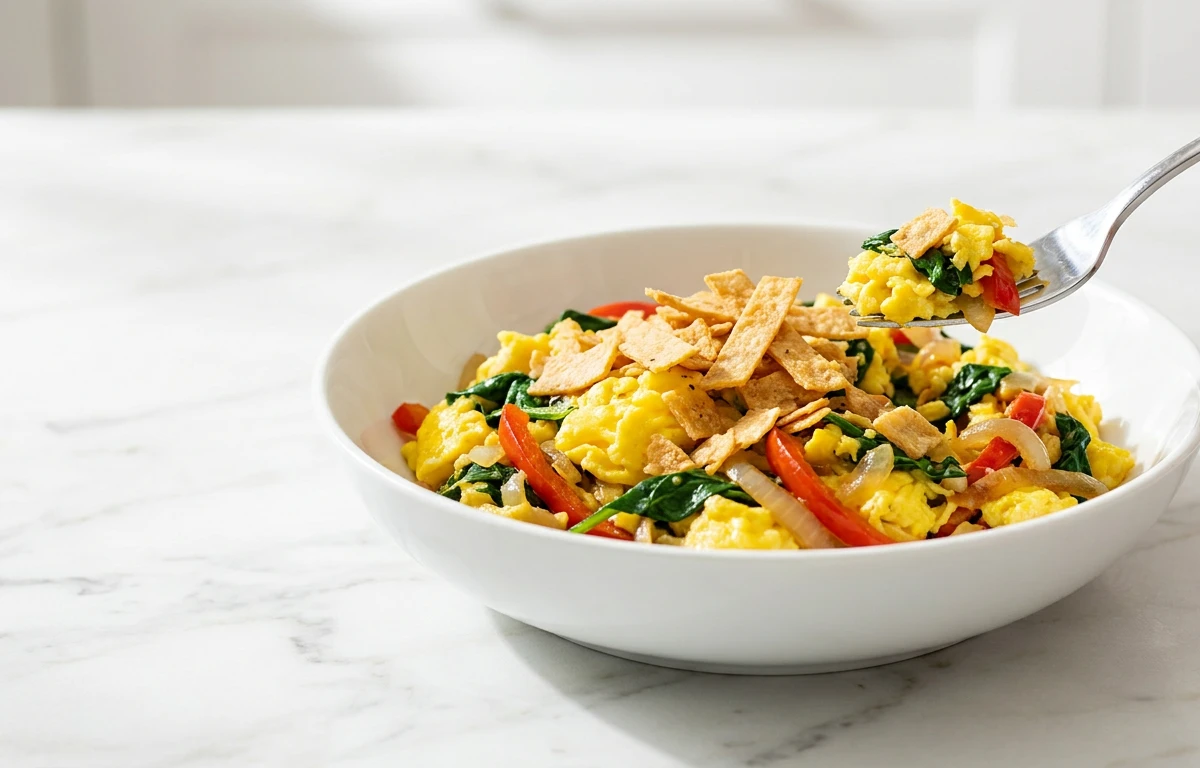
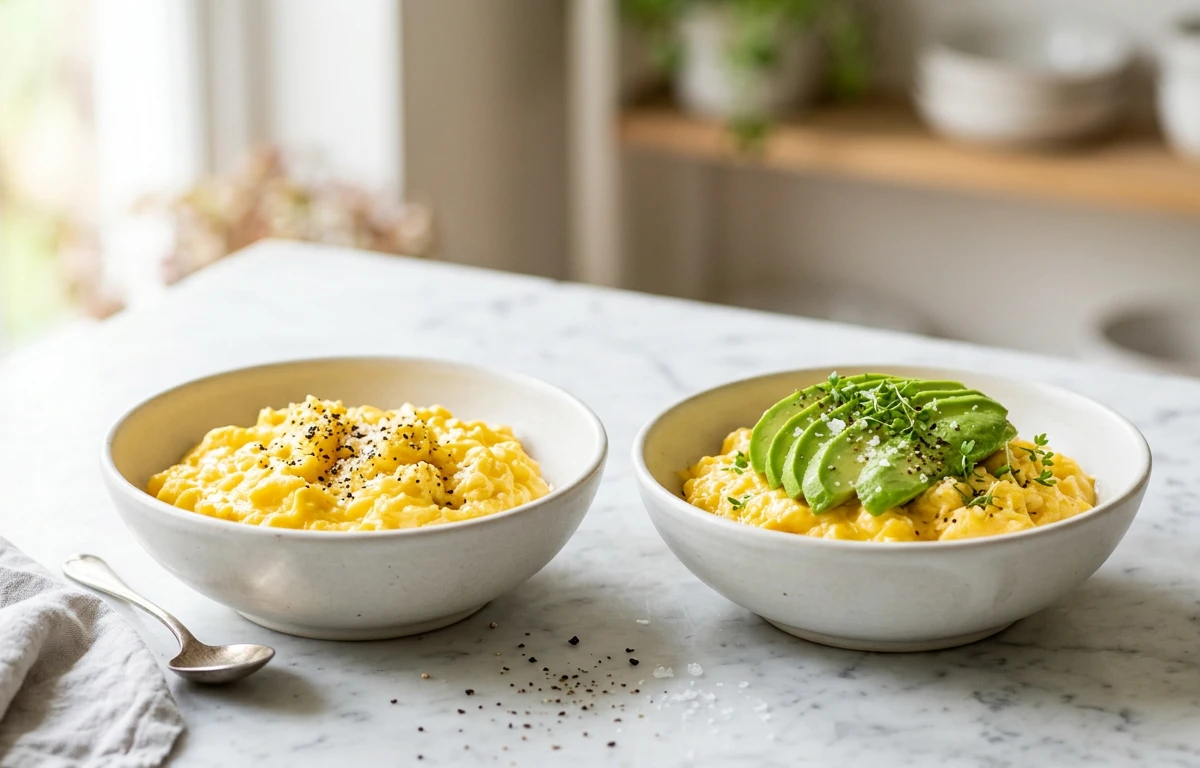
Learn to make the silkiest, most luxurious scrambled eggs at home with two classic techniques. One is the low-and-slow French method that yields tiny, custard-like curds; the other is the faster, fluffier American diner-style with large, tender clouds. Both deliver creamy, spoonable eggs that turn a simple breakfast into something special.
For 2 servings
- prep · ~1 min
Crack and whisk the eggs.
1.Crack 4 large eggs into a mixing bowl.2.Add 1 pinch salt and 1 pinch black pepper.3.Whisk vigorously for 30 seconds until fully blended and slightly frothy. - saute · ~8 min
French-Style: Melt butter and cook low-and-slow.
1.Place an 8-inch nonstick skillet over low heat.2.Add 1 tablespoon cold butter and let it melt slowly without sizzling.3.Pour in half the egg mixture (about 2 eggs' worth).4.Stir constantly with a rubber spatula, scraping the bottom and sides continuously.5.After 5-7 minutes, tiny creamy curds will form and the eggs will thicken to a risotto-like consistency.6.Remove from heat while still slightly runny — carryover heat finishes the cooking.TIPKeep the heat low — patience is the secret. High heat turns them rubbery in seconds. - saute · ~3 min
American-Style: Melt butter and fluff fast.
1.Place a 10-inch nonstick skillet over medium heat.2.Add 1 tablespoon cold butter and let it melt until foamy.3.Pour in the remaining egg mixture.4.Let it set undisturbed for 15 seconds until edges begin to firm.5.Use the spatula to push and fold the eggs in broad sweeps from the edges toward the center.6.After 60-90 seconds, large soft clouds will form. Kill the heat while eggs are still glossy and moist.TIPDon't over-stir — pushing and folding creates larger, fluffier curds. Off the heat before they look fully dry. - garnish
Plate and garnish.
Divide the French-style and American-style eggs onto two warm plates. Sprinkle both with chopped chives and serve immediately with toast.
TIPWarm the plates with hot water beforehand — cold plates seize the eggs and make them rubbery.
What to keep in mind.
6 tips from the recipe — small details that make a real difference to the final dish.
- 1For French-style eggs, whisk constantly and keep the heat low; the curds form slowly from the bottom up.
- 2Use cold butter straight from the fridge; it melts gradually and helps control the cooking temperature.
- 3Pull French-style eggs off the heat while still slightly runny; residual heat will finish them perfectly.
- 4For American-style eggs, let the eggs set undisturbed for 15 seconds before folding to create big, fluffy curds.
- 5Never cook scrambled eggs on high heat — they will turn dry and rubbery in seconds.
- 6Warm your serving plates with hot water before plating; cold plates seize the eggs and ruin the texture.
Adapt it for your goals.
Low-oil
Replace the butter with a splash of milk or water when whisking; the steam helps create soft curds with significantly less fat.
high proteinHigh-protein
Add 2 tablespoons of cottage cheese or silken tofu to the whisked eggs; it boosts protein content and adds extra creaminess without changing the texture.
jainJain
Replace butter with ghee (clarified butter) and skip the onion/garlic; garnish with fresh coriander instead of chives for a Jain-friendly version.
veganVegan
Use a plant-based egg substitute (like blended silken tofu with black salt) and cook with vegan butter; the same low-and-slow method yields a similar custard-like texture.
Why this is on our healthy list.
High-Quality Protein
Each egg provides about 6g of complete protein with all essential amino acids, supporting muscle repair and satiety.
Rich in Choline
Egg yolks are one of the best dietary sources of choline, a nutrient vital for brain health and liver function.
Source of Vitamin D
Eggs contain naturally occurring vitamin D, which supports bone health and immune function.
Butter Provides Fat-Soluble Vitamins
The butter in this recipe supplies vitamins A, D, E, and K2, which aid in nutrient absorption and overall vitality.
Frequently asked questions
You likely cooked them over too high heat or left them on the stove too long. Eggs continue to cook from residual heat, so remove them while still slightly glossy.