Dana Methi
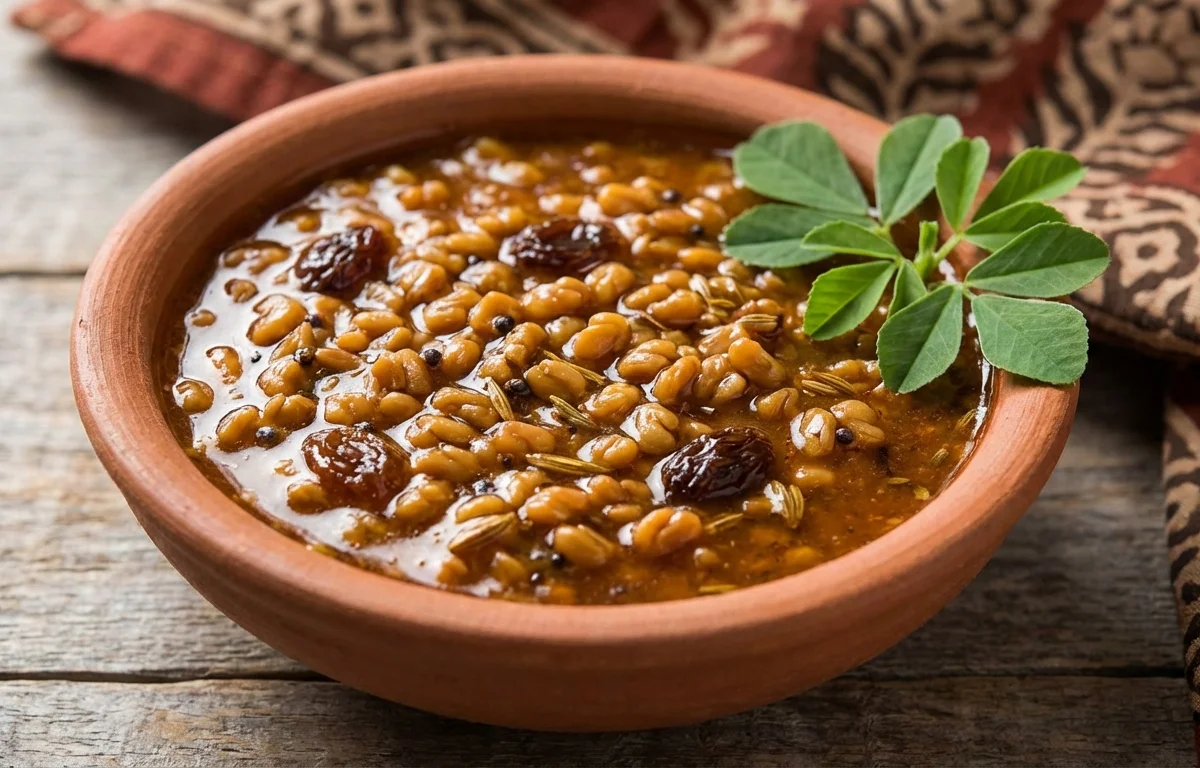
A simple North Indian-style sabzi where soaked fenugreek seeds are cooked with onions, tomatoes, and mild spices. Slightly bitter, earthy, and comforting, it goes especially well with phulka, roti, or plain rice.
For 4 servings
- prep · ~1 min
Soak the fenugreek seeds.
Wash the fenugreek seeds well and soak them in enough water overnight. Drain before cooking.
- boil · ~15 min
Boil the fenugreek seeds.
Add the soaked fenugreek seeds and 2 cups water to a pan. Boil until the seeds are just tender, then drain off the water.
TIPBoiling after soaking helps soften the seeds and removes some bitterness. - saute · ~6 min
Cook the cumin, onion, chili, and ginger.
1.Heat oil in a pan over medium heat.2.Add cumin seeds and let them sizzle for 20 to 30 seconds.3.Add onion, green chili, and ginger.4.Cook until the onion turns soft and light golden, about 4 to 5 minutes. - saute · ~7 min
Cook the tomatoes and spices.
1.Add tomato and mix well.2.Add turmeric powder, red chili powder, coriander powder, garam masala, and salt.3.Cook until the tomatoes soften and the mixture looks thick, about 5 to 6 minutes.TIPMash the tomatoes lightly with the spoon so the masala coats the seeds evenly. - saute · ~7 min
Add the fenugreek seeds and finish the sabzi.
Add the boiled fenugreek seeds to the pan and mix well with the masala. Cook for 5 to 7 minutes on low heat until the flavors come together and the sabzi turns semi-dry.
- garnish
Garnish with coriander leaves.
- serve
Serve hot with roti or plain rice.
What to keep in mind.
7 tips from the recipe — small details that make a real difference to the final dish.
- 1Soak the methi dana overnight and rub it once while washing to remove any dusty residue before boiling.
- 2Do not overboil the fenugreek seeds; they should be just tender, not mushy, so the sabzi keeps a pleasant bite.
- 3Drain the boiled seeds very well, or the masala will turn watery instead of the intended semi-dry texture.
- 4Cook the onions only to light golden; deeply browned onions can make this sabzi taste heavier and slightly more bitter.
- 5Mash the tomatoes as they soften so the masala clings to each seed rather than sitting separately in the pan.
- 6After adding the boiled seeds, keep the heat low for the final few minutes so they absorb the onion-tomato masala evenly.
- 7This sabzi tastes even better after a short rest, so let it sit 5 to 10 minutes before serving with roti.
Adapt it for your goals.
Jain
Skip onion and ginger, and use a little extra tomato plus hing for a Jain-friendly version with a simpler, sharper flavor.
low oilLow-oil
Use less oil and cook the onion-tomato masala with a splash of water as needed; good if you want a lighter everyday sabzi.
garlicGarlic
Add a few chopped garlic cloves with the ginger for a deeper, more savory North Indian-style taste.
potatoPotato
Mix in small boiled potato cubes at the end to soften the bitterness and make the dish more filling.
Why this is on our healthy list.
Fiber-Rich Fenugreek Seeds
Fenugreek seeds bring natural fiber and hearty texture, making this simple sabzi more satisfying than many lighter side dishes.
Plant-Based Everyday Dish
Made from seeds, onions, tomatoes, and spices, this is a fully plant-based sabzi suited to regular home-style meals.
Tomato and Spice Goodness
Tomatoes, ginger, cumin, and coriander add antioxidant-rich ingredients and plenty of flavor without relying on heavy cream or butter.
Frequently asked questions
Usually the seeds were not soaked long enough, not boiled enough, or the boiling water was not drained. A well-cooked onion-tomato masala also helps balance the bitterness.



.webp)