French Omelette
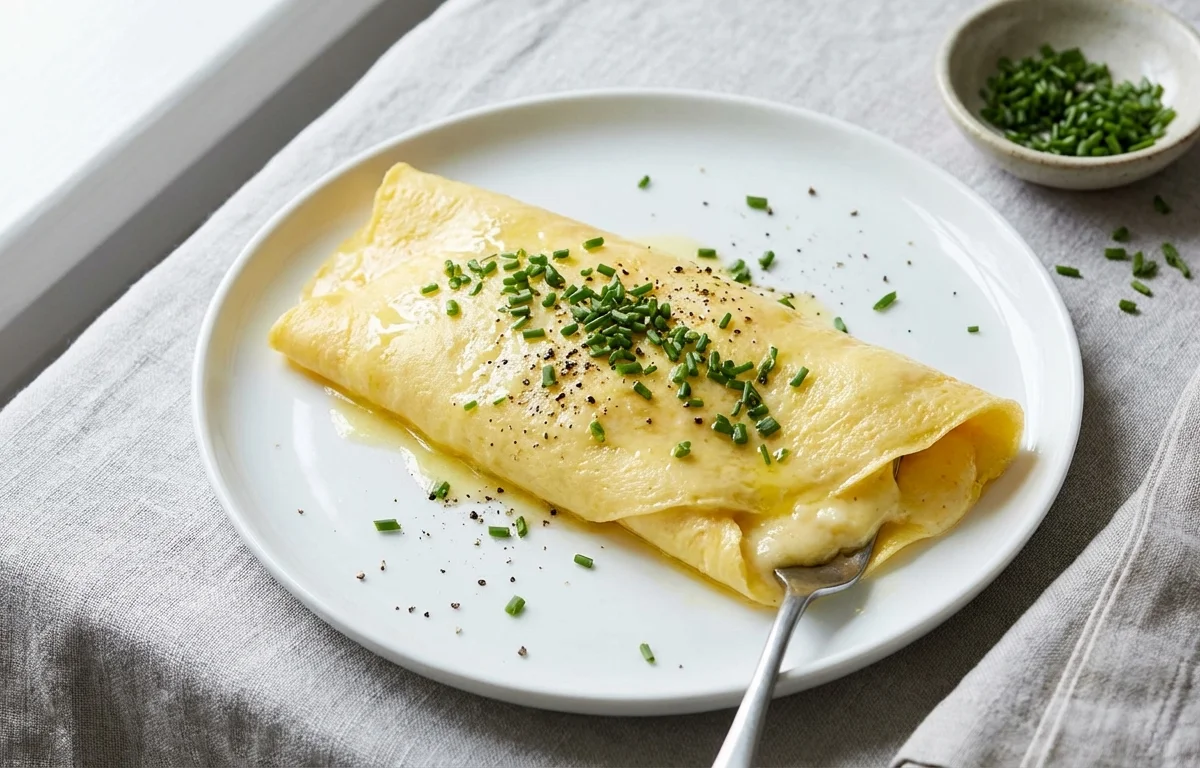
Tender, pale yellow eggs cooked gently with butter and rolled into a soft, delicate omelette. This classic French style stays silky inside and makes a light breakfast or brunch dish with toast or salad.
For 2 servings
- prep
Crack the eggs into a bowl.
Add the eggs to a medium bowl so you can whisk them evenly before cooking.
- mix · ~1 min
Whisk the eggs with salt and pepper.
1.Add salt and black pepper to the eggs.2.Whisk briskly until the yolks and whites are fully blended.3.Stir in the chives if using.TIPWhisk just until smooth and slightly frothy; too much air can make the omelette puff instead of staying silky. - fry · ~1 min
Melt the butter in a nonstick pan.
Set an 8-inch nonstick pan over low to medium-low heat and melt the butter until foamy but not browned.
TIPKeep the heat gentle so the eggs stay pale yellow and tender. - fry · ~2 min
Cook the eggs gently.
1.Pour the egg mixture into the pan.2.Stir quickly with a spatula while shaking the pan for 30 to 40 seconds.3.As soon as small soft curds form, smooth the surface into an even layer.4.Cook briefly until the top looks softly set but still a little glossy. - assemble · ~1 min
Roll the omelette into shape.
Tilt the pan away from you and fold the omelette over itself in 2 to 3 motions to form a neat oval roll.
TIPDo not let the eggs brown; a French omelette should be soft, smooth, and barely colored. - serve
Slide onto a plate and serve at once.
Turn the omelette seam-side down on the plate and serve immediately while the center is still soft.
What to keep in mind.
7 tips from the recipe — small details that make a real difference to the final dish.
- 1Use an 8-inch nonstick pan; a larger pan makes the omelette too thin to roll neatly.
- 2Keep the butter foamy, not brown, so the eggs stay pale and classically French.
- 3Stir constantly only at the start; once soft curds appear, smooth the top and stop moving it.
- 4Pull the pan off the heat when the surface is still slightly glossy; carryover heat finishes the center.
- 5Warm the serving plate first so the soft omelette stays tender instead of tightening up on contact.
- 6If adding chives, chop them very finely so they disappear into the eggs without tearing the surface.
- 7Serve immediately; a French omelette loses its silky texture quickly if it sits.
Adapt it for your goals.
Herb-forward
Swap or combine chives with fines herbes like parsley, tarragon, or chervil for a more classic French bistro flavor.
cheese filledCheese-filled
Add a small spoonful of soft goat cheese, Boursin, or grated Gruyère just before rolling for a richer brunch version.
low dairyLow-dairy
Use less butter and a slick of neutral oil with a little butter for flavor if you want a lighter finish.
pepper freePepper-free
Omit black pepper to keep the interior and exterior visually smooth and closer to a traditional pale French omelette.
Why this is on our healthy list.
Protein-Rich Eggs
Eggs provide high-quality protein that makes this light omelette satisfying for breakfast or brunch.
Naturally Low in Carbs
Made mainly from eggs, butter, and herbs, this dish fits well when you want a low-carbohydrate option.
Contains Helpful Micronutrients
Eggs contribute important nutrients like choline and B vitamins, while chives add a small boost of fresh herbs.
Frequently asked questions
The heat was too high or the pan stayed on too long. Cook over low to medium-low heat and remove it while still pale.