
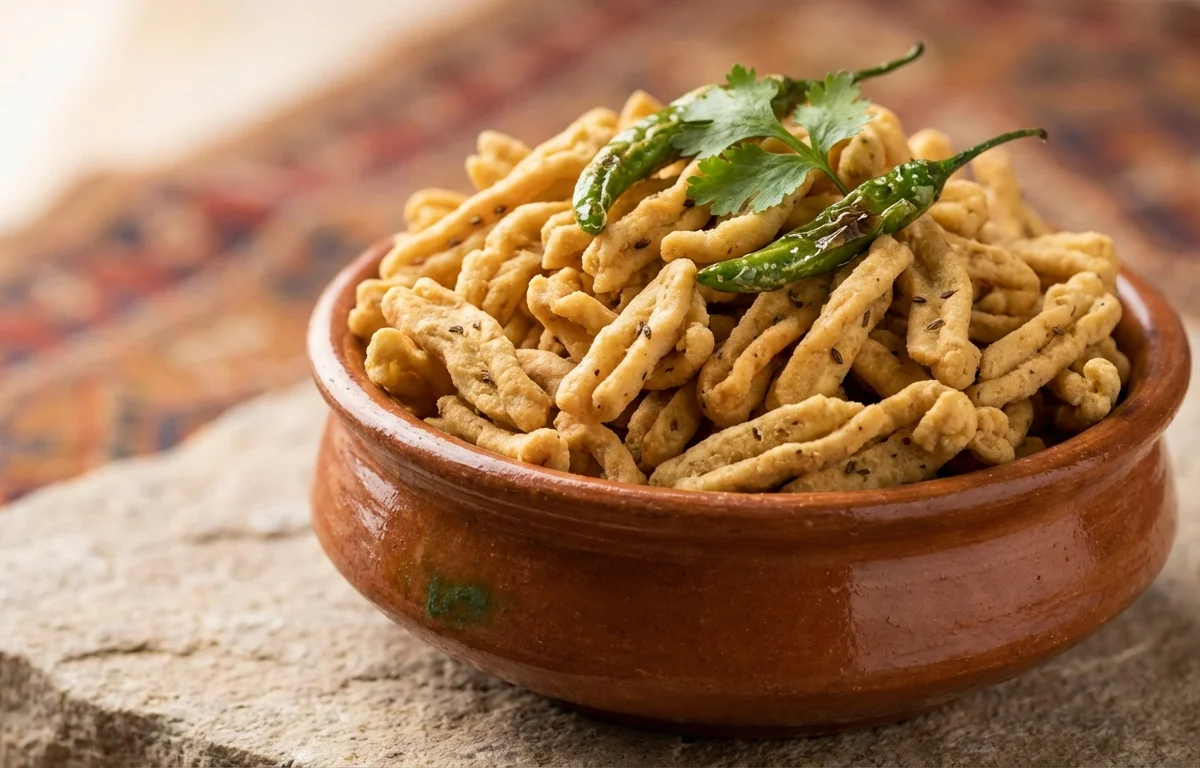
Ganthiya
Crisp yet light Gujarati gram flour strands seasoned with carom seeds and a gentle touch of spice. Freshly fried ganthiya is wonderfully snackable on its own and even better with fried green chilies or a cup of chai.
For 4 servings
- prep · ~3 min
Measure and ready the ingredients.
Keep the chickpea flour, spices, salt, oil, and warm water ready. Fit a sev press or ganthiya maker with a thick plain disc so the dough can be pressed directly into the oil.
- mix · ~2 min
Mix the dry ingredients.
1.Add chickpea flour to a wide bowl.2.Add crushed carom seeds, asafoetida, turmeric powder, red chili powder, and salt.3.Mix well so the spices are evenly distributed through the flour. - knead · ~6 min
Knead a soft dough.
Add 2 tbsp oil and rub it into the flour. Pour in warm water little by little and knead into a smooth, soft dough that is softer than roti dough but still holds shape.
TIPA stiff dough makes hard ganthiya, while a very loose dough breaks in the oil. - rest · ~10 min
Rest the dough briefly.
Cover the dough and let it rest for 10 minutes so the flour hydrates fully and presses out more smoothly.
- fry · ~5 min
Heat the oil and fill the press.
1.Heat oil for deep frying in a kadai over medium heat.2.Check the heat by dropping in a tiny bit of dough; it should rise steadily without browning too fast.3.Grease the inside of the press lightly and fill it with the rested dough.TIPKeep the oil on medium heat so the ganthiya cooks through and stays light. - fry · ~6 min
Press and fry the ganthiya.
1.Press thick strands of dough directly into the hot oil in a loose circular layer.2.Fry until the bubbles reduce and the strands look set and lightly golden, turning gently once.3.Do not let them brown deeply; ganthiya should stay pale and crisp.4.Lift out with a slotted spoon and drain well. - fry · ~7 min
Repeat with the remaining dough.
Fry the rest in batches, adjusting the heat as needed between batches. Cool completely so the ganthiya turns fully crisp.
- serve · ~1 min
Break into pieces and serve.
Once cooled, break the ganthiya into easy snack-size lengths and serve fresh. It can also be stored in an airtight container after cooling fully.
What to keep in mind.
7 tips from the recipe — small details that make a real difference to the final dish.
- 1Crush the ajwain lightly before mixing so its flavor spreads through the besan instead of staying in whole bites.
- 2The dough should feel softer than roti dough but not sticky; if it cracks in the press, knead in a teaspoon or two of warm water.
- 3Resting the dough for 10 minutes is key, because fully hydrated besan presses out in smooth strands without breaking.
- 4Fry on medium heat only; if the oil is too hot, the outside colors quickly while the inside stays dense instead of crisp.
- 5Do not crowd the kadai with thick layers of strands, or the ganthiya will steam and lose its light texture.
- 6Pull the ganthiya out when pale golden and the bubbling has reduced; deep browning makes them harder and less traditional.
- 7Cool completely before storing, otherwise trapped steam will soften the crisp strands in the container.
Adapt it for your goals.
Peppery
Swap the red chili powder for cracked black pepper for a warmer, more aromatic spice profile that is common in tea-time snacks.
milderMilder
Reduce or skip the chili powder to make a gentler batch for kids or for serving with spicy fried chilies on the side.
garlic free satvikGarlic-free satvik
Use a pinch more ajwain and skip asafoetida if needed for a simpler satvik-style flavor while keeping the snack aromatic.
black pepper ajwainBlack-pepper-ajwain
Add extra crushed ajwain and a little black pepper for a more robust farsan-style version that pairs especially well with chai.
Why this is on our healthy list.
Besan-Based Protein
Since ganthiya is made from chickpea flour, it offers more plant protein and staying power than many snacks made from refined flour.
Naturally Gluten-Free Base
The dough uses gram flour rather than wheat, making the base suitable for people who avoid gluten ingredients.
Digestive Spices
Ajwain and asafoetida are traditional Gujarati seasonings often used to make besan snacks feel lighter and more aromatic.
Frequently asked questions
The most common reasons are stiff dough or oil that is too hot. Keep the dough soft and fry on medium heat so the strands cook through gently.



.webp)
.webp)
.webp)