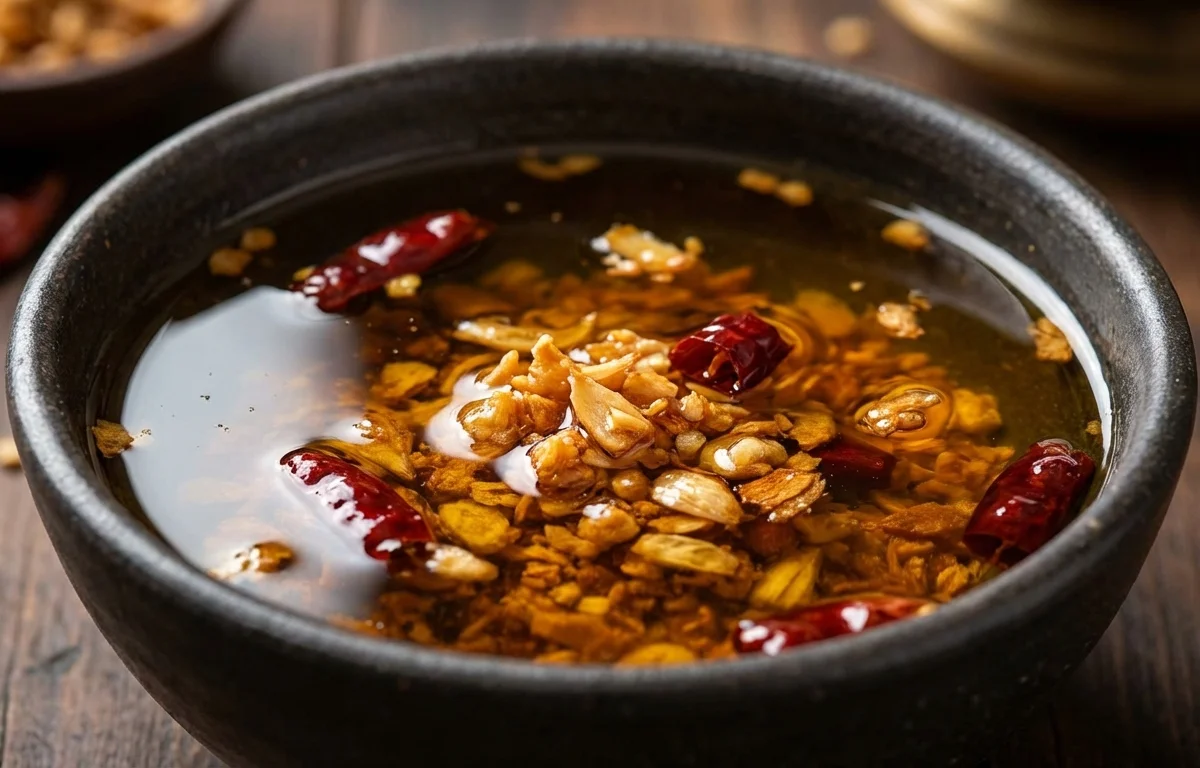
Garlic Sesame Oil
A fragrant, nutty oil infused with slow-roasted garlic and toasted sesame seeds. This versatile Indian condiment adds a punch of flavor to dal, rice, or simple rotis in minutes.
For 8 servings
- prep · ~5 min
Prep the garlic and aromatics.
1.Peel and thinly slice 12 garlic cloves.2.Break the dried red chilies in half and shake out the seeds. - fry · ~10 min
Infuse the sesame oil.
1.Pour sesame oil into a small pan and set over the lowest possible heat.2.Add the sliced garlic, sesame seeds, and dried red chili.3.Let them sizzle gently for 8–10 minutes until the garlic turns crisp and golden, not dark brown.TIPKeep the heat low — garlic burns quickly and turns bitter at high temperatures. - mix · ~10 min
Finish and cool.
1.Take the pan off the heat. Stir in a pinch of salt.2.Let the oil cool in the pan for 10 minutes so the flavors deepen. - assemble · ~2 min
Store the garlic sesame oil.
1.Pour the cooled oil along with all the garlic, seeds, and chili into a clean, heatproof glass jar.2.Seal tightly and keep at room temperature.
What to keep in mind.
6 tips from the recipe — small details that make a real difference to the final dish.
- 1Use cold-pressed sesame oil for a deeper, nuttier flavor that stands up to the garlic.
- 2Slice garlic cloves uniformly (about 2 mm thick) so they cook evenly and turn crispy at the same time.
- 3Watch the garlic closely in the last 2 minutes—it can go from golden to burnt very fast, ruining the oil.
- 4Let the oil cool completely in the pan off the heat to allow the flavors to meld and mellow.
- 5Store in a clean, dry glass jar at room temperature away from direct sunlight for up to 2 weeks.
- 6To reuse the crispy garlic pieces separately, strain the oil after cooling and store them in an airtight container.
Adapt it for your goals.
Extra spicy
Add 1-2 more dried red chilies or a small pinch of red chili flakes for a fierier kick — ideal for drizzling over spicy chaat or eggs.
herbaceousHerbaceous
Add a sprig of fresh curry leaves along with the garlic for a South Indian twist that pairs beautifully with rice and dal.
smokySmoky
Replace half the sesame oil with mustard oil (heat to smoking point first) for a pungent, smoky character that works wonders on roasted vegetables.
low sodiumLow-sodium
Omit the pinch of salt entirely without compromising the oil's shelf stability — the salt is purely for flavor balance.
vegan & gluten freeVegan & gluten-free
This recipe is already naturally vegan and gluten-free, making it a safe high-flavor drizzle for all plant-based and gluten-free dishes.
Why this is on our healthy list.
Rich in Healthy Fats
Cold-pressed sesame oil provides heart-friendly polyunsaturated and monounsaturated fats, along with vitamin E, a natural antioxidant.
Garlic's Immune Support
Garlic contains allicin, a sulfur compound linked to immune-boosting and anti-inflammatory properties, even when gently heated.
Sesame Seeds for Minerals
White sesame seeds contribute copper, manganese, and calcium, supporting bone health and antioxidant defenses.
Low in Added Sodium
With only a single pinch of salt per batch, this condiment is a lower-sodium alternative to many store-bought flavored oils.
Frequently asked questions
Yes, but black sesame seeds are slightly more bitter and will give the oil a darker color and earthier flavor — the result is still delicious.