Gavhachi Kurdai
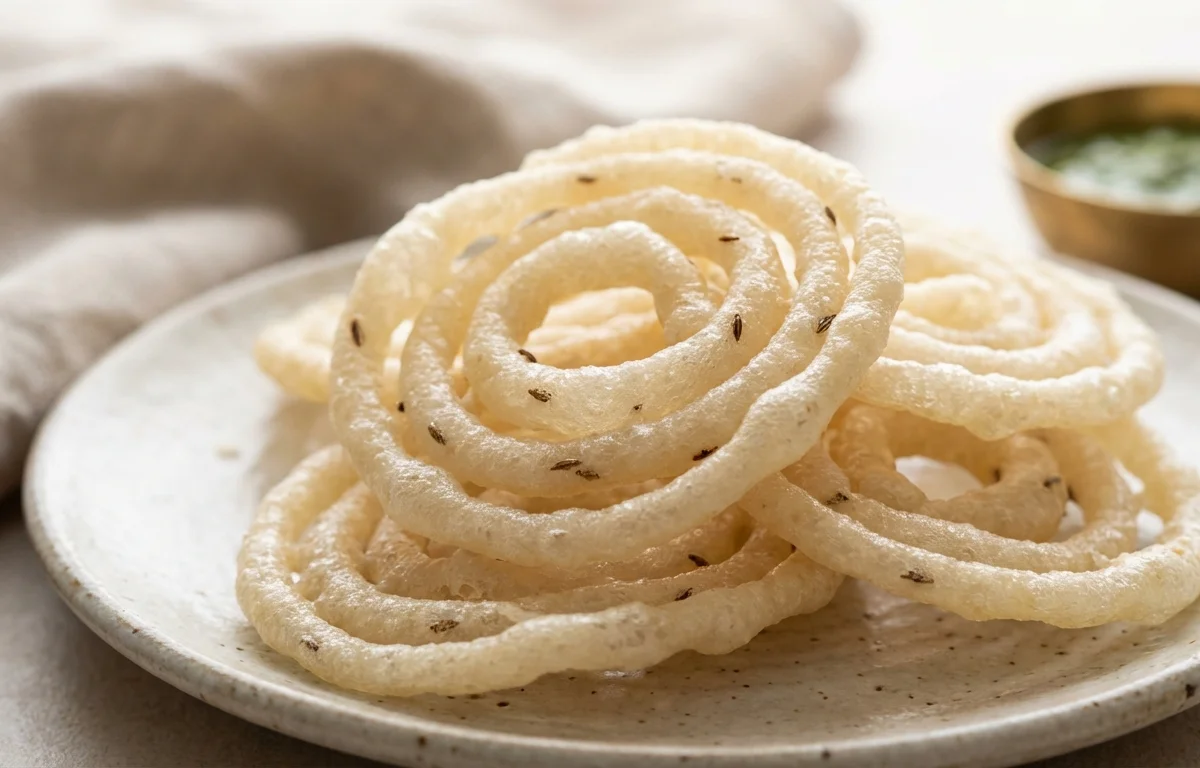
Crispy, sun-dried wheat flour wafers from the heart of Maharashtra. These savory, spiced discs are deep-fried into light, crunchy delights, perfect as a side with dal-rice or a tea-time snack with tangy chutney.
For 4 servings
- prep · ~15 min
Knead the stiff dough.
1.Reserve 1 tbsp of wheat flour for dusting.2.Combine the remaining wheat flour, cumin seeds, carom seeds, turmeric powder, red chili powder, salt, and 2 tsp oil in a wide mixing bowl.3.Rub the oil and spices into the flour thoroughly with your fingertips.4.Add warm water a little at a time, kneading continuously until you achieve a very stiff, smooth dough.5.Cover with a damp cloth and rest for 15 minutes.TIPKnead the dough on the harder side — a stiff dough ensures the kurdai turn out crispier. - prep · ~20 min
Roll the dough into paper-thin discs.
1.Divide the dough into small, equal-sized balls the size of a gooseberry.2.Dust the rolling board with the reserved dry flour.3.Roll each ball into a thin, round disc approximately 4-5 inches in diameter.4.Consistency check: The disc should be translucent and nearly paper-thin.5.Arrange the rolled discs on a clean, dry muslin cloth without overlapping.TIPDon't worry about perfectly round shapes; focus on getting them uniformly thin so they fry evenly.
What to keep in mind.
6 tips from the recipe — small details that make a real difference to the final dish.
- 1Knead the dough very stiff; a soft dough will make the kurdai puff unevenly and turn chewy instead of crisp.
- 2Roll each disc paper-thin — hold it up to light; you should see through it for maximum crunch.
- 3Sun-dry the rolled discs until completely brittle; any residual moisture leads to sogginess during frying.
- 4Store dried kurdai in an airtight container in a cool, dark place for up to 2 months.
- 5Deep-fry on medium heat; too high and they brown without crisping, too low and they absorb excess oil.
- 6Poke the discs lightly with a fork before drying if you prefer flatter, less puffy wafers.
Adapt it for your goals.
Spiced Garlic
Add 1 teaspoon of finely minced garlic (dried or fresh garlic paste) to the dough for a pungent, savory twist that pairs wonderfully with yogurt dips.
Black Pepper & SesameBlack Pepper & Sesame
Replace cumin and carom with 1 teaspoon each of freshly cracked black pepper and toasted sesame seeds for a nutty, mildly hot variation.
Methi (Fenugreek) LeafMethi (Fenugreek) Leaf
Mix in 2 tablespoons of dried fenugreek leaves (kasuri methi) with the dry ingredients for a slightly bitter, earthy flavor that cuts through rich gravies.
Gluten Free (Rice Flour)Gluten-Free (Rice Flour)
Substitute wheat flour with fine rice flour and add 2 tablespoons of roasted gram flour (besan) to bind; the result is extra crunchy and suitable for gluten-sensitive diets.
Why this is on our healthy list.
High in Dietary Fiber
Whole wheat flour provides a good amount of fiber, aiding digestion and promoting a feeling of fullness.
Digestive Aid from Carom Seeds
Ajwain (carom seeds) is traditionally known in Ayurveda to help relieve bloating and improve digestion.
Low Sugar Content
This savory snack contains no added sugar, making it a suitable option for those monitoring their sugar intake.
Source of Complex Carbohydrates
Whole wheat offers sustained energy release, unlike refined flour snacks, helping maintain stable blood sugar levels.
Frequently asked questions
No, sun-drying is essential. Without it the discs will absorb too much oil and turn out soft, not crisp. Dry them until they are completely brittle and snap easily.



.webp)