
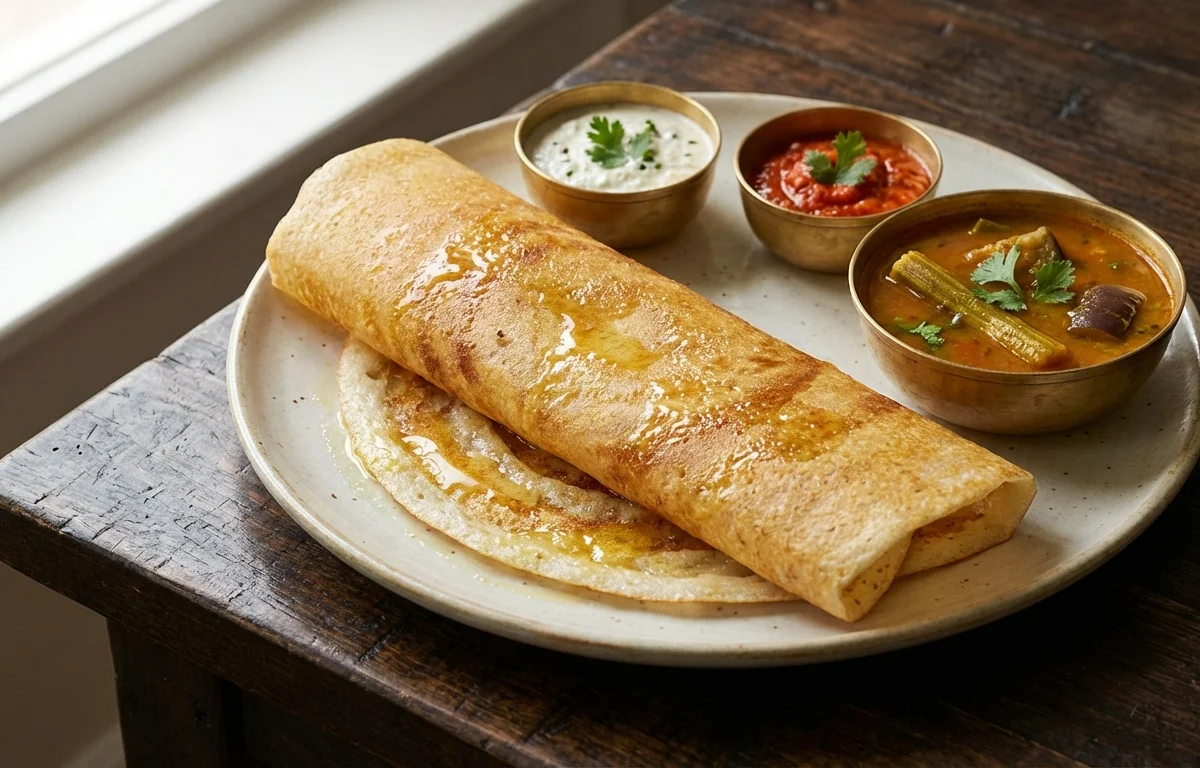
Ghee Dosa
Thin, golden dosa with crisp edges and a soft center, cooked with plenty of ghee for rich flavor. This South Indian favorite is simple, comforting, and perfect with coconut chutney or sambar.
For 4 servings
- prep · ~360 min
Soak the rice and dal.
1.Rinse the rice well until the water runs mostly clear.2.Rinse the urad dal and fenugreek seeds well.3.Soak the rice in plenty of water in one bowl for 6 hours.4.Soak the urad dal and fenugreek seeds in another bowl for 6 hours.TIPGood soaking helps the batter grind smoothly and ferment better. - mix · ~20 min
Grind the batter.
1.Drain the soaked urad dal and fenugreek seeds.2.Grind them with a little water to a light, smooth batter.3.Drain the rice and grind it separately with a little water to a slightly grainy batter.4.Mix both batters together in a large bowl until well combined. - rest · ~480 min
Ferment the batter.
Cover the bowl loosely and leave the batter in a warm place for about 8 hours, or until risen and airy. Stir in the salt gently after fermentation.
TIPLeave enough space in the bowl because the batter will rise as it ferments. - prep
Thin the batter for dosa.
Add a little water if needed and mix to a pourable batter that spreads easily on a hot pan. It should be thinner than idli batter but not watery.
- fry · ~6 min
Cook the dosas on a hot tawa.
1.Heat a tawa over medium heat until hot but not smoking.2.Pour a ladle of batter in the center and spread it outward in a thin circle.3.Drizzle 1 tsp ghee around the edges and a little over the top.4.Cook until the base turns golden and the edges lift easily.5.Fold the dosa and remove it from the pan.TIPIf the pan is too hot, the batter will not spread well. Lower the heat briefly before pouring the next dosa. - serve
Serve the ghee dosa hot.
What to keep in mind.
7 tips from the recipe — small details that make a real difference to the final dish.
- 1If the tawa gets too hot, wipe it briefly with a damp cloth before spreading the next dosa so the batter spirals smoothly.
- 2Grind the urad dal very fluffy and the rice slightly grainy; that contrast gives a soft center with crisp, lacy edges.
- 3Use a large bowl for fermentation, as dosa batter can rise noticeably overnight and may overflow if packed too tight.
- 4Add salt only after fermentation as written; mixing it in later helps the batter rise better in many home kitchens.
- 5For extra-crisp ghee dosa, spread the batter thinner than a plain dosa and drizzle the ghee mainly around the edges.
- 6Cook on medium heat until the edges release on their own; forcing it early can tear the dosa before it browns.
- 7Leftover batter keeps well refrigerated for a couple of days; stir gently and adjust with a splash of water before using again.
Adapt it for your goals.
Masala
Fill the hot ghee dosa with spiced potato masala for a more substantial breakfast or tiffin-style meal.
low gheeLow-ghee
Use just a light drizzle of ghee around the edges instead of over the top if you want the same aroma with less richness.
set dosa styleSet-dosa-style
Keep the batter slightly thicker and spread smaller rounds for softer, fluffier dosas with less crispness.
milletMillet
Replace part of the rice with a mild millet for an earthier flavor while keeping the urad dal for fermentation and structure.
Why this is on our healthy list.
Naturally Fermented Batter
The rice and urad dal batter is fermented, which can make the dosa feel lighter and adds pleasant tang and complexity.
Plant Protein from Urad Dal
Urad dal contributes plant protein and makes the dosa more satisfying than a rice-only batter.
Balanced Energy Base
Rice provides easy-to-digest carbohydrates, while dal adds body and staying power for a steady, comforting meal.
Frequently asked questions
The pan is often too hot or the batter is too thick. Lower the heat briefly, then thin the batter with a little water until it pours and spreads easily.


