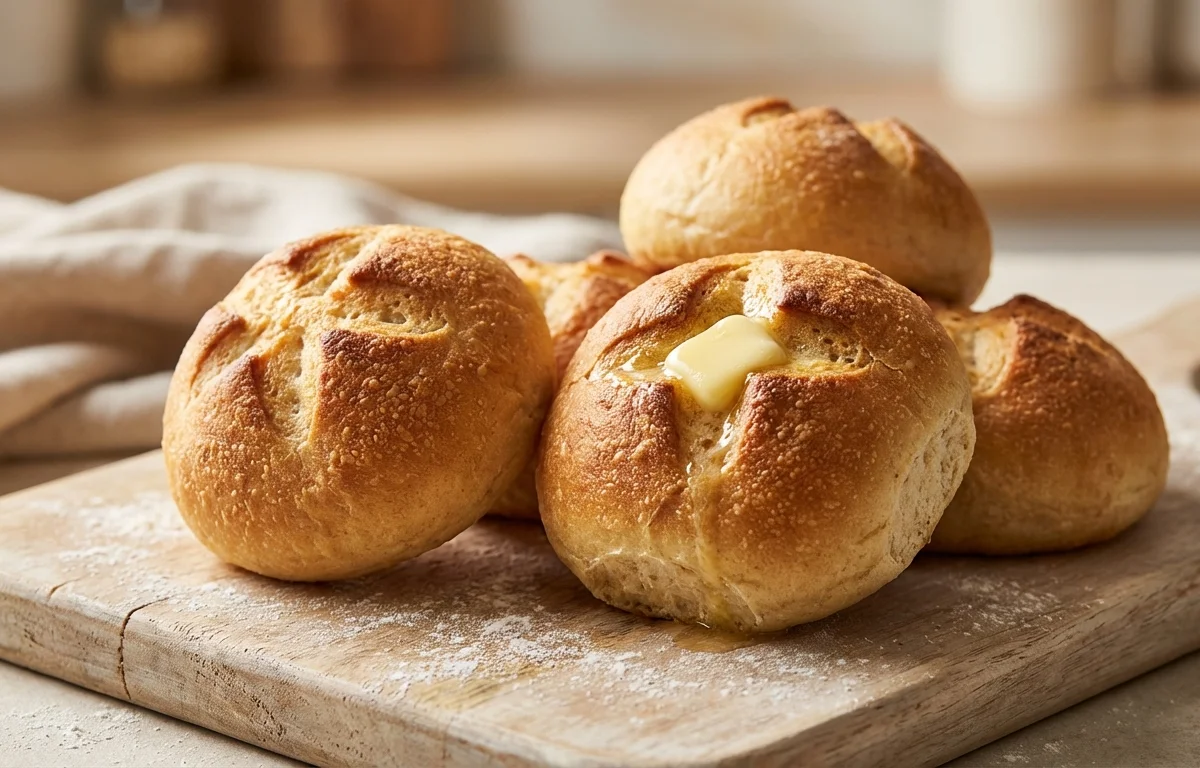
Goan Pao
These crusty little Goan bread rolls have a light, airy center and a thin golden shell. Made with a simple yeast dough and baked until fragrant, they are perfect for mopping up curries or serving warm with butter.
For 8 servings
- mix · ~4 min
Mix the dough ingredients.
1.Add all-purpose flour, instant yeast, sugar, and salt to a large bowl.2.Pour in the lukewarm water and mix until a shaggy dough forms.3.Add the oil and bring everything together into one mass. - knead · ~10 min
Knead the dough until smooth.
Turn the dough onto a work surface and knead for 8 to 10 minutes until it looks smooth, soft, and slightly springy. The dough should feel supple, not dry.
TIPIf the dough feels sticky, resist adding too much extra flour. Slightly tacky dough gives pao a lighter crumb. - rest · ~60 min
Let the dough rise until doubled.
Lightly oil the bowl, place the dough inside, and cover it. Let it rise in a warm spot until doubled in size.
- assemble · ~7 min
Shape the pao rolls.
1.Punch down the risen dough gently.2.Divide it into 8 equal pieces.3.Shape each piece into a smooth round ball by tucking the edges underneath.4.Place the balls close together on a lightly greased baking tray so they can expand and lightly touch as they proof. - rest · ~30 min
Proof the shaped rolls.
Cover the tray loosely and let the rolls rise again until puffy and almost doubled.
TIPDo not overproof. The rolls should look airy and soft but still hold their shape. - bake · ~18 min
Bake the pao until golden.
Bake in a preheated oven at 220°C until the tops are lightly golden and the rolls sound hollow when tapped.
- serve
Cool slightly and serve warm.
What to keep in mind.
7 tips from the recipe — small details that make a real difference to the final dish.
- 1Keep the dough slightly tacky while kneading; a drier dough gives denser pao.
- 2Use truly lukewarm water, not hot, so the instant yeast stays active without being damaged.
- 3When shaping, pull the surface tight underneath each ball for smoother tops and better oven spring.
- 4Place the dough balls close enough to just touch during proofing; that soft side pull is characteristic of pao.
- 5Bake only until lightly golden, not deep brown, so the crust stays thin rather than hard.
- 6If the rolls brown too fast, tent loosely with foil for the last few minutes of baking.
- 7Pao is best the day it is baked, but you can rewarm cooled rolls for a few minutes to refresh the crust.
Adapt it for your goals.
Overnight-proof
After kneading, refrigerate the dough overnight for a slower rise and deeper bready flavor, then shape and proof the next day.
whole wheatWhole-wheat
Replace part of the all-purpose flour with whole wheat flour for a nuttier taste and heartier crumb; keep some white flour for softness.
butter brushedButter-brushed
Brush the hot baked pao lightly with melted butter for a softer top and richer finish, especially good for serving with curries.
mini paoMini-pao
Divide into smaller rolls for snack-size pao that are ideal for sliders, breakfast buns, or serving alongside xacuti and vindaloo.
Why this is on our healthy list.
Yeast-Fermented Bread
The yeast fermentation helps develop flavor and structure naturally, giving the rolls their airy crumb without needing enrichments.
Low in Added Fat
This dough uses only a small amount of oil, so the bread stays light and versatile for pairing with richer Goan dishes.
Simple Ingredient List
Made from flour, water, yeast, sugar, salt, and a little oil, this is a straightforward homemade bread without heavy additives.
Frequently asked questions
Usually the dough was too dry, under-kneaded, or not proofed enough. Keep it slightly tacky, knead until springy, and let it rise until puffy.