
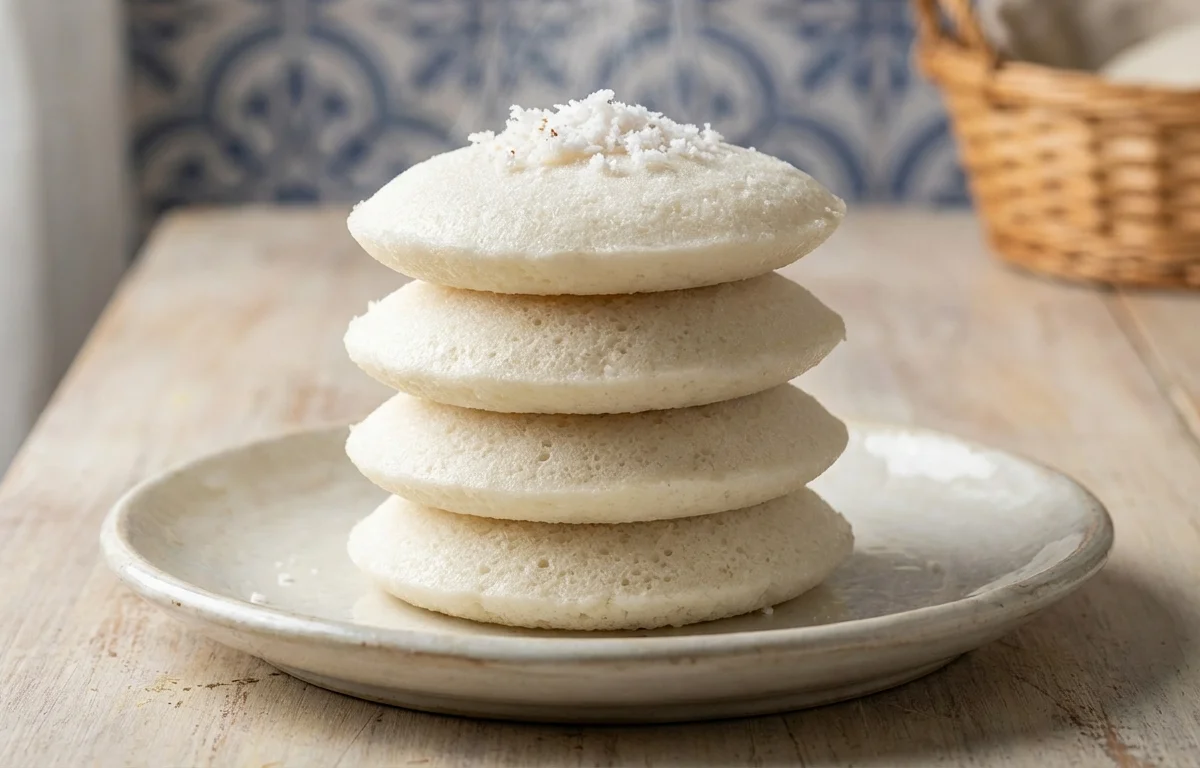
Goan Sanna
These soft, lightly sweet steamed rice cakes are a Goan favorite, made with rice, fresh coconut and a gentle yeast rise. They turn out fluffy and tender, perfect with sorpotel, xacuti or a simple curry.
For 8 servings
- prep · ~360 min
Soak the rice.
Wash the parboiled rice well and soak it in enough water for 6 hours or overnight. Drain completely before grinding.
- mix · ~15 min
Grind the batter.
1.Add the soaked rice to a grinder with grated fresh coconut and sugar.2.Pour in a little water at a time and grind to a smooth, thick batter.3.Transfer the batter to a large bowl and stir in the salt and instant yeast.TIPKeep the batter thick like idli batter so the sannas rise well and hold their shape. - rest · ~120 min
Let the batter rise.
Cover the bowl and keep it in a warm place for about 2 hours, until the batter looks airy and slightly puffed.
TIPDo not overproof the batter or the sannas can turn sour and collapse after steaming. - prep · ~3 min
Grease the molds.
Lightly grease 8 small steel bowls or idli molds with oil so the sannas release easily after steaming.
- assemble · ~3 min
Fill the molds.
Stir the batter gently once, then pour it into the greased molds until they are about three-quarters full.
- steam · ~20 min
Steam the sannas.
Place the filled molds in a steamer and steam over medium heat for 15 to 20 minutes, until the tops look set and a skewer inserted in the center comes out clean.
TIPKeep the steamer at a steady medium heat; very high heat can make the tops uneven. - rest · ~5 min
Cool briefly before unmolding.
Let the sannas sit for 5 minutes after steaming, then loosen the edges and remove them gently from the molds.
- serve
Serve warm.
Serve the Goan sannas warm as a side with Goan curries, sorpotel, xacuti or any lightly spiced gravy dish.
What to keep in mind.
7 tips from the recipe — small details that make a real difference to the final dish.
- 1Drain the soaked rice very well before grinding so the batter stays thick enough to trap steam and rise.
- 2Grind the coconut and rice until smooth but not runny; a coarse batter gives denser, gritty sannas.
- 3Fill each mold only three-quarters full, since the yeast and steam will lift the batter as it cooks.
- 4Steam on medium heat, not high, so the tops stay even and the centers cook through without turning rubbery.
- 5Rest the steamed sannas for 5 minutes before unmolding; they firm up slightly and release more cleanly.
- 6If your kitchen is cool, proof the batter in an oven with just the light on to encourage a gentle rise.
- 7Sannas are best warm, but you can refrigerate them and re-steam briefly to bring back their soft texture.
Adapt it for your goals.
Traditional toddy-style
Replace the yeast with fresh toddy if available for a more classic Goan aroma and a naturally fermented taste.
idli mold versionIdli-mold version
Steam the batter in idli plates for smaller, everyday sannas that are easy to portion and serve with curry.
less sweetLess-sweet
Reduce the sugar slightly if serving with rich, spicy dishes like sorpotel and you want the cakes more neutral.
mini party sannasMini-party-sannas
Use smaller cups or molds to make bite-sized sannas that work well for festive Goan spreads and buffets.
Why this is on our healthy list.
Steamed, Not Fried
Because sannas are steamed, they cook up soft and light without the extra heaviness that comes from deep-frying.
Energy-Giving Carbohydrates
Parboiled rice provides steady, satisfying starch that makes these cakes a filling side for curries and gravies.
Coconut Adds Satiety
Fresh coconut contributes richness and fiber-like bulk, which helps the sannas feel moist and satisfying.
Frequently asked questions
The batter was likely too thin, under-risen, or not ground smoothly enough. Keep it thick like idli batter and let it get airy before steaming.


