Goan Sannas
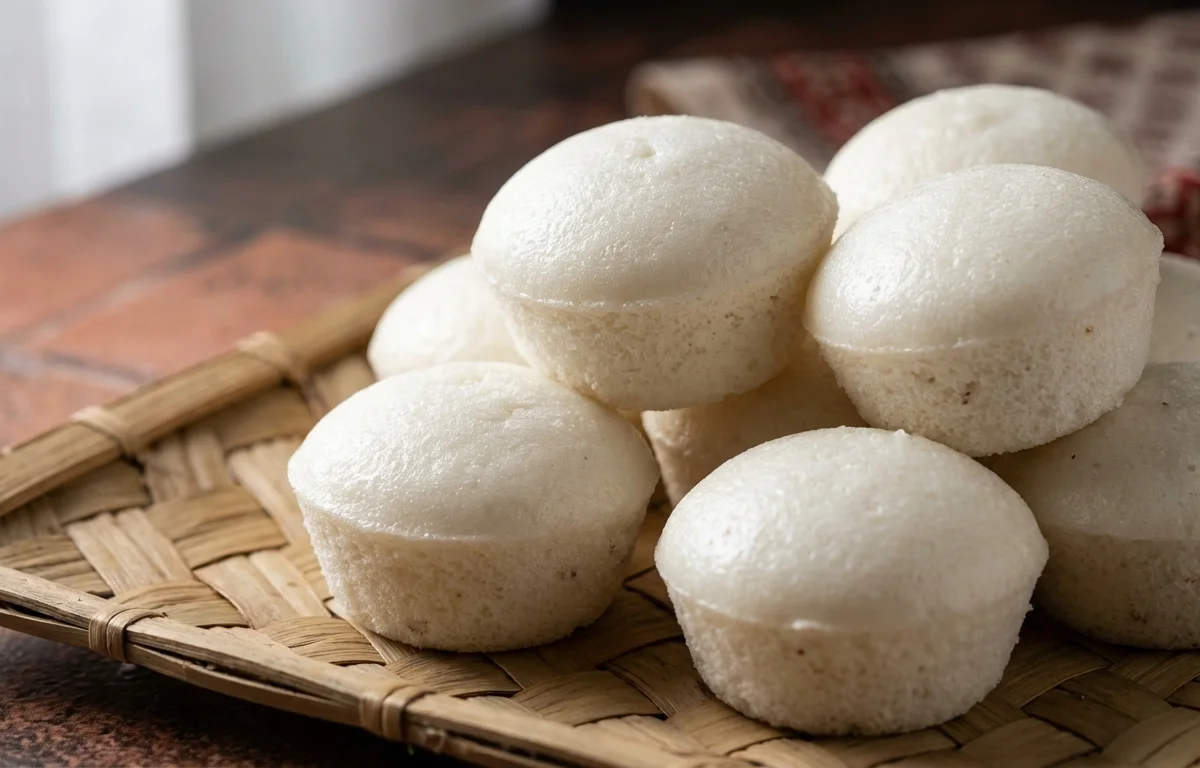
These soft, lightly sweet steamed rice cakes are a Goan favorite, made with rice, coconut, and a gentle ferment. They turn out fluffy and tender, perfect with sorpotel, xacuti, or a simple curry.
For 8 servings
- prep · ~360 min
Soak the rice and flattened rice.
1.Rinse the parboiled rice well until the water runs clearer.2.Soak the rice in fresh water for 6 hours.3.Soak the flattened rice in a little water for 10 minutes just before grinding.TIPUse thick flattened rice so it adds softness without making the batter watery. - mix · ~15 min
Grind the batter.
1.Drain the soaked rice and flattened rice.2.Grind the rice, grated coconut, and flattened rice with palm toddy and a little water to a smooth, thick batter.3.Add sugar and salt, then mix well until the batter is even and pourable.TIPKeep the batter slightly thick; a thin batter makes flat sannas instead of fluffy ones. - rest · ~480 min
Ferment the batter.
Transfer the batter to a large bowl, leaving room for it to rise. Cover and let it ferment in a warm spot for about 8 hours, until airy and slightly risen.
TIPDo not overmix after fermentation or the batter can lose some of its trapped air. - prep · ~5 min
Prepare the steamer and molds.
Heat water in a steamer. Lightly grease 8 small sannas molds or small bowls with oil.
- assemble · ~4 min
Fill the molds with batter.
Stir the batter gently once, then pour it into the greased molds until they are about three-quarters full.
- steam · ~15 min
Steam the sannas.
Place the molds in the steamer and steam over medium heat until the sannas are cooked through and springy, about 12 to 15 minutes.
TIPKeep the heat medium so the cakes cook evenly without turning dense on top. - rest · ~5 min
Cool the sannas briefly.
Let them sit for 5 minutes after steaming so they firm up slightly and release more easily from the molds.
- serve
Unmold and serve the sannas.
Run a spoon around the edge if needed, unmold gently, and serve warm.
What to keep in mind.
7 tips from the recipe — small details that make a real difference to the final dish.
- 1Grind the batter very smooth but keep it slightly thick; a loose batter steams up flat instead of domed and fluffy.
- 2Use a large bowl for fermenting, because toddy-fermented batter can rise more than expected overnight.
- 3Once the batter turns airy, stir only lightly before filling the molds so you do not knock out the trapped bubbles.
- 4Fill each mold only three-quarters full to give the sannas room to puff while steaming.
- 5Steam on medium heat and avoid a hard boil; aggressive steam can make the tops dense or uneven.
- 6Let the sannas rest for 5 minutes after steaming before unmolding, so they firm up and release cleanly.
- 7If making ahead, cool completely and refrigerate; re-steam briefly to bring back their soft, tender texture.
Adapt it for your goals.
Yeast-based
If fresh toddy is unavailable, use a little yeast for fermentation; it gives similar lift and makes the recipe easier outside Goa.
less sweetLess-sweet
Reduce the sugar for a more savory sanna that pairs especially well with rich Goan curries like sorpotel or xacuti.
mini sannasMini-sannas
Steam the batter in smaller cups for bite-size sannas that are ideal for festive spreads or appetizer platters.
banana leaf steamedBanana-leaf steamed
Line the molds with small banana leaf pieces for a subtle earthy aroma and a more traditional festive presentation.
Why this is on our healthy list.
Naturally Fermented Batter
The toddy-fermented batter is easier on the palate and develops depth of flavor through a traditional natural fermentation process.
Energy-Giving Rice Base
Parboiled rice and flattened rice make these steamed cakes a satisfying carbohydrate-rich accompaniment to spicy curries.
Coconut Adds Good Fats
Fresh coconut contributes richness, texture, and plant-based fats that make the sannas more filling and flavorful.
Steamed, Not Fried
Because they are steamed rather than fried, sannas stay light and soft without needing much added oil.
Frequently asked questions
The batter should look airy, slightly risen, and a bit lighter in texture. It should smell pleasantly sweet-tangy, not sharply sour.