.webp)
Green Gram Pesarattu (Dosa)
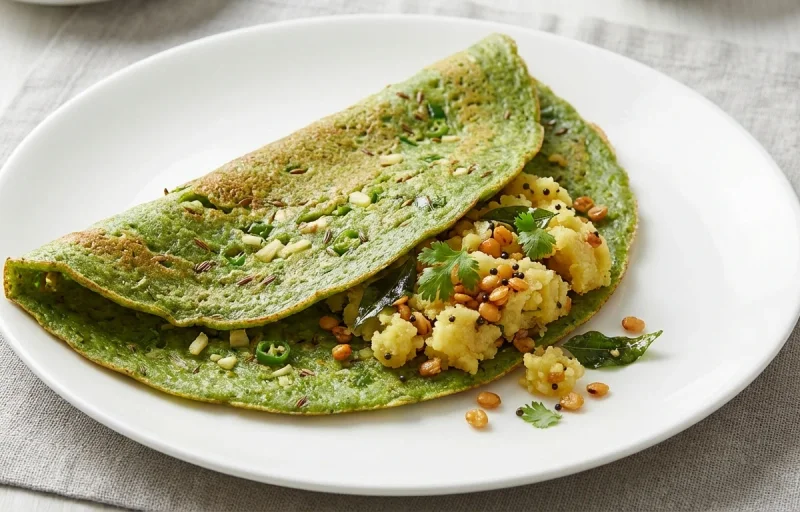
Crispy, thin crepes made from whole green gram, lightly spiced with ginger and green chilies. This beloved Andhra breakfast is naturally gluten-free, packed with plant protein, and needs no fermentation — just soak and grind. Serve hot with ginger chutney or coconut chutney for a morning meal that is as nourishing as it is satisfying.
For 8 servings
- prep
Soak the green gram.
Wash whole green gram thoroughly. Soak in enough water to cover by 2 inches for at least 4 hours. Drain completely before grinding.
TIPSoak longer if the beans are old — 6 hours ensures smoother batter. - mix
Grind the batter.
1.Add drained green gram, ginger, green chilies, and cumin seeds to a mixer grinder.2.Pour in ¼ cup water and grind to a smooth, slightly coarse paste.3.Add rice flour and salt. Blend again briefly to combine.4.Transfer batter to a bowl. It should be pouring consistency — like pancake batter.TIPKeep the batter slightly coarse, not ultra-smooth. A little texture makes the pesarattu crispier. - other
Heat the tawa.
Place a cast iron tawa or non-stick griddle over medium-high heat. Let it get hot, then rub the surface with a halved onion or a lightly oiled paper towel.
TIPThe tawa must be hot before pouring batter — cold tawa makes pesarattu stick. - fry
Cook the pesarattu.
1.Lower heat to medium. Pour a ladleful of batter in the center of the tawa.2.Spread quickly in outward circles to form a thin, even crepe — thinner than a regular dosa.3.Drizzle 1 tsp oil around the edges and a few drops in the center.4.Cook until the underside turns golden brown and the edges lift (about 2 minutes).5.Flip and cook the other side for 1 minute until crisp.TIPSpread fast! Pesarattu batter sets quicker than regular dosa batter — work in swift circular motions. - assemble
Fold and serve immediately.
Fold the pesarattu in half or roll it loosely. Serve hot off the tawa with ginger chutney or coconut chutney.
What to keep in mind.
7 tips from the recipe — small details that make a real difference to the final dish.
- 1Soaking the green gram for at least 4 hours (6 for older beans) ensures a smooth, lump-free batter.
- 2Grind the batter to a slightly coarse texture — not ultra-smooth — for the crispiest pesarattu.
- 3Spread the batter quickly and thinly on the tawa; it sets faster than regular dosa batter.
- 4Use a cast iron tawa for the best heat retention and browning; rub it with onion to prevent sticking.
- 5Drizzle oil around the edges while cooking; this creates the signature crispy lacy edge.
- 6Serve the pesarattu immediately off the tawa; it loses its crunch quickly as it cools.
- 7Leftover batter keeps refrigerated for up to 24 hours — stir well before using as it thickens.
Adapt it for your goals.
Onion-stuffed
After spreading the batter, scatter finely chopped onion, cilantro, and a pinch of red chili powder on top before cooking. This adds a savory, slightly sweet crunch that makes it a meal on its own.
High proteinHigh-protein
Replace 1 tbsp rice flour with 1 tbsp gram flour (besan) or oats flour to increase protein content and add a subtle nutty flavor, ideal for a post-workout breakfast.
VeganVegan
The recipe is already vegan — simply use a neutral vegetable oil like sunflower or avocado oil for drizzling to keep it fully plant-based.
Gluten freeGluten-free
Naturally gluten-free as written, but ensure your rice flour is labeled gluten-free to avoid cross-contamination if serving sensitive individuals.
Why this is on our healthy list.
High in Plant Protein
Whole green gram (mung beans) are a rich source of plant-based protein, making this a filling breakfast that supports muscle repair and keeps you full longer.
Rich in Dietary Fiber
Mung beans provide soluble and insoluble fiber, aiding digestion and helping maintain stable blood sugar levels after the meal.
Naturally Low in Fat
With only a small amount of oil used for cooking, this pesarattu is a low-fat breakfast option that doesn't compromise on taste.
Good Source of Folate
Mung beans are a natural source of folate (vitamin B9), important for cell growth and red blood cell formation.
Gluten-Free Naturally
This dish uses no wheat flour — it's inherently gluten-free, suitable for those with celiac disease or gluten sensitivity.
Frequently asked questions
The tawa might not be hot enough when you pour the batter, or you may need to rub it with a halved onion or oiled cloth before each crepe.