Hawaiian Laulau
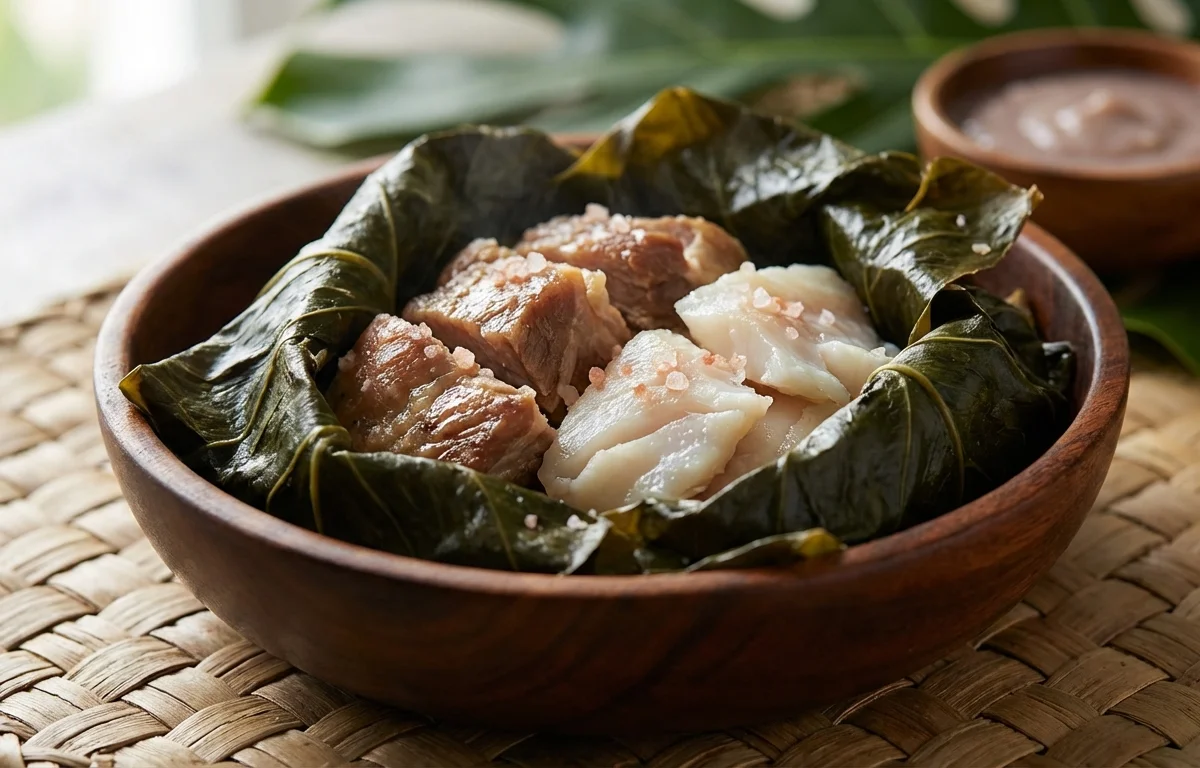
Tender chunks of pork and butterfish wrapped in taro leaves and steamed until meltingly soft. A traditional Hawaiian dish where the leaves impart a subtle earthy flavor to the richly seasoned meat. Served with rice and poi for an authentic island meal.
For 4 servings
- prep · ~10 min
Prepare the taro and ti leaves.
1.Wash taro leaves thoroughly under cold water, removing any grit. Cut off the fibrous stems.2.Blanch taro leaves in boiling water for 30 seconds until pliable, then transfer to an ice bath. Drain and pat dry.3.Rinse ti leaves and remove the hard center rib to make them flexible for wrapping.TIPWear gloves when handling raw taro leaves — the sap can irritate sensitive skin. - prep · ~15 min
Season the pork and assemble the bundles.
1.In a bowl, toss the cubed pork shoulder with hawaiian sea salt until evenly coated.2.Lay 2 ti leaves in a cross shape on a flat surface.3.Place 4 taro leaves overlapping in the center to form a cup.4.Add one-quarter of the seasoned pork and top with one piece of butterfish.5.Fold the taro leaves up and over the filling to create a tight parcel.6.Wrap the ti leaves around the taro parcel and tie securely with kitchen twine. Repeat for all 4 bundles. - steam · ~180 min
Steam the laulau bundles.
1.Fill the steamer pot with water, ensuring it stays below the steamer basket.2.Bring to a rolling boil over high heat.3.Place the bundles seam-side down in the steamer basket.4.Cover tightly and reduce heat to maintain a gentle steam. Cook for 3 hours, checking the water level occasionally and topping up with hot water as needed.TIPKeep the steam steady but not ferocious — boiling dry will ruin the bundles. - serve · ~1 min
Unwrap and serve hot.
Remove bundles from the steamer. Cut the twine and discard the outer ti leaves. Serve the tender pork and fish wrapped in the soft taro leaves immediately. Pair with steamed white rice and poi.
What to keep in mind.
7 tips from the recipe — small details that make a real difference to the final dish.
- 1For the most tender laulau, use well-marbled pork shoulder — the fat keeps the meat moist during the long steam.
- 2Do not skip blanching the taro leaves; it removes the calcium oxalate crystals that can cause throat irritation.
- 3Tie each bundle snugly but not too tight; the leaves need a little room to expand as the meat cooks.
- 4If ti leaves are unavailable, you can substitute banana leaves — just soften them over a flame first.
- 5To test doneness, poke a bundle with a skewer; the pork should slide off the skewer easily after 3 hours.
- 6Make-ahead: Steam the laulau a day ahead, cool completely, then reheat gently in a steamer for 30 minutes.
- 7Always add hot water to the steamer, not cold — a sudden temperature drop can toughen the meat.
Adapt it for your goals.
Chicken Laulau
Substitute boneless, skinless chicken thighs for the pork shoulder — a leaner, quicker-cooking option that still stays moist, ready in about 2 hours.
Vegetarian LaulauVegetarian Laulau
Replace the pork with firm tofu and the butterfish with shiitake mushrooms, seasoned with soy sauce and sesame oil; steam for 1.5 hours for a plant-based island meal.
Spicy LaulauSpicy Laulau
Add 1-2 thinly sliced Hawaiian chili peppers (or serranos) to the pork before wrapping for a subtle heat that cuts through the richness.
Low Sodium LaulauLow-Sodium Laulau
Use a light hand with the Hawaiian sea salt and rely on the natural earthiness of the taro leaves for flavor — ideal for those watching their salt intake.
Why this is on our healthy list.
Rich in Collagen
The pork shoulder breaks down into gelatin during long steaming, which supports joint health and skin elasticity.
Good Source of Omega-3s
Butterfish provides healthy omega-3 fatty acids, beneficial for heart and brain health.
Leafy Green Nutrients
Taro leaves are packed with fiber, vitamin A, and antioxidants, contributing to digestion and immune support.
Mineral-Rich Seasoning
Hawaiian sea salt contains trace minerals like calcium and magnesium that enhance electrolyte balance.
Frequently asked questions
Yes, frozen taro leaves work well — just thaw them completely and squeeze out excess water before wrapping.