
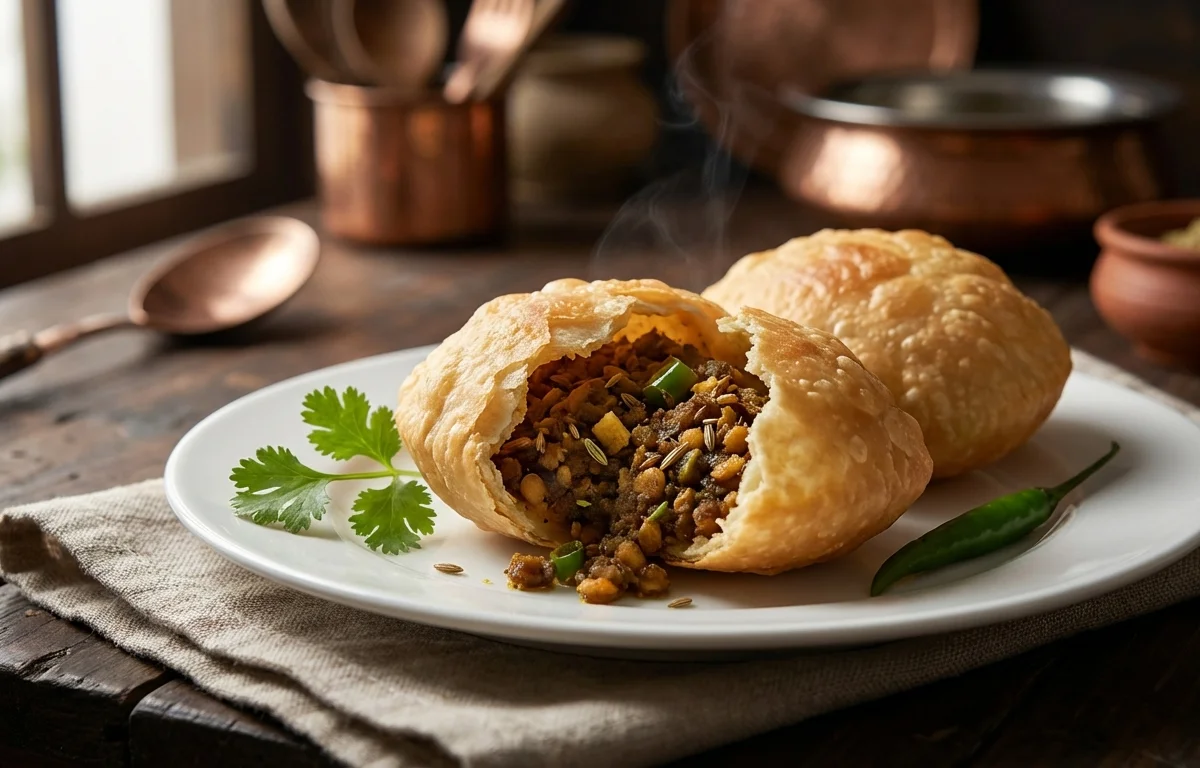
Hing er Kochuri
A beloved Bengali breakfast bread with a flaky maida shell and a warmly spiced urad dal filling scented with hing. These puffed kochuris are crisp outside, soft inside, and wonderful with aloor torkari.
For 8 servings
- prep · ~5 min
Grind the soaked dal.
Grind the soaked urad dal to a coarse paste without adding extra water. Keep the texture slightly grainy so the filling stays light and crumbly.
TIPA wet paste makes the filling sticky and hard to stuff. - knead · ~20 min
Knead the dough.
Mix all-purpose flour, 2 tbsp oil, and a little salt in a bowl. Rub well, then add water gradually and knead into a soft, smooth dough. Cover and rest 20 minutes.
- saute · ~8 min
Cook the dal filling.
1.Heat 1 tbsp oil in a pan over medium heat.2.Add fennel seeds, cumin seeds, and asafoetida and let them turn fragrant for 20 to 30 seconds.3.Add grated ginger and green chili and cook for 30 seconds.4.Add the ground urad dal, remaining salt, and red chili powder.5.Cook, stirring often, until the mixture turns dry, aromatic, and leaves the sides of the pan, 6 to 8 minutes.TIPThe filling must be dry enough to roll into small balls without sticking. - rest · ~10 min
Cool the filling.
Transfer the filling to a plate and let it cool fully. Divide it into 8 small portions.
- assemble · ~10 min
Stuff and shape the kochuris.
1.Divide the dough into 8 equal balls.2.Flatten one ball into a small disc with slightly thinner edges.3.Place one portion of filling in the center and gather the edges to seal.4.Gently flatten and roll very lightly into a small thick disc.5.Repeat with the remaining dough and filling.TIPRoll gently so the filling spreads evenly without tearing the dough. - fry · ~15 min
Fry the kochuris.
1.Heat oil for frying in a kadai over medium heat.2.Slide in one kochuri and press lightly with a slotted spoon until it puffs.3.Flip and fry until both sides are light golden and crisp, about 1 to 2 minutes per side.4.Remove and drain, then fry the remaining kochuris the same way.TIPKeep the oil medium hot. Very hot oil browns the outside before the layers can puff. - serve
Serve hot.
Serve the hing er kochuri hot while still crisp. It is traditionally paired with aloor torkari or a simple potato curry.
What to keep in mind.
7 tips from the recipe — small details that make a real difference to the final dish.
- 1Grind the soaked urad dal without water; even a slightly wet paste makes the stuffing heavy and harder to puff.
- 2Cook the filling until it turns dry and leaves the pan, then cool it completely before stuffing to prevent soggy kochuris.
- 3While shaping, keep the center slightly thicker than the edges so the seal stays secure and the filling spreads evenly.
- 4Roll very lightly after stuffing; pressing too hard can tear the maida shell and leak dal into the oil.
- 5Fry on medium heat, not high, so the kochuri has time to puff before the outside turns dark.
- 6Press the top gently with a slotted spoon right after it rises in the oil to encourage an even, full puff.
- 7For make-ahead prep, refrigerate the cooked filling for a day and bring it back to room temperature before stuffing.
Adapt it for your goals.
Spicier
Add extra green chili or a bit more red chili powder if you want a sharper, more fiery breakfast-style kochuri.
no onion no garlicNo-onion-no-garlic
This version is already naturally free of onion and garlic, making it ideal for traditional satvik-style serving with potato curry.
bakedBaked
Brush the shaped kochuris with oil and bake until golden for a lighter version, though they will be less puffed and flaky than fried.
ajwain flavoredAjwain-flavored
Add a pinch of ajwain to the dough for a more digestive, aromatic shell that pairs especially well with the hing-filled center.
Why this is on our healthy list.
Urad Dal Adds Protein
The spiced urad dal filling contributes plant protein and makes the kochuri more sustaining than a plain fried bread.
Digestive Spice Support
Hing, fennel, cumin, and ginger are classic spices used in Bengali cooking to make rich lentil fillings feel more balanced and aromatic.
Satisfying Breakfast Dish
The combination of flour, lentils, and warming spices makes this a filling breakfast that is traditionally served as a hearty morning meal.
Frequently asked questions
Usually the dough was rolled too thin, the filling was too wet, or the oil was too hot. A gentle roll and medium-hot oil give the best puff.

-curry.webp)
.webp)