Hukoti Maas Chutney
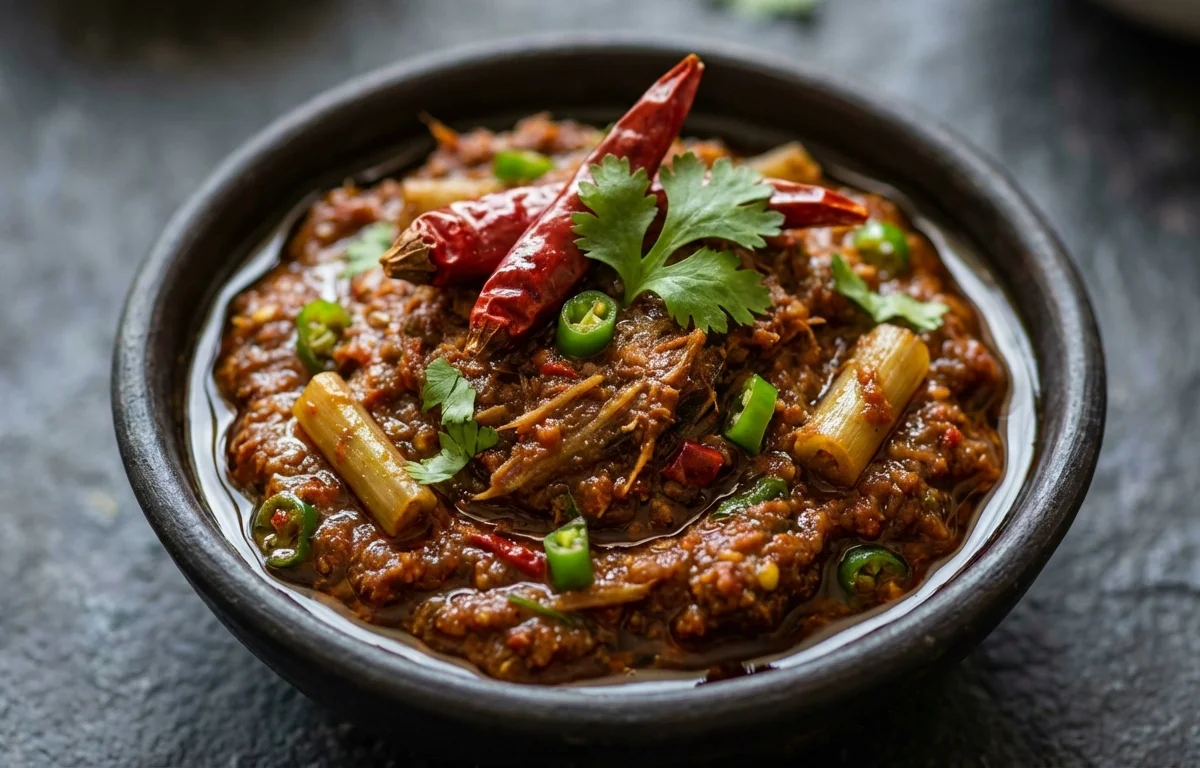
A bold, pungent Assamese chutney made with hukoti—fermented dry fish—pounded together with fiery green chilies, garlic, and fresh coriander. This rustic condiment packs an intense umami punch and is traditionally enjoyed with steamed rice, adding a burst of flavor to simple meals.
For 8 servings
- prep
Clean and prep the hukoti fish.
1.Check the hukoti pieces for any stray bones or hard bits and discard.2.Rinse the fish briefly under running water and pat completely dry with a kitchen towel.3.If the pieces are large, break or tear them into smaller, rough chunks.TIPHukoti is naturally salty and pungent—do not soak it, or you'll lose its characteristic flavor. - saute · ~3 min
Lightly dry-roast the fish.
Warm a small pan over low heat. Add the cleaned hukoti pieces and dry-roast for 2–3 minutes, turning often, until they release their aroma and turn slightly crisp. Remove from heat and let them cool.
TIPKeep the heat low—hukoti burns quickly and will turn bitter if overcooked. - mix
Pound the chutney base.
1.In a stone mortar and pestle, add the green chilies, garlic cloves, and a pinch of salt.2.Pound to a coarse paste, grinding in circular motions.3.Add the cooled dry-roasted hukoti and continue pounding until the fish breaks down and blends with the chili-garlic mix.4.Add the fresh coriander leaves and pound just enough to incorporate—keep some texture, do not make it a smooth paste.TIPA traditional mortar and pestle gives the right texture; a food processor turns it too pasty. Pound by hand for best results. - mix
Finish with mustard oil.
Drizzle the raw mustard oil over the pounded chutney. Mix once more with the pestle to combine everything. Taste and adjust salt only if needed—remember the fish already carries salt.
TIPRaw mustard oil adds a sharp, nasal-clearing pungency that is essential to this chutney. Do not heat it. - serve
Serve the hukoti maas chutney.
Transfer the chutney to a small serving bowl. Garnish with a few extra coriander leaves. Serve immediately alongside hot steamed rice with a drizzle of more raw mustard oil on top, if desired.
What to keep in mind.
6 tips from the recipe — small details that make a real difference to the final dish.
- 1If your hukoti is very hard, break it into small pieces before roasting for even toasting.
- 2Use a stone mortar and pestle — a food processor overemulsifies the fish and makes the chutney pasty.
- 3Add green chilies gradually: pounded whole seeds release intense heat; remove seeds for milder spice.
- 4Make-ahead: store in an airtight glass jar in the fridge for up to 5 days — flavors deepen over time.
- 5Do not skip the raw mustard oil drizzle — its pungent kick is the signature finish of this chutney.
- 6Serve at room temperature; cold chutney mutes the aromatic punch of garlic and mustard oil.
Adapt it for your goals.
Milder version
Reduce green chilies to 2–3 and remove seeds before pounding. The chutney stays pungent from the hukoti and garlic, but is approachable for sensitive palates.
Smokier finishSmokier finish
After roasting the hukoti, char the garlic cloves and green chilies directly over a flame or in a dry pan until blistered before pounding. Adds a smoky layer that complements the fermented fish.
Herbal twistHerbal twist
Replace half the coriander with fresh mint leaves. The mint's coolness balances the heat of the chilies and the intensity of the hukoti, making the chutney brighter.
Oil freeOil-free
Omit the mustard oil. The chutney is still deeply flavorful from the dry-roasted fish and aromatics — just drier. Sprinkle a splash of water if needed while pounding.
Why this is on our healthy list.
Rich in Fermented Probiotics
Hukoti is a naturally fermented fish, which can introduce beneficial bacteria that support gut health and digestion when consumed raw or lightly cooked.
High-Quality Animal Protein
Dried fermented fish provides concentrated, bioavailable protein in small amounts — perfect for adding a protein boost to a simple rice meal.
Contains Immune-Boosting Allium Compounds
Garlic and mustard oil are both rich in organosulfur compounds like allicin, which have antimicrobial and anti-inflammatory properties.
Packed with Antioxidants from Fresh Herbs
Fresh coriander leaves provide vitamin C, vitamin K, and flavonoid antioxidants that help combat oxidative stress.
Low in Added Fats
Only one teaspoon of mustard oil is used, making this a low-fat condiment that relies on the fish's natural oils and the herbs for flavor.
Frequently asked questions
Yes, but the flavor will change. Use any pungent, salt-cured dry fish like bombil (Bombay duck) or dried anchovies. Adjust salt and roasting time accordingly.