Hukoti Maas Pitika
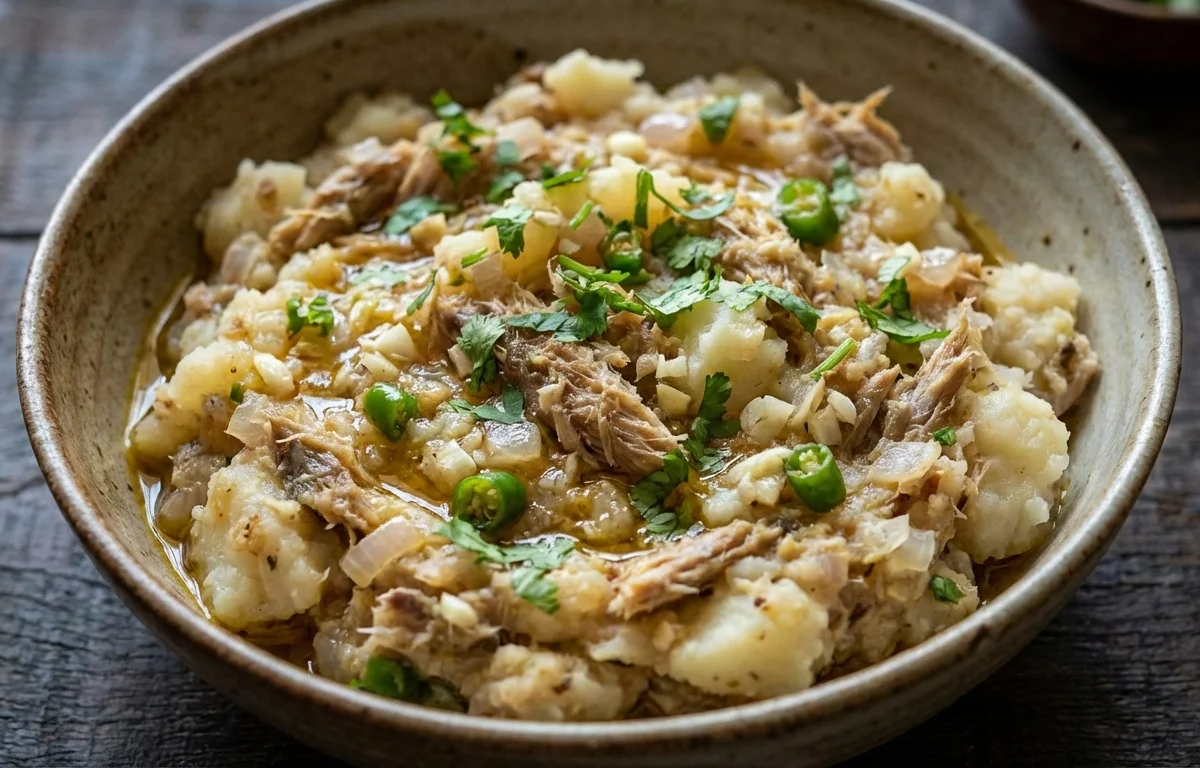
A rustic Assamese mash made by roasting dried hukoti fish until smoky and crisp, then pounding it with roasted tomatoes, green chilies, and a drizzle of pungent mustard oil. Every bite carries deep umami notes from the fermented fish, brightened with raw onion and fresh coriander.
For 4 servings
- roast · ~4 min
Roast the fish, tomato and green chilies.
1.Skewer the dried hukoti fish and roast directly over a medium flame, turning often, until smoky and crisp (3-4 minutes).2.Roast the whole tomato and green chilies alongside on an open flame until the skin chars and blisters (3-4 minutes).3.Let everything cool slightly so you can handle it. - prep · ~3 min
Peel and clean the roasted ingredients.
1.Peel away the charred skin from the tomato and discard.2.Remove the stem ends of the roasted green chilies.3.Check the fish for any hard bones or fins and discard them.TIPDon't wash the roasted ingredients — you'll lose the smoky flavour that makes this dish special. - mix · ~2 min
Pound the fish with the roasted vegetables.
Place the cleaned fish, tomato, and green chilies in a mortar. Add the pinch of salt and pound with the pestle until everything breaks down into a coarse, chunky mash. If you don't have a mortar, use a sturdy bowl and a fork to mash well.
- mix · ~1 min
Fold in raw onion, coriander and mustard oil.
Transfer the mash to a serving bowl. Add finely chopped raw onion, chopped coriander leaves, and drizzle the pungent mustard oil. Mix everything together with a spoon until well combined.
TIPLet the pitika rest for 5 minutes so the raw onion and mustard oil can mellow into the fish. - serve
Serve with plain rice and a wedge of lime.
What to keep in mind.
7 tips from the recipe — small details that make a real difference to the final dish.
- 1Roast the hukoti fish until it is brittle enough to snap easily — this ensures maximum smokiness.
- 2Char the tomato and green chilies over an open flame for a deep, fire-roasted flavour that cannot be replicated on a gas stove griddle.
- 3Do not wash the roasted ingredients after peeling; rinsing washes away the essential smoky particles.
- 4Use mortar and pestle for a coarse, textured mash — over-blending in a food processor makes the pitika pasty.
- 5Let the finished pitika rest for 5 minutes before serving so the raw onion and mustard oil meld with the fish.
- 6Mustard oil must be pungent and raw — never substitute with a milder oil or the dish loses its signature bite.
- 7Discard any hard fish bones and fins thoroughly after roasting to avoid unpleasant crunch.
Adapt it for your goals.
Vegetarian
Replace hukoti fish with 100g of roasted, mashed eggplant (baingan) — you get a similar smoky, charred base without the fish, ideal for vegetarians or those avoiding fermented seafood.
extra herbyExtra-herby
Fold in 2 tablespoons of finely chopped mint leaves along with the coriander for a cooling, fresh contrast to the intense smoky fish and pungent mustard oil.
low oilLow-oil
Use only 1 teaspoon of mustard oil or swap entirely for a squeeze of lemon juice — reduces fat while keeping acidity to balance the fish's richness.
Why this is on our healthy list.
Rich in Fermented Probiotics
Hukoti fish is a dried, naturally fermented product that introduces beneficial bacteria and enzymes, supporting gut health and digestion.
High-Quality Animal Protein
Dried fish is a concentrated source of complete protein, essential for muscle repair and overall bodily function, with minimal fat.
Vitamin C from Fresh Ingredients
Raw onion, tomato, and green chilies provide a generous dose of vitamin C, which aids immunity and iron absorption from the fish.
Heart-Healthy Fatty Acids
Mustard oil contains omega-3 and omega-6 fatty acids in a favourable ratio, supporting cardiovascular health when used in moderation.
Frequently asked questions
Yes, but choose a firm, dried fermented fish like bombay duck (loitta) or dried anchovies — the texture and smoky roast will still work, though the flavour will differ slightly.