
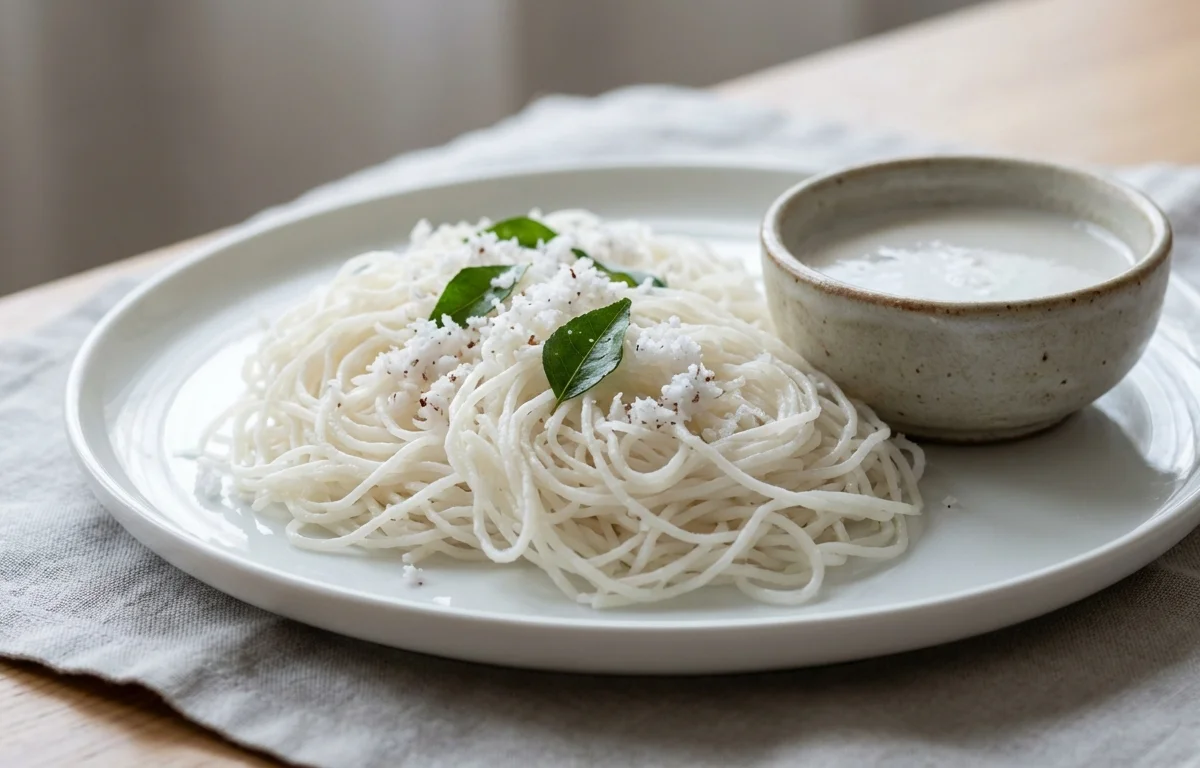
Idiyappam
Light, delicate rice noodles pressed into little nests and steamed until soft. This South Indian favorite is simple, comforting, and perfect with vegetable stew, kurma, or a spoon of sweetened coconut.
For 8 servings
- prep · ~2 min
Grease the idiyappam plates.
Lightly grease the idiyappam plates or small steaming plates with coconut oil so the noodles release easily after steaming.
- boil · ~5 min
Boil the water with salt.
Bring the water and salt to a full boil in a saucepan. Keep it very hot for mixing the dough.
- mix · ~5 min
Mix the flour and hot water.
1.Place the rice flour in a wide bowl.2.Pour in the hot salted water little by little.3.Mix with a spoon until the flour comes together.4.When cool enough to handle, gather it into a soft dough with no dry patches.TIPThe dough should be soft and smooth, not sticky or crumbly. Add a spoon of hot water if it feels dry. - knead · ~3 min
Knead the dough smooth.
Knead the warm dough for 2 to 3 minutes until smooth. Cover it with a cloth so it does not dry out.
- assemble · ~7 min
Press the dough into nests.
1.Fill the idiyappam press with a portion of dough while it is still warm.2.Press thin strands in a circular motion onto each greased plate.3.Make 8 small nests in total.4.Sprinkle a little grated coconut over each nest.TIPPressing is easier while the dough is warm. If it cools too much, knead briefly with a little hot water. - steam · ~8 min
Steam the idiyappam.
Arrange the plates in a steamer and steam until the strands turn glossy and cooked through, 7 to 8 minutes.
- rest · ~2 min
Rest for 2 minutes.
- serve · ~1 min
Serve the idiyappam warm.
Lift the idiyappam gently from the plates and serve warm with vegetable stew, kurma, or sweetened coconut.
What to keep in mind.
7 tips from the recipe — small details that make a real difference to the final dish.
- 1Use fully boiling water for the dough; lukewarm water makes the strands crack when pressed.
- 2Keep the dough covered with a damp cloth between batches so the surface does not dry out.
- 3Load the press while the dough is still warm; cooled dough needs a splash of hot water and a quick re-knead.
- 4Do not pack the nests too thickly on the plate, or the center can stay dense after steaming.
- 5The idiyappam is done when the strands look glossy and lose any dry, floury appearance.
- 6Rest the steamed nests for 2 minutes before lifting so they release cleanly without breaking.
- 7Leftovers can be refrigerated and reheated by steaming for a minute or two to soften them again.
Adapt it for your goals.
Sweet-breakfast
Serve the warm idiyappam with sweetened coconut, a little sugar or jaggery, for a simple traditional breakfast-style version.
coconut richCoconut-rich
Add a little more grated coconut between layers for a softer, more aromatic idiyappam that pairs especially well with Kerala stew.
brown riceBrown-rice
Use finely milled roasted brown rice flour for a nuttier flavor and a slightly heartier texture.
mini portionMini-portion
Press smaller nests for easier steaming and serving alongside kurma or vegetable stew at brunch or festive meals.
Why this is on our healthy list.
Light Steamed Preparation
Because idiyappam is steamed rather than fried, it stays light and gentle while still feeling satisfying.
Naturally Gluten-Free
Made from rice flour, this dish is naturally gluten-free for those who avoid wheat-based breakfast items.
Simple, Minimal Ingredients
With rice flour, water, salt, and coconut, the recipe is straightforward and free of heavy sauces or rich fats.
Includes Fresh Coconut
The grated coconut adds flavor, texture, and some natural richness that makes the dish more filling.
Frequently asked questions
The dough is usually too dry or too cool. Knead in a spoon or two of hot water and press it while still warm.


