Jonna Rotte
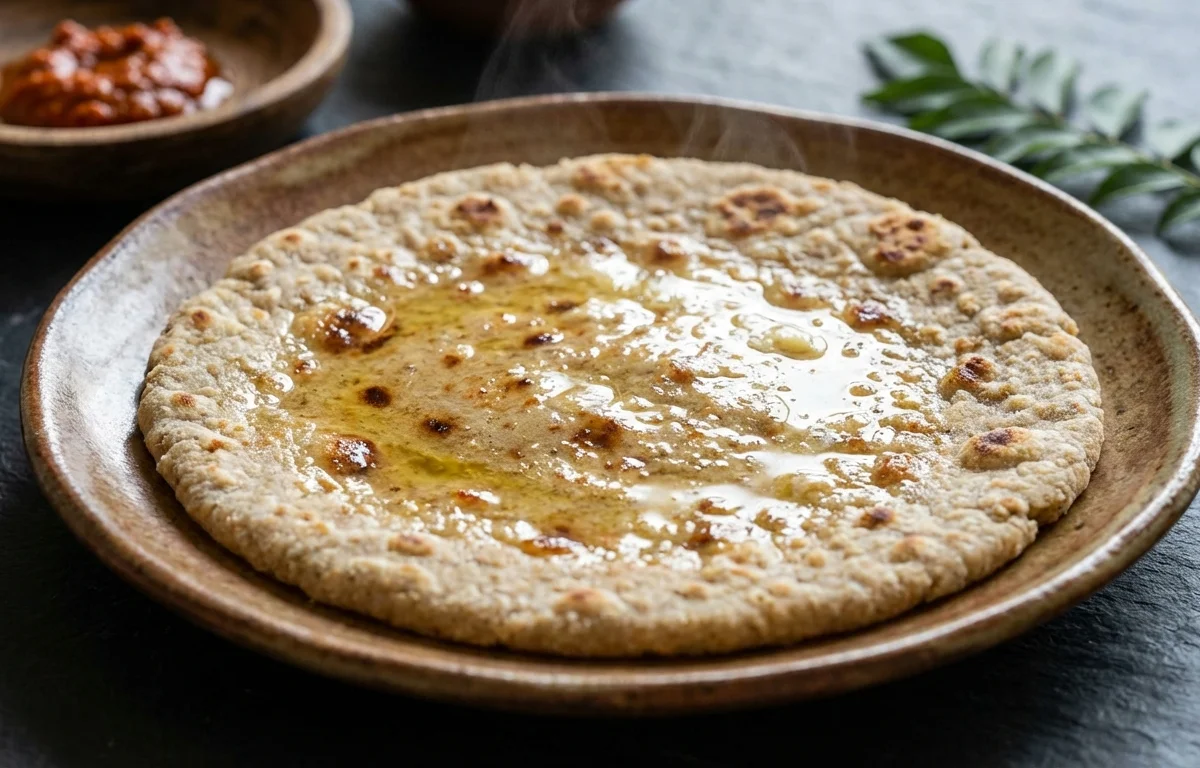
Rustic sorghum flatbreads from Andhra and Telangana with a soft center and lightly toasted edges. Made with hot water and hand-patted, these wholesome rotte are best served warm with chutney, dal, or spicy curries.
For 8 servings
- boil · ~3 min
Heat the water.
Bring the water to a near boil in a small pan. It should be hot enough to help the flour bind easily.
- mix · ~1 min
Mix the flour and salt.
Add the jowar flour and salt to a wide bowl and mix well so the salt is evenly distributed.
- knead · ~7 min
Make a soft dough.
1.Pour the hot water gradually into the flour mixture.2.Mix with a spoon at first until the flour starts coming together.3.When cool enough to handle, knead gently into a soft, smooth dough.4.Cover the dough with a cloth so it does not dry out.TIPJowar dough cracks quickly if left open, so keep it covered while shaping each rotte. - prep · ~2 min
Divide the dough.
Split the dough into 8 equal portions and roll each one into a smooth ball.
- assemble · ~3 min
Pat one rotte.
1.Take one dough ball and place it on a sheet of parchment paper or a clean damp cloth.2.Pat it gently with your fingers into a thin round flatbread.3.Smooth any cracks at the edges with damp fingers.4.Keep the rotte medium thin so it cooks evenly.TIPWet fingers lightly while patting to prevent sticking and help the edges stay neat. - fry · ~3 min
Cook the rotte on a hot tawa.
1.Heat a tawa over medium heat.2.Transfer the patted rotte carefully onto the hot tawa.3.Cook until the surface changes color and light spots appear, about 1 to 2 minutes.4.Drizzle a little oil around the edges, flip, and cook the other side until light brown spots appear.TIPKeep the heat at medium; very high heat makes the outside dry before the center cooks. - assemble · ~15 min
Repeat with the remaining dough.
Pat and cook the remaining dough balls the same way, stacking the cooked rotte in a cloth-lined container to keep them soft.
- serve · ~1 min
Serve the jonna rotte warm.
Serve hot or warm with chutney, pappu, or a spicy vegetable curry.
What to keep in mind.
7 tips from the recipe — small details that make a real difference to the final dish.
- 1Use the dough while still warm; cooled jowar dough is more likely to crack as you pat it.
- 2If the dough feels dry after kneading, sprinkle in hot water a teaspoon at a time until it becomes pliable.
- 3Pat each rotte directly on parchment or a damp cloth so you can lift and transfer it without tearing.
- 4Seal edge cracks with lightly wet fingers before cooking, or the rotte will split on the tawa.
- 5Do not stack the raw patted rotte; shape and cook one at a time to prevent sticking and drying.
- 6Store cooked rotte in a cloth-lined box, not an open plate, so trapped warmth keeps them soft.
- 7Reheat leftover rotte briefly on a tawa with a few drops of water nearby to bring back softness.
Adapt it for your goals.
Low-oil
Cook the rotte on a well-seasoned cast-iron tawa with little or no oil for a lighter everyday version.
veganVegan
This recipe is naturally vegan as written, making it a simple plant-based flatbread for curries and chutneys.
onion chiliOnion-chili
Mix very finely chopped onion, green chili, and cumin into the dough for a more flavorful breakfast-style rotte.
jainJain
Serve it with Jain-friendly dal or chutney; the rotte itself is already free from onion and garlic.
Why this is on our healthy list.
Naturally Gluten-Free
Made entirely with jowar flour, this flatbread is suitable for those avoiding wheat and other gluten-containing grains.
Whole Grain Goodness
Sorghum is a whole grain that adds fiber and a more sustaining texture than refined flour flatbreads.
Simple Ingredient Dish
With just jowar, water, salt, and a little oil, this is a minimally processed everyday staple.
Frequently asked questions
Jowar dough dries quickly and has no gluten, so keep it covered, pat while still warm, and use damp fingers to smooth cracks.




.webp)