Jowar ki Roti
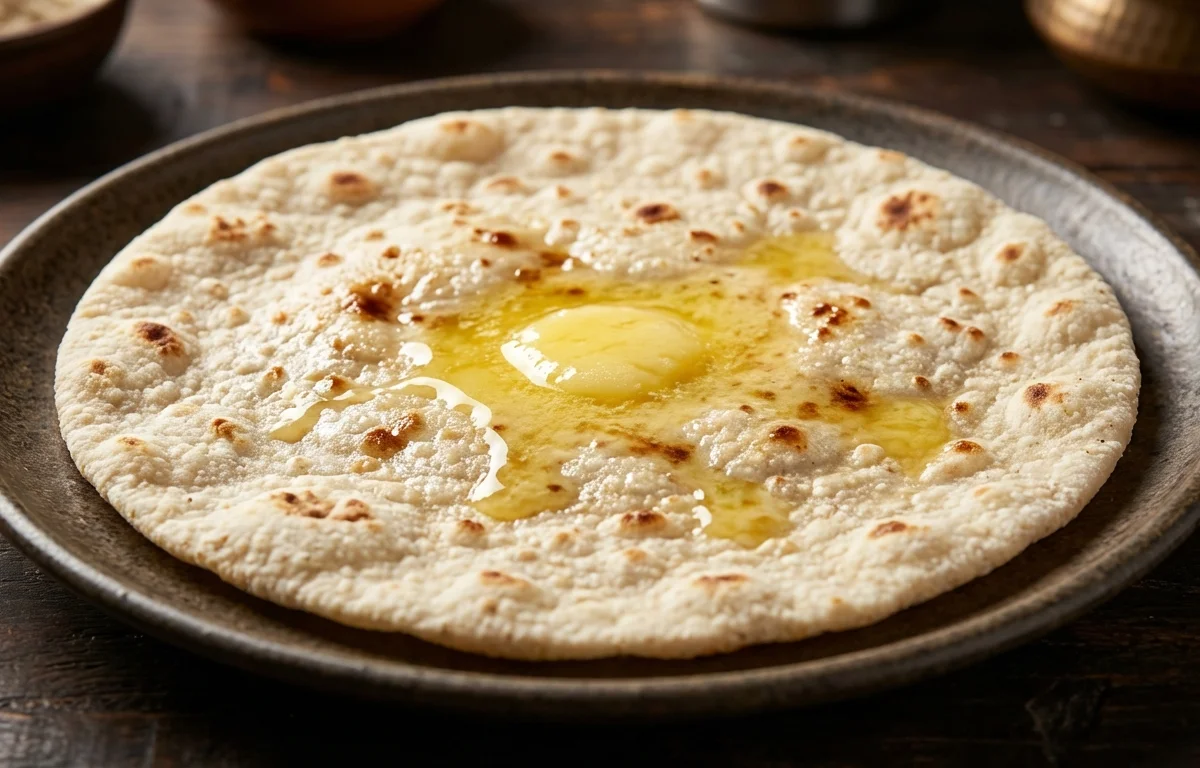
Rustic, gluten-free flatbreads made from sorghum flour, a winter staple across Maharashtra and Karnataka. These rotis have a slightly nutty, earthy flavor and a wonderfully crisp yet soft texture when cooked on a hot tawa. Served warm with a dollop of ghee, thecha, or a hearty brinjal sabzi.
For 8 servings
- prep · ~5 min
Bring water to a boil.
Heat 1 cup of water in a pan or kettle until it comes to a rolling boil. The water must be boiling hot to cook the jowar flour slightly.
- mix · ~10 min
Make the dough.
1.Combine 2 cups jowar flour and salt in a large mixing bowl.2.Pour a little boiling hot water at a time over the flour and mix with a wooden spoon.3.Once cool enough to handle, add 1 tsp oil and knead for 3-4 minutes into a soft, pliable dough.4.Add a splash of room temperature water if the dough feels dry or crumbly.TIPGluten-free flours don't develop structure like wheat — the dough will feel loose. That is normal, just knead it into a smooth mass. - prep · ~2 min
Divide the dough.
Divide the dough into 8 equal portions and roll each into a smooth ball between your palms. Keep them covered with a damp cloth.
- prep · ~8 min
Roll the rotis.
1.Place a plastic sheet or banana leaf on the rolling board and dust it lightly with dry jowar flour.2.Place one dough ball on the sheet and press it flat with your fingers.3.Using a rolling pin, gently roll it out into a 5-inch disc, dusting with dry flour as needed to prevent sticking.4.Peel the sheet away carefully — the roti is delicate and lacks gluten structure.TIPDon't roll paper-thin; keep it a little thicker than a wheat roti. Jowar rotis crack if rolled too thin, and they cook up crisp on the edges and soft in the center when slightly thick. - fry · ~8 min
Cook the roti on a hot tawa.
1.Heat a tawa over medium-high heat until a sprinkle of flour browns instantly.2.Gently transfer the rolled roti onto the hot tawa. Cook for 30-40 seconds until the underside gets light brown spots.3.Flip the roti and cook the other side for 30 seconds.4.Press gently with a folded kitchen cloth around the edges — this helps the roti puff slightly and cook evenly.TIPIf the tawa is not hot enough, the roti will stick and tear. A moderately hot tawa is key to a clean release. - garnish · ~5 min
Brush with ghee and serve immediately.
Remove the roti from the tawa and brush the top with 1/4 tsp ghee. Stack them in a casserole lined with a cloth to keep them soft. Repeat with remaining dough balls. Serve hot.
TIPJowar rotis stiffen as they cool — eat them right off the tawa. If making ahead, wrap them in a cloth inside a hot casserole to retain moisture.
What to keep in mind.
7 tips from the recipe — small details that make a real difference to the final dish.
- 1Knead the dough while it is still warm from the boiling water for a smoother, more pliable texture.
- 2If the roti cracks while rolling, press the edges together and roll gently; the dough lacks gluten and needs a delicate touch.
- 3Use a plastic sheet or banana leaf to roll the roti—it helps lift the delicate flatbread without tearing.
- 4Keep the tawa at a steady medium-high heat; if it's too cool, the roti will stick and break apart.
- 5Press the edges of the roti gently with a folded cloth while cooking to encourage even puffing and a soft center.
- 6For the softest rotis, serve immediately or stack them in a cloth-lined casserole to trap steam.
- 7Store leftover rotis wrapped in a damp cloth inside an airtight container—reheat on a dry tawa to restore softness.
Adapt it for your goals.
Spiced roti
Add 1 teaspoon each of finely chopped fresh coriander, green chili, and a pinch of cumin seeds to the dough for a herby, mildly spicy flatbread that pairs well with yogurt or pickle.
veganVegan
Skip brushing with ghee and use a neutral oil or melted coconut oil instead—this keeps the recipe fully plant-based without losing the moist finish.
mixed millet rotiMixed millet roti
Replace half the jowar flour with ragi (finger millet) or bajra (pearl millet) flour for a deeper, more complex flavor and a darker, rustic appearance.
stuffed jowar rotiStuffed jowar roti
Fill each dough ball with a spiced mixture of mashed boiled potato, finely chopped onion, and green chili before rolling; cook gently to create a stuffed paratha-style winter meal.
low oil versionLow-oil version
Skip the oil in the dough and the ghee brush; the roti will be drier but still flavorful, ideal for those watching fat intake—serve with a moist sabzi or chutney.
Why this is on our healthy list.
Naturally Gluten-Free
Jowar (sorghum) is a naturally gluten-free grain, making these rotis a safe and satisfying option for those with celiac disease or gluten sensitivity.
Rich in Dietary Fiber
Whole grain jowar flour is packed with fiber, which aids digestion, promotes satiety, and helps maintain steady blood sugar levels.
Good Source of Iron
Jowar contains iron, which supports healthy red blood cell production and energy levels, especially important in plant-based diets.
Low Glycemic Index
Sorghum has a lower glycemic index compared to refined wheat flour, making this roti a smart choice for blood sugar management.
Packed with Antioxidants
Dark-colored sorghum varieties (often used for jowar flour) are rich in anthocyanins and other antioxidants that help reduce oxidative stress.
Frequently asked questions
This happens if the dough is too dry or the water wasn't hot enough—add a splash more warm water and knead again; gluten-free dough needs more moisture than wheat dough.



.webp)