Kerala Parotta
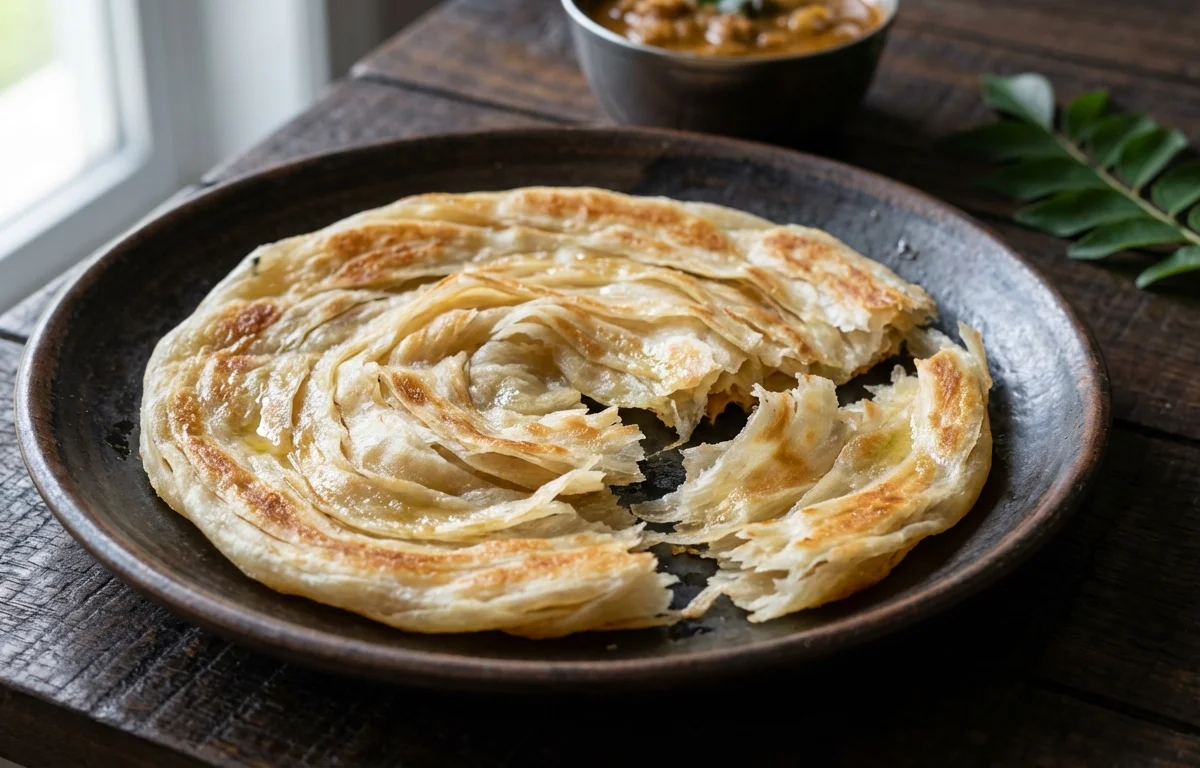
Flaky, soft, and irresistibly layered flatbread from Kerala. Made with all-purpose flour and plenty of resting time, this parotta gets its signature spiral layers from a unique rolling and coiling technique. Cooked on a hot griddle with a drizzle of oil until golden and crisp on the outside while staying soft and chewy inside. A street-food favorite that pairs beautifully with beef fry, chicken curry, or egg curry.
For 6 servings
- mix · ~10 min
Make the dough.
1.In a large mixing bowl, combine all-purpose flour, sugar, and salt.2.Crack the egg into the flour mixture and add 2 tablespoons of oil.3.Gradually add lukewarm water, a little at a time, mixing with your hand.4.Knead for 8-10 minutes until you get a very soft, smooth, and slightly sticky dough.TIPThe dough should be softer than regular chapati dough. A soft dough yields soft, flaky parottas. - rest · ~180 min
Rest the dough.
1.Divide the dough into 6 equal-sized balls, each roughly the size of a lemon.2.Coat each ball lightly with a few drops of oil to prevent drying.3.Place them in a bowl, cover with a damp cloth, and rest for 2 to 3 hours at room temperature.TIPThe longer the resting time, the more elastic the gluten becomes, which is essential for creating paper-thin, stretchy layers. - prep · ~2 min
Roll, stretch, and layer the dough balls.
1.Grease your work surface with a few drops of oil. Take one rested dough ball and flatten it slightly with your palm.2.Using a rolling pin, roll it out as thin as possible into a large, almost translucent circle, about 10-12 inches in diameter.3.Drizzle a few drops of oil all over the thin disc.4.Starting from one edge, make tiny pleats or folds across the dough, forming a long, pleated ribbon.5.Hold the pleated ribbon from one end and stretch it gently by tossing it against the work surface to make it thinner and longer.6.Coil the stretched ribbon from one end into a tight spiral, tucking the outer end underneath.TIPDon't worry about tiny tears in the dough while stretching. The layering hides imperfections beautifully. - rest · ~25 min
Rest the coils.
1.Place all the prepared coils back in the bowl.2.Cover with a damp cloth and let them rest for another 20 to 30 minutes.TIPThis second rest relaxes the gluten again, making the final roll-out much easier. - prep · ~1 min
Roll out the final parottas.
1.Take one rested coil and place it on a lightly oiled surface.2.Gently roll it out into a circle about 6-7 inches in diameter and roughly 5 mm thick. Use light hands to preserve the layers. - fry · ~2 min
Cook the parottas on a hot griddle.
1.Heat a tawa or flat griddle over medium-high heat until hot.2.Place a rolled parotta on the dry griddle and cook for 30-40 seconds until you see small bubbles and the underside changes color.3.Flip the parotta and drizzle about 1 to 2 teaspoons of oil over the surface.4.Flip again and drizzle oil on the other side. Cook for another 30-40 seconds, pressing gently with a spatula to encourage puffing.5.Cook until both sides are golden brown with characteristic flaky spots.TIPAfter cooking, place the parotta between both palms and crush it gently from the sides. This action, called 'clapping,' separates the beautiful layers instantly. - serve
Serve hot.
Serve the Kerala Parotta immediately while hot and flaky, paired with beef fry, chicken curry, kadala curry, or a simple egg curry.
What to keep in mind.
7 tips from the recipe — small details that make a real difference to the final dish.
- 1Rest the dough for the full 2-3 hours to develop elastic gluten for paper-thin layers.
- 2Use lukewarm water when kneading to help the dough come together smoothly and quickly.
- 3Grease your work surface and hands lightly with oil to prevent sticking while stretching the dough.
- 4When rolling the final parotta, use gentle, even pressure to avoid crushing the delicate spiral layers.
- 5The 'clapping' technique after cooking is essential — crush the parotta gently between your palms to separate the layers while still hot.
- 6Make-ahead: coiled dough can be refrigerated for up to 4 hours; bring to room temperature before rolling and cooking.
- 7Store any leftover parottas in a sealed container at room temperature for 1 day; reheat on a dry skillet to restore crispness.
Adapt it for your goals.
Whole-wheat parotta
Replace half the all-purpose flour with whole-wheat atta for a nuttier flavor and higher fiber content. Expect slightly less flaky layers but a heartier texture.
eggless parotta (vegan)Eggless parotta (vegan)
Skip the egg and add 1 extra tablespoon of oil plus 2-3 tablespoons of water. The parotta will be slightly less rich but still soft and layered.
spiced parottaSpiced parotta
Add 1/2 teaspoon of finely chopped curry leaves and 1/4 teaspoon of crushed black pepper to the dough for a subtle Kerala-style spicy twist.
Why this is on our healthy list.
Provides Quick Energy
Made primarily from all-purpose flour, Kerala Parotta offers easily digestible carbohydrates that provide a quick source of energy.
Contains Protein from Egg
The single egg in the dough adds a small amount of high-quality protein, contributing to muscle repair and satiety.
Low in Added Sugar
Only a pinch of sugar is used, making this a savory flatbread with minimal added sweeteners.
Source of Healthy Fats
The oil used in the dough and for cooking provides essential fatty acids, especially when using traditional coconut oil.
Frequently asked questions
The dough likely hasn't rested enough. Ensure a full 2-3 hour rest so the gluten relaxes, making the dough pliable and less prone to tearing.