Kesar Phirni
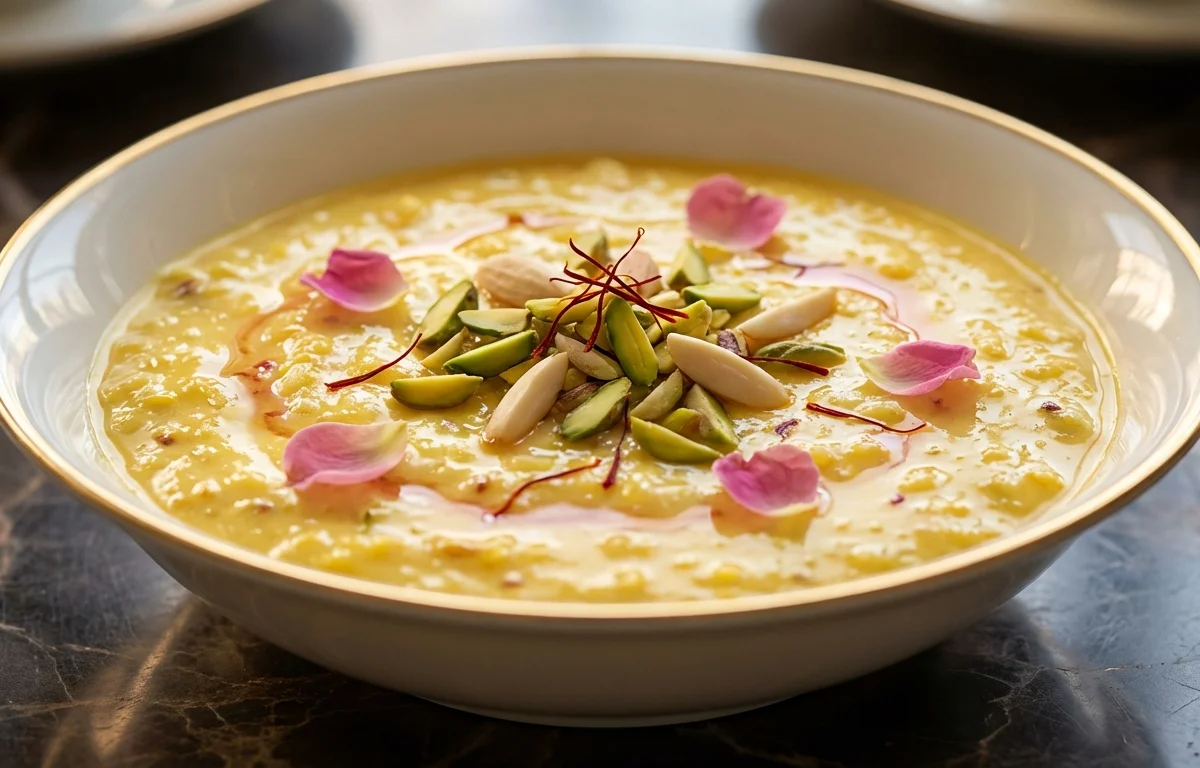
Creamy ground-rice pudding gently cooked with milk, sugar, saffron, and cardamom until silky and thick. Served chilled, this festive North Indian dessert feels rich yet light enough to enjoy after a full meal.
For 4 servings
- prep · ~30 min
Soak and grind the rice.
1.Wash the basmati rice well and soak it in water for 30 minutes.2.Drain the rice completely.3.Grind it with 2 to 3 tbsp milk from the measured milk into a slightly coarse paste.TIPKeep the rice slightly grainy, not completely smooth, so the phirni gets its classic texture. - prep · ~5 min
Soak the saffron and ready the garnish.
Soak the saffron strands in 1 tbsp warm milk from the measured milk. Crush the cardamom seeds and keep the sliced almonds and pistachios ready.
- boil · ~7 min
Bring the milk to a gentle boil.
Pour the remaining milk into a heavy pan and bring it to a gentle boil over medium heat, stirring once or twice so it does not catch at the bottom.
- simmer · ~15 min
Cook the ground rice in the milk.
1.Lower the heat and stir the ground rice paste once.2.Pour it into the hot milk in a thin stream while stirring constantly.3.Cook on low heat, stirring often, until the mixture thickens and the rice cooks through.TIPStir well around the base and sides of the pan to prevent lumps and sticking. - mix · ~7 min
Add the sugar, saffron, and cardamom.
Stir in the sugar, saffron milk, and crushed cardamom. Cook for 5 to 7 minutes more until the phirni looks creamy and thick but still slightly loose, as it will set more on cooling.
- assemble · ~3 min
Portion the phirni into serving bowls.
Take the pan off the heat and divide the hot phirni into 4 katoris. Sprinkle almonds and pistachios on top.
- rest · ~120 min
Chill until set.
Let the bowls cool to room temperature, then refrigerate until nicely chilled and lightly set.
- serve
Serve the kesar phirni chilled.
What to keep in mind.
7 tips from the recipe — small details that make a real difference to the final dish.
- 1Grind the soaked rice to a slightly coarse paste, not fully smooth, so the phirni keeps its classic faintly grainy body.
- 2Pour the rice paste into the hot milk in a thin stream while stirring continuously to avoid lumps forming instantly.
- 3Use a heavy-bottomed pan and keep scraping the base and sides as it simmers, because milk solids catch quickly.
- 4Stop cooking when the phirni is thick yet still a little loose; it firms up noticeably after chilling.
- 5Cool the filled katoris before refrigerating so condensation does not drip back and loosen the set texture.
- 6For the best aroma, soak the saffron in warm milk first and add it only near the end, not at the start.
- 7Phirni tastes best fully chilled, and the texture improves after a few hours of resting in the fridge.
Adapt it for your goals.
Rose-kesar
Add a few drops of rose water after cooking for a more festive Mughlai-style aroma that pairs beautifully with saffron.
less sweetLess-sweet
Reduce the sugar slightly if you prefer the milk, saffron, and cardamom flavours to stand out more clearly.
nut freeNut-free
Skip almonds and pistachios for allergy-friendly serving; the phirni will still be creamy and fragrant on its own.
earthen potEarthen-pot
Set the phirni in मिट्टी kulhads or clay bowls for a traditional touch and a slightly deeper, earthy finish.
Why this is on our healthy list.
Calcium-Rich Dairy Base
Made with milk, this dessert provides calcium and dairy protein while delivering a naturally creamy texture.
Saffron and Cardamom Aroma
Saffron and green cardamom add intense flavour and fragrance, letting the dessert feel luxurious without many ingredients.
Nuts Add Good Fats
Almonds and pistachios contribute healthy fats, a bit of protein, and satisfying crunch over the soft phirni.
Frequently asked questions
Usually the rice paste was added too quickly or without enough stirring. Pour it in slowly and keep stirring constantly as it goes into the hot milk.



.webp)