
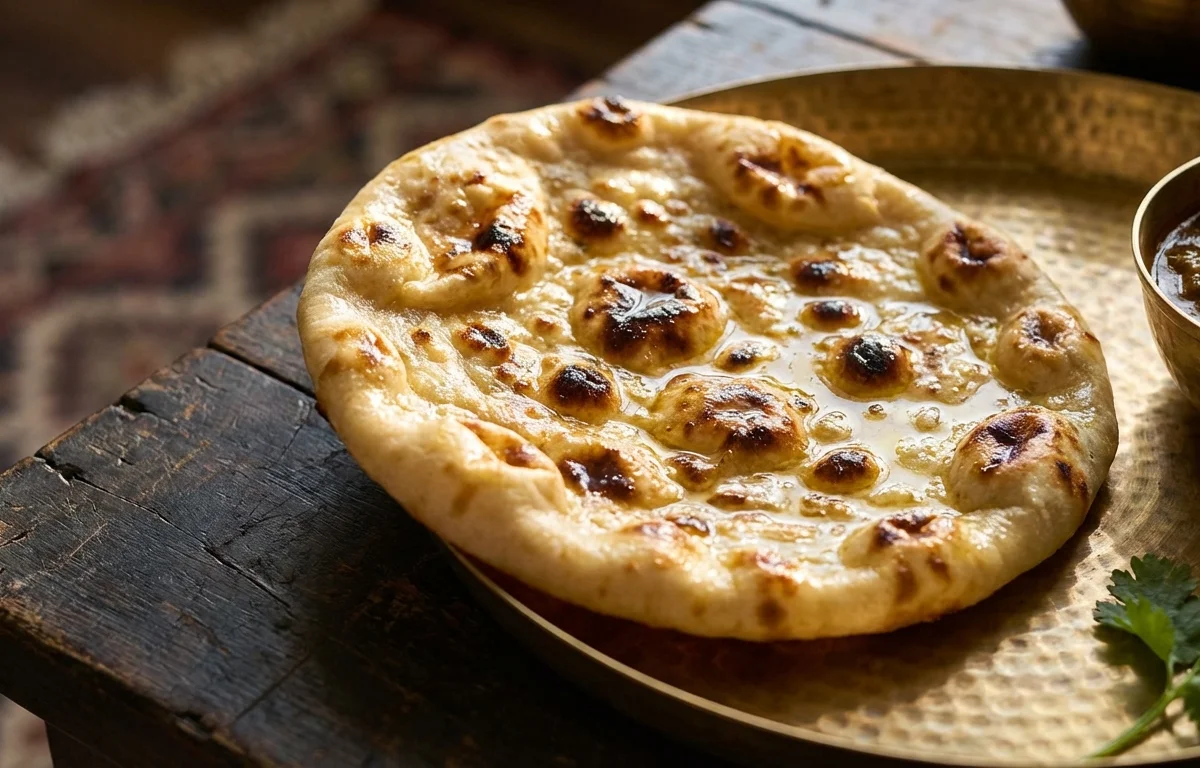
Khameeri Roti
This old Delhi style leavened flatbread has a gentle tang, soft center, and lightly charred spots from the hot tawa. It is made with a simple fermented dough and tastes especially good with rich curries and kebabs.
For 8 servings
- mix · ~2 min
Mix the starter ingredients.
In a large bowl, whisk yogurt, sugar, baking soda, salt, and 1/2 cup lukewarm water until smooth and slightly frothy.
TIPUse lukewarm, not hot, water so the dough ferments well without turning sour too fast. - knead · ~10 min
Knead the dough.
1.Add whole wheat flour and all-purpose flour to the bowl.2.Pour in the oil and mix with your fingers until the flour looks evenly moistened.3.Add the remaining lukewarm water little by little and knead into a soft, smooth dough.4.Knead for 6 to 8 minutes until the dough feels supple and slightly tacky. - rest · ~360 min
Cover and ferment the dough.
Lightly oil the surface of the dough, cover the bowl, and keep it in a warm place for 6 hours until puffed and airy.
TIPThe dough should rise and smell lightly tangy. If the kitchen is cool, give it a little more time. - prep · ~7 min
Divide and shape the rotis.
1.Punch down the dough gently to release excess air.2.Divide it into 8 equal portions.3.Shape each portion into a smooth ball.4.Roll each ball into a thick round roti about 5 to 6 inches wide.TIPDust lightly with flour while rolling, but do not make the rotis too thin or they lose their soft bite. - fry · ~1 min
Cook the first side on a hot tawa.
Heat a tawa over medium-high heat. Place one rolled roti on it and cook until small bubbles appear and the bottom gets light brown spots.
- fry · ~2 min
Flip and finish the roti.
1.Flip the roti and cook the second side until it puffs in places.2.Brush very lightly with oil if needed.3.Press gently with a cloth or spatula so it cooks evenly and gets a few darker spots.4.Remove and keep wrapped in a clean cloth while you cook the rest.TIPKeep the heat medium-high. Low heat dries the roti before it puffs. - serve
Serve the khameeri roti warm.
What to keep in mind.
7 tips from the recipe — small details that make a real difference to the final dish.
- 1Ferment until the dough looks airy and smells mildly tangy, not sharply sour.
- 2Keep the dough slightly tacky while kneading; a stiff dough makes dense rotis.
- 3Roll these thicker than regular chapati so they stay soft and develop a bready bite.
- 4Heat the tawa fully before the first roti, or the bread will dry out before puffing.
- 5Press only after flipping, and do it gently so trapped air can help the roti puff.
- 6Stack cooked rotis in a cloth-lined container to keep their soft center from drying.
- 7In cool weather, place the covered dough in a switched-off oven with the light on to ferment.
Adapt it for your goals.
All-wheat
Use only whole wheat flour for a nuttier, more rustic roti. It will be slightly denser but pairs beautifully with rich nihari-style gravies.
no yogurtNo-yogurt
Replace yogurt with a mild sourdough starter or a little extra warm water plus a splash of lemon for a dairy-free tang and similar fermented character.
stuffed garlicStuffed-garlic
Fold in finely minced garlic and chopped coriander before rolling for a more aromatic roti that works well with kebabs and tandoori dishes.
low oilLow-oil
Skip brushing with oil on the tawa and keep the cooked rotis wrapped well; you still get softness with less added fat.
Why this is on our healthy list.
Whole Grain Goodness
The whole wheat flour adds bran and germ, giving the roti more fiber and a steadier, more filling texture than breads made only with refined flour.
Fermented Dough Digestibility
The long rested yogurt-based dough develops a light tang and can feel easier to eat than an unfermented flatbread for many people.
Moderate Fat Preparation
This bread uses only a small amount of oil in the dough and for cooking, especially compared with richer layered flatbreads.
Frequently asked questions
The dough was likely too stiff, under-fermented, or cooked on a tawa that was not hot enough. Keep the dough soft, let it get airy, and cook over medium-high heat.


