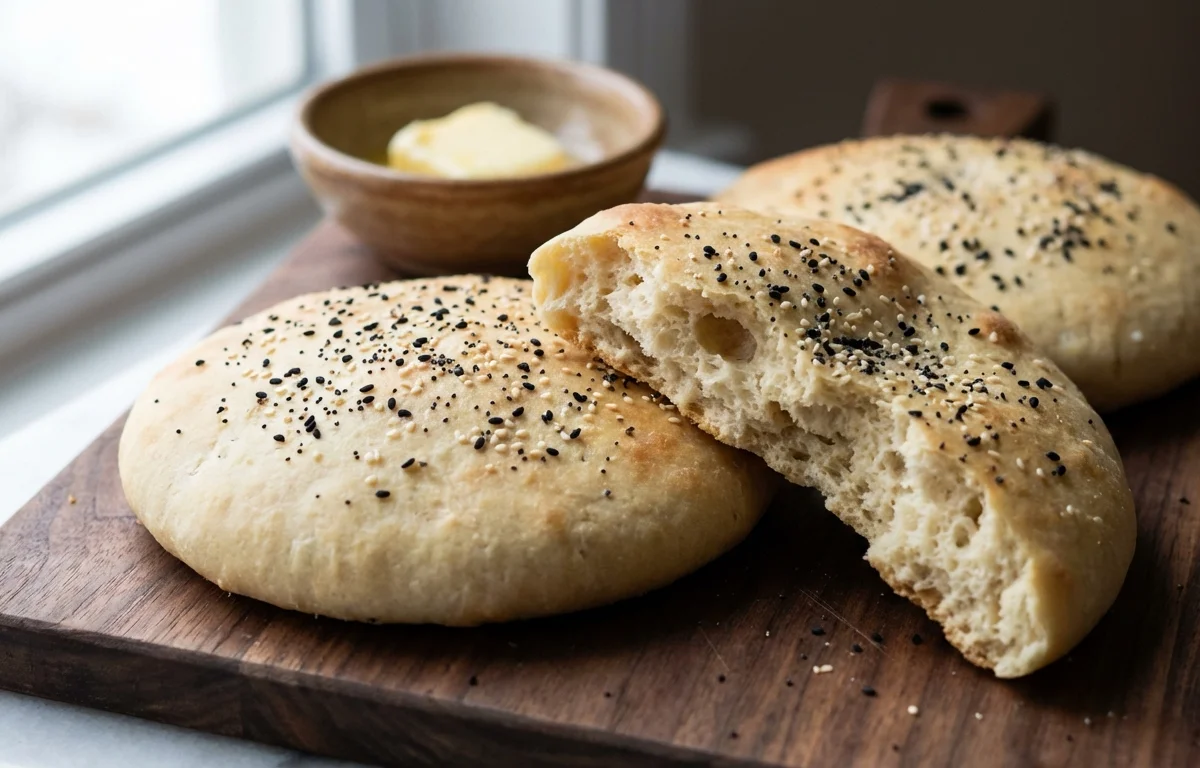
Lavasa Bread
Lavasa is a thin, soft flatbread with roots in Armenian baking and a long history in Indian Irani and Parsi cafes. This simple version cooks on a hot tawa until lightly blistered, making it perfect with kebabs, eggs, or chai.
For 8 servings
- mix
Mix the dry ingredients.
Add all-purpose flour, salt, and sugar to a wide bowl and mix well so the seasoning spreads evenly through the flour.
- knead · ~8 min
Knead the dough.
1.Add 1 tbsp oil to the flour mixture.2.Pour in the lukewarm water little by little and bring everything together.3.Knead for 6 to 8 minutes until you have a smooth, soft dough.TIPKeep the dough soft but not sticky. A stiff dough makes the lavasa dry and hard to roll thin. - rest · ~15 min
Rest the dough.
Cover the dough and let it rest for 15 minutes so the gluten relaxes and the breads roll out easily.
- prep · ~7 min
Divide and roll the breads.
1.Divide the dough into 8 equal balls.2.Dust the work surface lightly with flour if needed.3.Roll each ball into a very thin oval or round bread.TIPRoll each piece as thinly as possible without tearing for the classic lavasa texture. - fry · ~15 min
Cook the lavasa on a hot tawa.
1.Heat a tawa or flat pan over medium-high heat.2.Place one rolled bread on the hot tawa and cook until small bubbles appear.3.Flip and cook the second side with a few light brown spots.4.Brush or drizzle a little oil very lightly while cooking if needed.5.Repeat with the remaining breads.TIPDo not overcook. Lavasa should stay soft with light blisters, not turn crisp like a cracker. - serve
Stack and serve the lavasa warm.
Keep the cooked breads stacked in a clean cloth so they stay soft, then serve warm with kebabs, eggs, or tea.
What to keep in mind.
7 tips from the recipe — small details that make a real difference to the final dish.
- 1Use lukewarm water gradually; the dough should feel supple, not tight, so the breads roll paper-thin.
- 2After resting, knead the dough briefly again before dividing to smooth the surface and prevent ragged edges.
- 3Roll one lavasa at a time and keep the remaining dough balls covered so they do not dry out.
- 4Heat the tawa fully before the first bread; if the pan is only warm, the lavasa turns dry instead of blistered.
- 5Cook just until bubbles form and a few pale brown spots appear; longer cooking makes it cracker-crisp.
- 6Stack the cooked lavasa in a clean cloth immediately to trap steam and keep the flatbreads soft and foldable.
- 7If making ahead, cool completely, then wrap well and reheat for a few seconds on a hot tawa before serving.
Adapt it for your goals.
Whole-wheat
Replace part of the all-purpose flour with whole wheat flour for a nuttier taste and a more rustic lavasa.
low oilLow-oil
Skip the oil on the tawa and cook on a well-heated pan for a lighter flatbread that still stays soft if not overcooked.
herbedHerbed
Add a little dried kasuri methi or crushed black pepper to the dough for extra aroma that pairs well with eggs and kebabs.
veganVegan
This recipe is already vegan as written, making it an easy bread option for plant-based meals and wraps.
Why this is on our healthy list.
Simple, Low-Ingredient Bread
Made with basic pantry staples and very little oil, this flatbread is a straightforward accompaniment to protein-rich fillings.
Moderate in Added Fat
Only a small amount of oil goes into the dough and cooking, helping keep the bread soft without making it greasy.
Comforting Energy Source
The flour provides carbohydrates that make lavasa useful as a satisfying base for eggs, kebabs, and other hearty sides.
Frequently asked questions
The dough was likely too stiff or the bread was cooked too long. Keep the dough soft, roll thin, and cook only until lightly blistered.