Sambhar
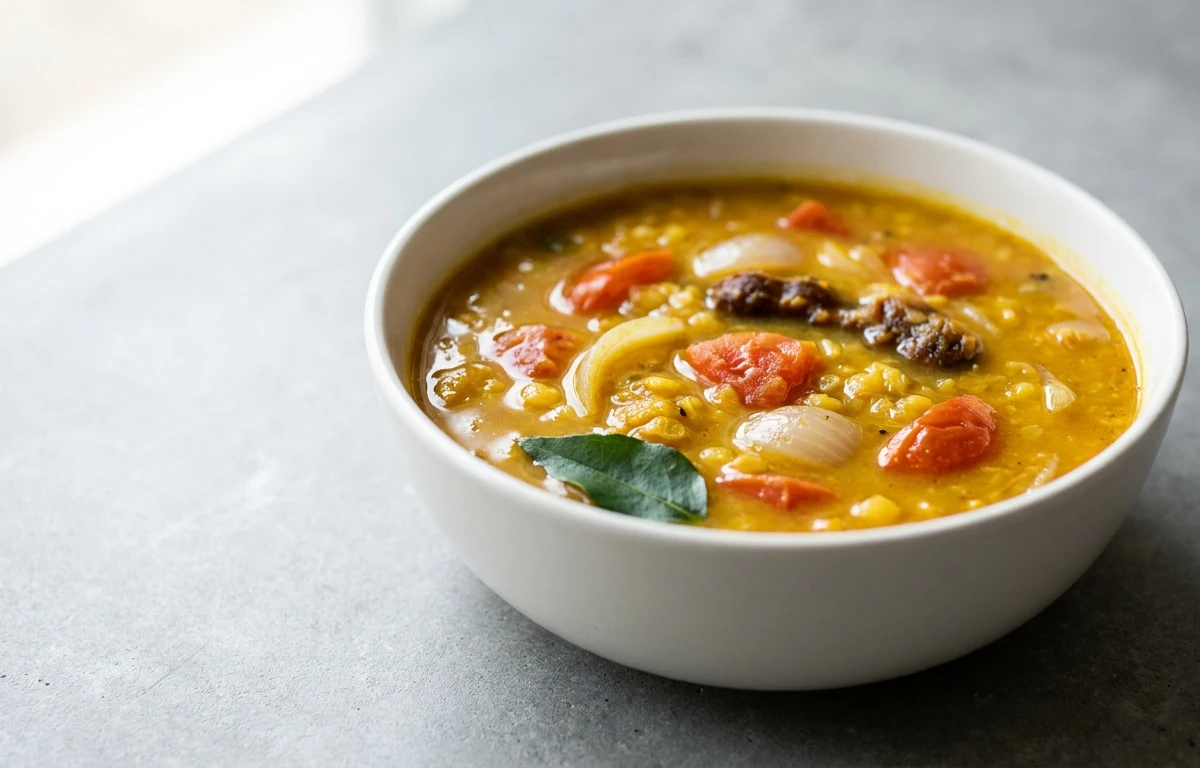
A steaming bowl of South Indian comfort — tangy, spiced lentil stew loaded with vegetables. Toor dal simmers into a creamy base, while tamarind and freshly ground sambar powder bring layers of warmth and sourness. Every spoonful carries the unmistakable aroma of curry leaves crackling in hot ghee.
For 4 servings
- prep · ~20 min
Pressure cook the toor dal.
1.Wash toor dal thoroughly and add to a pressure cooker.2.Pour in 3 cups of water, add turmeric powder, and 1 teaspoon of oil.3.Close the lid and cook on high heat for 2 whistles, then low heat for 3-4 minutes.4.Let the pressure release naturally. Open and mash the dal until smooth.TIPAdding a drop of oil while pressure cooking prevents the dal from frothing. - prep · ~10 min
Prepare the tamarind extract.
1.Soak tamarind in half cup of warm water for 10 minutes.2.Squeeze the tamarind well with your fingers to extract all the pulp.3.Strain and set the tamarind water aside. - simmer · ~10 min
Boil the vegetables.
1.In a heavy-bottomed pot, add drumstick pieces, carrot slices, pumpkin cubes, brinjal quarters, chopped onion, tomato, and slit green chilies.2.Add 1 cup of water and bring to a boil.3.Cook until the vegetables are tender but still hold their shape.TIPHarder vegetables like drumsticks and carrots go in first; add softer ones a couple of minutes later. - mix · ~12 min
Combine the dal, tamarind, and sambar powder.
1.Pour the mashed dal into the pot with the boiled vegetables.2.Add the tamarind extract, sambar powder, and salt.3.Stir well and add water to reach a flowing, soup-like consistency.4.Simmer on medium heat for 10-12 minutes until frothy on top.TIPLet the sambar boil well — this integrates the raw smell of the spice powder into the stew. - temper · ~2 min
Make the tempering (tadka).
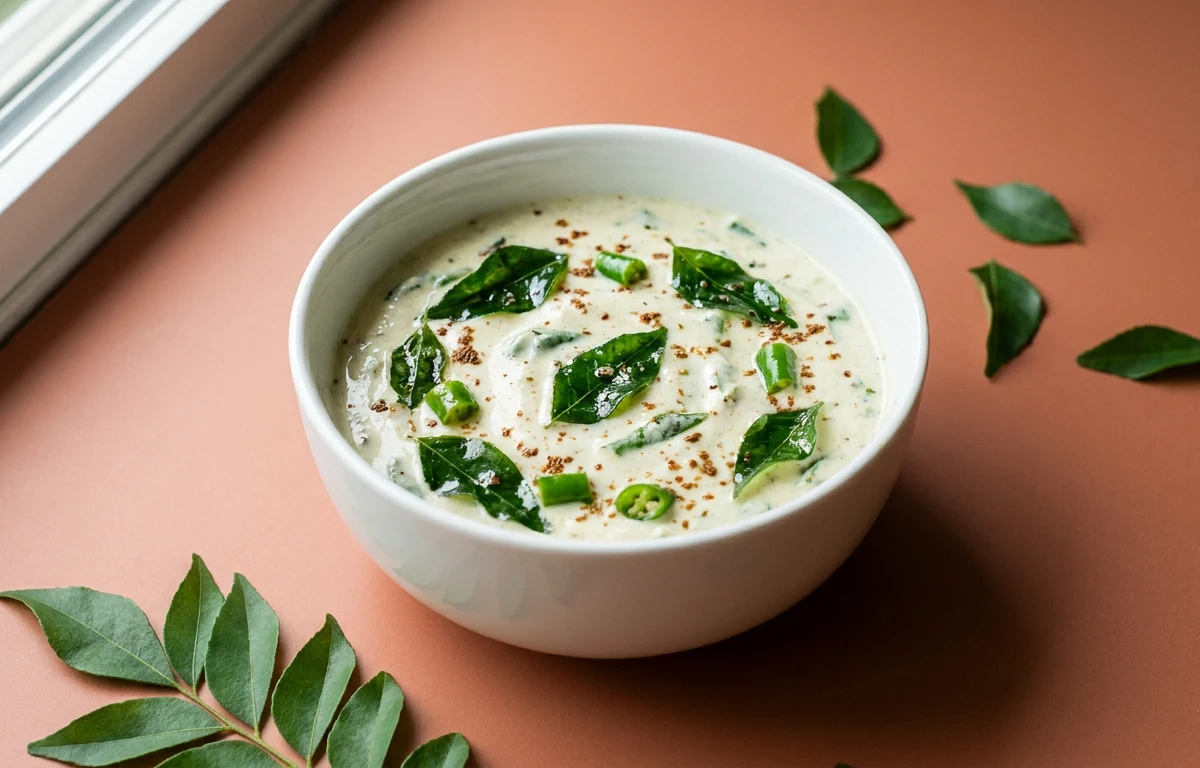
1.Heat ghee in a small tempering pan on medium heat.2.Add mustard seeds and let them splutter (30 seconds).3.Add cumin seeds, dried red chili, and a pinch of asafoetida. Sizzle for 5 seconds.4.Add fresh curry leaves and stand back — they will crackle and pop.TIPUse ghee instead of oil for the tadka — it elevates the final aroma instantly. - simmer · ~2 min
Pour the tempering into the sambar.
1.Immediately pour the hot tempering over the simmering sambar.2.Stir to combine everything and let it simmer for a final 2 minutes. - garnish · ~5 min
Garnish with fresh coriander leaves.
1.Turn off the heat.2.Sprinkle freshly chopped coriander leaves.3.Cover and let it rest for 5 minutes for flavors to meld.TIPA pinch of sambar powder right at the end adds a final pop of color and aroma.
What to keep in mind.
7 tips from the recipe — small details that make a real difference to the final dish.
- 1Always mash the dal well after pressure cooking for a creamy, cohesive sambar texture.
- 2Use freshly ground sambar powder for the deepest aroma; store-bought works but add it gradually.
- 3Add tamarind extract only after the dal is fully cooked — acidity can prevent the dal from softening.
- 4Let the sambar simmer uncovered until frothy on top; that froth signals the flavors have fully married.
- 5For the tadka, let mustard seeds finish popping before adding curry leaves to avoid oil splatters.
- 6Rest the finished sambar for 5 minutes off heat so the tempering infuses every spoonful.
- 7Sambar thickens as it sits; thin it with a splash of hot water when reheating for perfect consistency.
Adapt it for your goals.
High-protein
Replace half the toor dal with masoor dal (red lentils) and add a handful of paneer cubes or tofu chunks for extra protein without altering the classic sambar taste.
low oilLow-oil
Skip the oil in the dal and reduce ghee in the tadka to 1 teaspoon of coconut oil; the sambar stays light but still aromatic, ideal for daily meal prep.
jainJain
Omit onion, garlic, and asafoetida (if it contains wheat) and use only asafoetida labelled 'gluten-free and onion-garlic free'; the sambar remains flavorful with extra pumpkin and carrots.
veganVegan
Replace ghee with coconut oil or neutral oil in the tadka; use a vegan-friendly asafoetida to keep the dish fully plant-based without losing the signature tempering aroma.
vegetable swapVegetable-swap
Substitute drumstick with snake gourd or raw banana, and add a few pearl onions for extra sweetness; this variation shines when drumsticks are out of season.
Why this is on our healthy list.
Rich in Plant Protein
Toor dal provides a hearty dose of plant-based protein, making sambar a satisfying and muscle-friendly meal when paired with rice or roti.
High in Dietary Fiber
The combination of lentils, drumsticks, pumpkin, and brinjal delivers a fiber boost that supports digestion and helps maintain steady energy levels.
Packed with Antioxidants
Turmeric, curry leaves, tomatoes, and pumpkin all contribute antioxidants like curcumin and lycopene, which help combat oxidative stress.
Good Source of Vitamin A
Carrots, pumpkin, and curry leaves are naturally rich in beta-carotene, which supports eye health and immune function.
Low in Saturated Fat
With minimal ghee and a base of oil-free cooked dal, sambar is a heart-friendly dish that keeps saturated fat in check.
Frequently asked questions
Sambar consistency depends on how much water you add after mixing the dal; add hot water gradually and aim for a flowing, soup-like texture — it thickens further upon standing.