
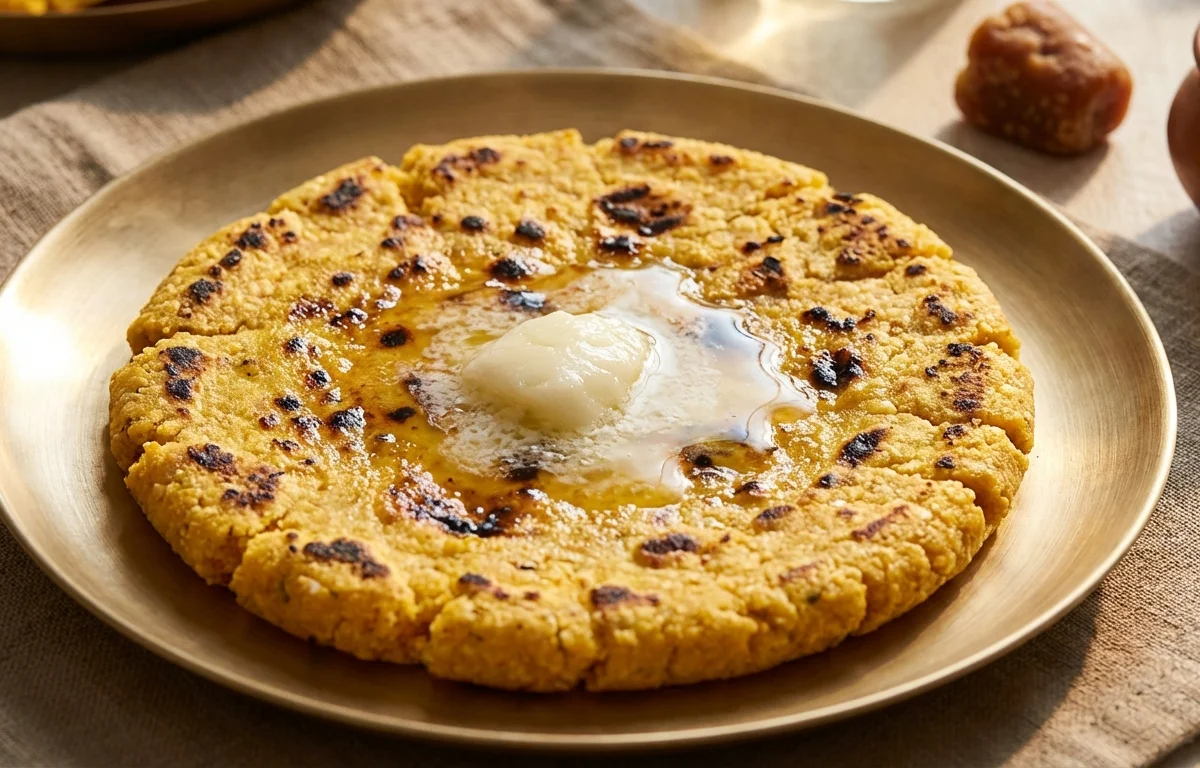
Makai no Rotlo
Rustic Gujarati flatbreads made with maize flour, warm water, and a little salt. These hearty rotlas are hand-patted and cooked until speckled, tender inside, and lightly crisp at the edges, perfect with shaak or yogurt.
For 4 servings
- prep
Set up the flour and warm water.
Place the maize flour and salt in a wide bowl. Keep the warm water nearby so the dough can be mixed while still warm, which helps the flour hold together.
- knead · ~7 min
Make a soft dough.
1.Add warm water little by little to the maize flour.2.Mix with your fingers until the flour starts coming together.3.Press and gather gently into a soft dough without cracks.4.Divide the dough into 4 equal balls and keep them covered.TIPMaize flour has no gluten, so knead by pressing and gathering rather than stretching like wheat dough. - assemble · ~4 min
Pat one rotlo.
1.Take one dough ball and place it on a clean flat surface or between sheets of parchment.2.Pat it gently with your fingers into a thick round disc.3.Smooth the edges as you work so the rotlo does not crack badly.4.Keep the thickness even for steady cooking.TIPIf the dough feels dry, moisten your palm with a few drops of water before patting. - fry · ~6 min
Cook the first rotlo on the hot pan.
1.Heat a tawa or skillet over medium heat.2.Lift the rotlo carefully and place it on the hot pan.3.Cook until the underside shows light brown spots and the top looks slightly dry.4.Flip and cook the second side until speckled and cooked through.TIPUse medium heat so the rotlo cooks inside before the outside hardens. - fry · ~1 min
Finish with a little ghee.
Brush a little ghee on both sides and cook briefly until the rotlo is aromatic and lightly crisp at the edges. Remove to a plate and keep covered in a cloth.
- assemble · ~15 min
Shape and cook the remaining rotlas.
Repeat the same patting and cooking method with the remaining dough balls, using the rest of the ghee as needed. Keep the finished rotlas covered so they stay soft.
- serve
Serve the makai no rotlo hot.
What to keep in mind.
7 tips from the recipe — small details that make a real difference to the final dish.
- 1Use water warm enough to handle comfortably; hot dough binds makai flour better and reduces cracking.
- 2Pat each rotlo while the dough ball is still warm, since cooled maize dough dries out and splits more easily.
- 3If edges crack as you shape, wet your fingertips lightly and smooth them before lifting to the tawa.
- 4Keep the rotlo slightly thicker than wheat roti so it stays tender inside instead of turning brittle.
- 5Wait for the top surface to look a little dry before flipping; that is the cue the first side has set.
- 6After cooking, stack the rotlas in a cloth-lined container to trap steam and keep them soft.
- 7Reheat leftover rotlo on a tawa with a few drops of ghee, not in a microwave, for better texture.
Adapt it for your goals.
Vegan
Replace ghee with peanut oil or sesame oil for brushing and cooking if you want a fully dairy-free rotlo.
jainJain
This recipe is already Jain-friendly as written; serve it with a simple yogurt or Jain shaak for a suitable meal.
low oilLow-oil
Cook the rotlo dry first and use only a very light final brushing of ghee if you want the rustic taste with less fat.
methiMethi
Mix in a little chopped fresh fenugreek leaves for an earthy, slightly bitter note that pairs well with winter Gujarati meals.
Why this is on our healthy list.
Naturally Gluten-Free
Made from maize flour rather than wheat, this rotlo is a good flatbread option for people avoiding gluten-containing grains.
Simple, Minimal Ingredients
With just maize flour, water, salt, and a little ghee, the dish is straightforward and free from heavily processed add-ins.
Satisfying Grain-Based Meal
Maize flour makes a hearty, filling flatbread that pairs well with yogurt or vegetable shaak for a balanced traditional plate.
Frequently asked questions
The dough is usually too dry or has cooled too much. Add a few drops of warm water, gather it gently, and pat with lightly wet fingers.



.webp)
.webp)
.webp)