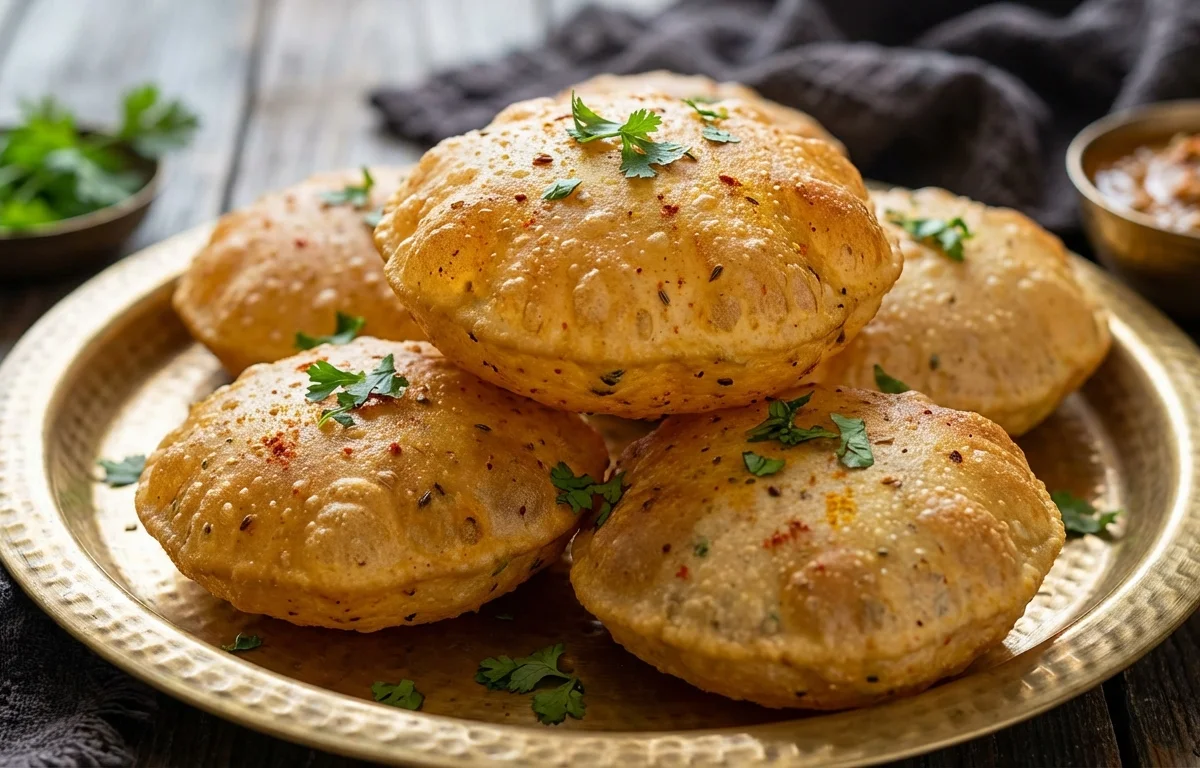
Masala Poori
Crisp, puffed pooris made with whole wheat flour and everyday spices for extra flavor in every bite. This simple Indian bread is great with potato curry, pickle, or a cup of chai on the side.
For 12 servings
- mix · ~3 min
Mix the dry ingredients.
1.Add whole wheat flour and semolina to a wide bowl.2.Add carom seeds, cumin seeds, red chili powder, turmeric powder, and salt.3.Mix well so the spices are evenly distributed. - knead · ~7 min
Knead a stiff dough.
Add 1 tsp oil and rub it into the flour. Pour in water little by little and knead into a firm, smooth dough. It should be tighter than chapati dough so the pooris puff and stay crisp.
TIPA soft dough makes oily, less puffed pooris. - rest · ~15 min
Cover and rest the dough.
Cover the dough with a plate or damp cloth and let it rest for 15 minutes.
- prep · ~10 min
Divide and roll the pooris.
1.Knead the rested dough briefly until smooth.2.Divide it into 12 equal small balls.3.Roll each ball into a small disc about 3 to 4 inches wide, keeping the thickness even.4.Keep the rolled pooris covered with a cloth so they do not dry out.TIPDo not dust with too much dry flour while rolling, as loose flour can burn in the oil. - fry · ~12 min
Fry the pooris.
1.Heat oil for frying in a deep kadai over medium-high heat.2.Slide in one poori and gently press it with a slotted spoon until it puffs.3.Flip and fry the other side until lightly golden with small brown spots.4.Remove and drain well, then repeat with the remaining pooris.TIPThe oil should be hot enough that the poori rises quickly; if it sits flat, wait a little longer before frying the next one. - serve
Serve the masala poori hot.
What to keep in mind.
7 tips from the recipe — small details that make a real difference to the final dish.
- 1Keep the dough noticeably stiffer than chapati dough; that firmness is what helps these pooris puff instead of soaking up oil.
- 2Rub the 1 tsp oil well into the flour before adding water so the pooris fry up crisper and less bready.
- 3Roll each disc evenly with no thin edges, or the poori may blister on one side and fail to puff fully.
- 4Avoid excess dry flour while rolling; any loose flour in the oil will burn and darken the next batch.
- 5Test the oil with a tiny dough bit first; it should rise quickly without turning dark immediately.
- 6After sliding in a poori, give it a gentle press with the slotted spoon only after it floats to encourage full puffing.
- 7Serve soon after frying for the best texture, though the semolina helps them stay crisp a bit longer than plain pooris.
Adapt it for your goals.
Milder-spice
Skip the red chili powder and slightly increase cumin for a gentler version that is more kid-friendly.
extra crispExtra-crisp
Increase semolina a little and roll the discs slightly thinner for pooris with a firmer, crisper bite.
herb masalaHerb-masala
Add finely chopped kasuri methi or coriander leaves to the dough for a more aromatic poori that pairs well with chai.
travel friendlyTravel-friendly
Fry them a shade deeper golden and cool completely before packing; they stay crisp longer for tiffin or travel.
Why this is on our healthy list.
Whole Wheat Goodness
Because the dough uses whole wheat flour, these pooris provide more natural grain fibre and a heartier texture than refined-flour versions.
Digestive Spice Support
Carom seeds and cumin are traditional Indian spices often used to add aroma while making fried breads feel easier to digest.
More Satisfying Texture
Semolina and whole wheat make the pooris chewier and more filling, so they feel substantial even when served in small portions.
Frequently asked questions
Usually the dough is too soft, the discs are rolled unevenly, or the oil is not hot enough. Keep the dough firm, roll evenly, and fry only when the poori rises quickly.