Minapa Dosa
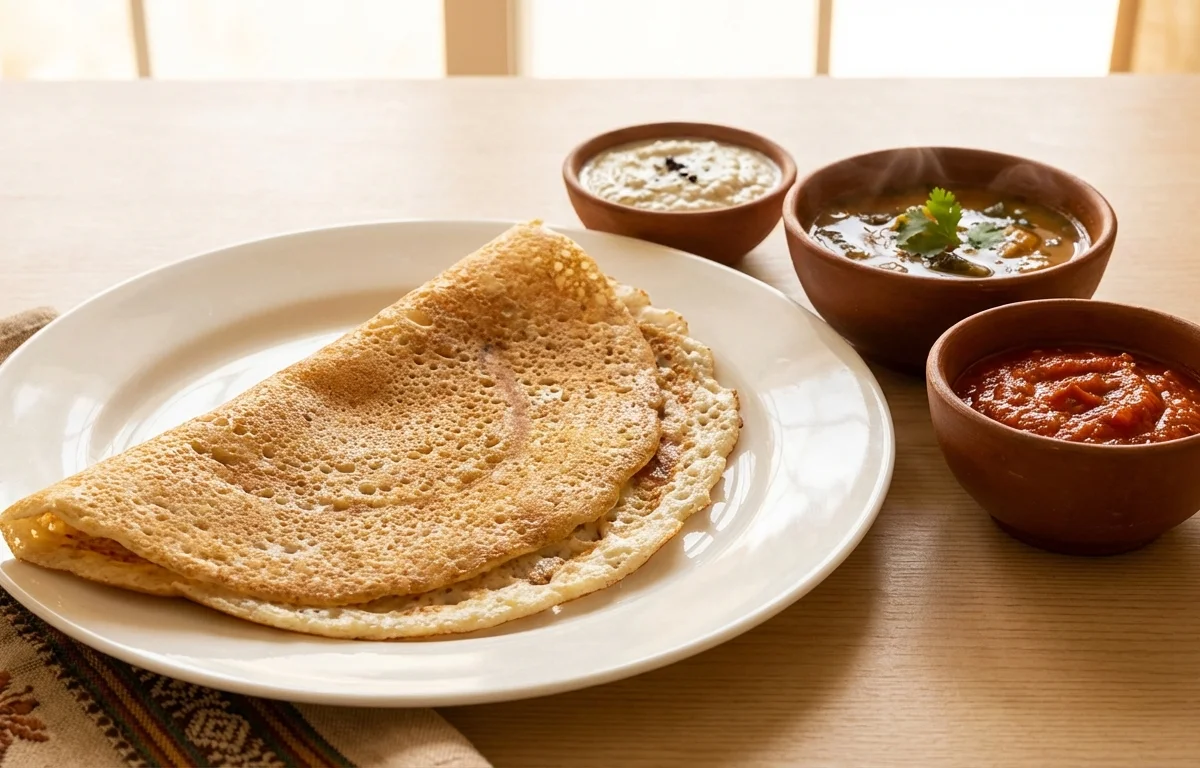
Crisp, lace-edged Andhra-style dosa made with a urad dal-heavy batter. It turns out light inside, golden outside, and tastes especially good with ginger chutney or coconut chutney.
For 8 servings
- prep · ~360 min
Soak the dal, rice, and fenugreek.
1.Rinse the urad dal well until the water runs mostly clear.2.Soak the urad dal in plenty of water for 6 hours.3.Rinse the rice and soak it with fenugreek seeds in a separate bowl for 6 hours. - mix · ~20 min
Grind the batter.
1.Drain the soaked urad dal and rice mixture.2.Grind the urad dal with water for grinding until very smooth and fluffy.3.Grind the rice and fenugreek with water for grinding to a smooth batter with a slight grainy feel.4.Mix both batters together in a large bowl until light and well combined.TIPKeep the batter thick but pourable. A very thin batter will not hold well on the pan. - rest · ~480 min
Ferment the batter.
Add salt and mix well. Cover the bowl and let the batter ferment in a warm place for about 8 hours, until slightly risen and airy.
TIPLeave enough room in the bowl because the batter expands as it ferments. - mix
Stir the batter before cooking.
Gently stir the fermented batter once. If needed, add a spoon or two of water to get a pourable consistency for spreading.
- fry · ~3 min
Cook the dosas.
1.Heat a dosa tawa or flat pan over medium heat.2.Pour a ladle of batter in the center and spread it outward in a thin circle.3.Drizzle a little oil around the edges and over the top.4.Cook until the bottom turns golden and the edges lift easily, about 2 to 3 minutes.5.Flip for 20 to 30 seconds if you like, then remove.TIPIf the pan is too hot, the batter will not spread smoothly. Lower the heat for a moment, then continue. - serve
Serve the minapa dosa hot.
What to keep in mind.
7 tips from the recipe — small details that make a real difference to the final dish.
- 1Grind the urad dal until very fluffy; that trapped air is what gives minapa dosa its light interior.
- 2Keep the rice batter slightly grainy, not silky smooth, so the dosas crisp up better on the tawa.
- 3Use a large bowl for fermentation because this urad-heavy batter rises more than regular dosa batter.
- 4If the batter spreads in thick patches, lightly cool the tawa for a few seconds before the next dosa.
- 5For lacey edges, spread the batter thinly and drizzle oil right around the rim, not just in the center.
- 6Stir the fermented batter gently only once; overmixing can knock out the air and make the dosa dense.
- 7Leftover batter keeps well refrigerated for 2 to 3 days; bring it closer to room temperature before making dosas.
Adapt it for your goals.
Low-oil
Cook on a well-seasoned cast-iron or nonstick tawa and use only a light oil drizzle for a lighter everyday version.
milletMillet
Replace the rice with little millet or foxtail millet for a more rustic flavor and a whole-grain style dosa.
set dosa styleSet-dosa-style
Keep the batter slightly thicker and spread less thin for a softer, spongier dosa instead of a crisp one.
spicedSpiced
Add crushed cumin, chopped green chili, and ginger to the fermented batter for a more savory breakfast dosa.
Why this is on our healthy list.
Rich in Lentil Protein
Because urad dal is the main ingredient, this dosa offers plant protein that helps make the meal more satisfying.
Fermented and Easy to Digest
The long fermentation develops flavor and can make the dal-rice batter gentler and lighter for many people.
Naturally Vegetarian
Made from dal, rice, fenugreek, and minimal oil, this is a simple vegetarian dish with traditional pantry ingredients.
Frequently asked questions
The batter may be too thick, under-fermented, or the tawa may not be hot enough. Also keep the rice portion slightly grainy and spread the dosa thin.



.webp)