
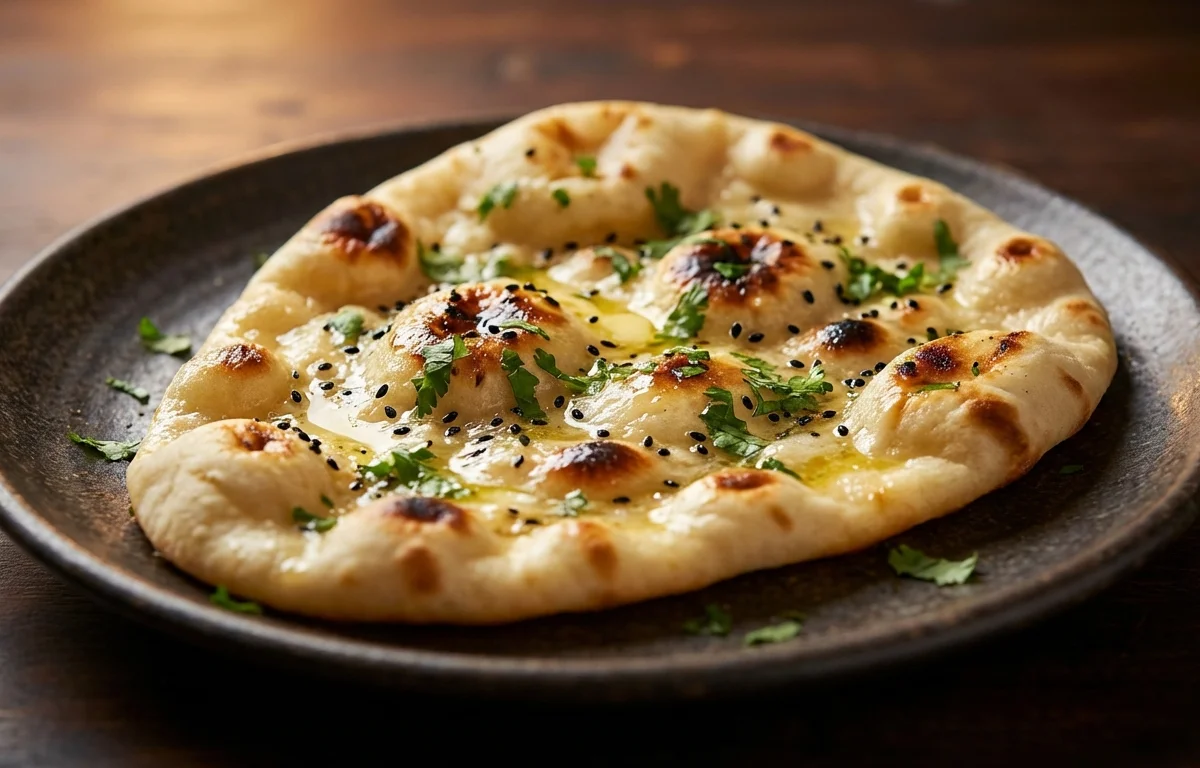
Naan
Soft, pillowy leavened flatbread with signature golden-brown blisters and a slight chew. Made with yogurt and yeast for that classic tandoor-style texture, finished with a brush of melted butter. This North Indian staple is perfect for scooping up curries and dal.
For 4 servings
- prep · ~10 min
Activate the yeast.
1.In a small bowl, combine ½ cup lukewarm water with 1 tsp sugar.2.Sprinkle 1 tsp dry yeast over the water and let it sit undisturbed for 10 minutes until frothy. - mix · ~3 min
Mix the dough.
1.In a large mixing bowl, combine all-purpose flour, salt, baking powder, and baking soda.2.Make a well in the center and add the frothy yeast mixture, yogurt, and oil.3.Mix with your hand or a spoon until a shaggy dough forms. - knead · ~10 min
Knead into a smooth dough.
1.Transfer the dough to a clean, lightly floured surface.2.Knead for 8-10 minutes until the dough is soft, smooth, and springs back when poked.3.Add a few drops of water if the dough feels too tight.TIPWell-kneaded dough is the secret to soft naan. The dough should feel like your earlobe — soft but not sticky. - rest · ~60 min
Let the dough proof.
1.Place the dough ball in a lightly oiled bowl, turning to coat.2.Cover with a damp kitchen towel and rest in a warm spot for 1 hour or until doubled in size.3.Punch down the risen dough and knead briefly for 1 minute.TIPIf your kitchen is cold, place the bowl inside an oven with just the light on — that gentle heat works perfectly. - prep · ~15 min
Divide and shape the dough.
1.Divide the dough into 4 equal portions and roll them into smooth balls.2.Cover with the damp towel and let rest for 10 minutes.3.On a lightly floured surface, roll each ball into an oval or teardrop shape about ¼ inch thick.4.Sprinkle nigella seeds and minced garlic on one side and press gently so they stick. - grill · ~10 min
Cook the naan on a hot skillet.
1.Heat a cast iron skillet over medium-high heat until it is very hot.2.Place one naan, seeded-side-up, in the dry skillet and cook for 60-90 seconds.3.When bubbles appear on top and the underside has golden-brown spots, flip the skillet upside down.4.Using tongs, hold the naan directly over the open flame for 15-20 seconds to char the top.5.Flip back and repeat charring on the other side for 10 seconds.TIPIf you don't have a gas flame, press the naan with a spatula while in the pan to get some char. For electric stoves, use a kitchen blowtorch or broil in the oven for 1-2 minutes. - garnish
Brush with butter and serve hot.
Transfer the hot naan to a plate and immediately brush generously with melted butter on both sides. Stack them wrapped in a clean kitchen towel to keep soft until serving.
TIPServe immediately — naan is best hot off the skillet, soft and slightly charred.
What to keep in mind.
6 tips from the recipe — small details that make a real difference to the final dish.
- 1Proof the yeast until frothy — if it doesn't foam, start over with fresh yeast to ensure a light, airy naan.
- 2Knead the dough until it feels as soft as your earlobe; under-kneading leads to dense, tough naan.
- 3Let the dough rise in a warm, draft-free spot; doubling in size is crucial for pillowy texture.
- 4Roll the naan evenly to about ¼-inch thickness for consistent cooking and good blistering.
- 5Cook naan in a screaming-hot dry skillet — the high heat creates signature golden-brown spots.
- 6For extra char without a gas flame, use the broiler for 1–2 minutes, watching closely to avoid burning.
Adapt it for your goals.
Garlic Naan
Add the minced garlic directly to the dough during mixing or press it onto the rolled naan before cooking; brush with garlic-infused butter after cooking for a classic, pungent twist.
Whole Wheat NaanWhole Wheat Naan
Replace half the all-purpose flour with whole wheat flour. Add 1-2 tablespoons extra water as whole wheat absorbs more moisture; expect a denser, nuttier flatbread with extra fiber.
Stuffed Paneer NaanStuffed Paneer Naan
Mix crumbled paneer with chopped cilantro, green chilies, and salt. Place a spoonful in the center of each dough ball, seal edges, and roll out carefully. Cook as directed for a cheesy, satisfying filling.
Herb & Seed NaanHerb & Seed Naan
Swap nigella seeds for a mix of sesame seeds, poppy seeds, and dried fenugreek leaves (kasuri methi). Add finely chopped fresh cilantro or mint to the dough for extra fragrance.
Vegan NaanVegan Naan
Replace yogurt with an equal amount of unsweetened plant-based yogurt (e.g., coconut or soy) and use a neutral oil or vegan butter for brushing. The recipe otherwise works as written.
Why this is on our healthy list.
Probiotics from Yogurt
The yogurt in this naan provides live cultures that support gut health and digestion, even after baking some beneficial enzymes remain.
Source of Energy
All-purpose flour provides complex carbohydrates that supply steady energy, making naan an ideal accompaniment to hearty meals.
Nigella Seeds: Antioxidant Boost
Nigella seeds (kalonji) are rich in thymoquinone, a compound known for its anti-inflammatory and antioxidant properties, adding a subtle health benefit.
Calcium from Yogurt and Butter
Both yogurt and butter contribute calcium, essential for strong bones and teeth, in modest amounts per serving.
Frequently asked questions
Check your yeast freshness — if it didn't foam in warm water (105-110°F) after 10 minutes, it's dead. Also ensure your kitchen is warm enough (ideally 75-85°F) for proofing.


