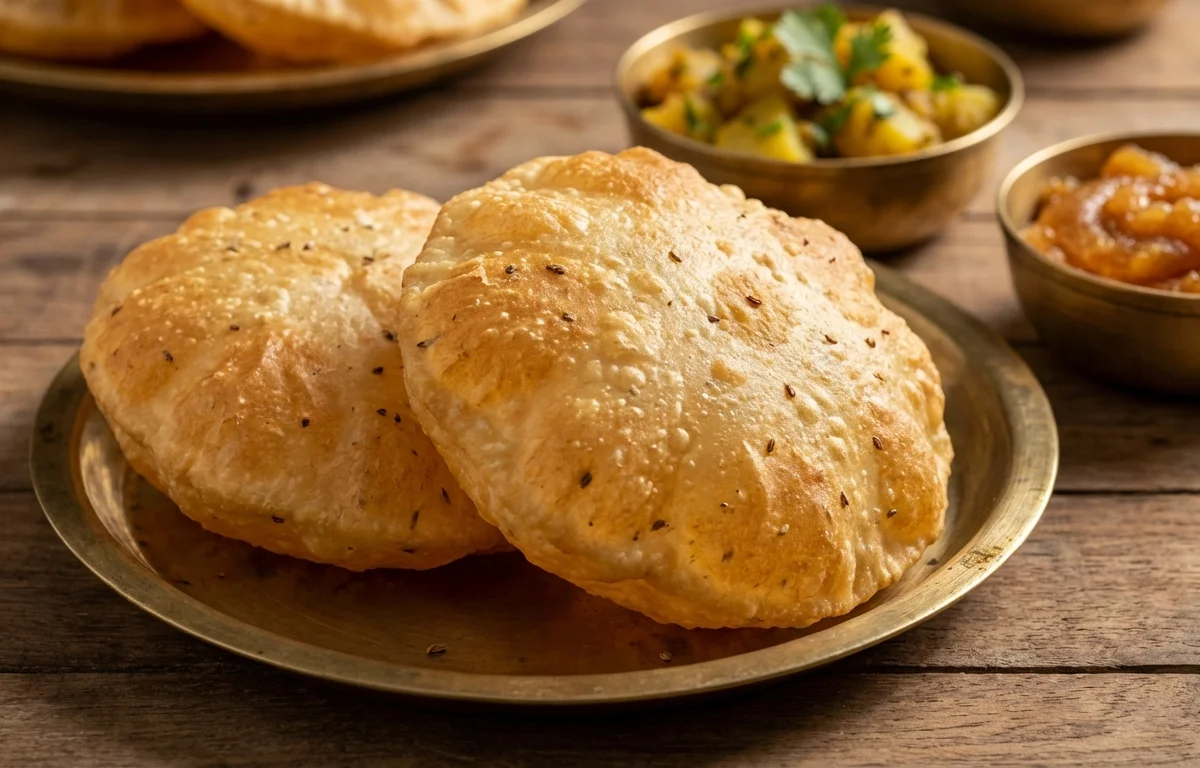
Nagori Puri
Nagori puri is a small, crisp-yet-soft North Indian fried bread made with semolina, flour, and yogurt. It puffs beautifully and tastes especially good with a mildly spiced potato sabzi or a simple pickle on the side.
For 8 servings
- mix
Mix the dry ingredients.
Add semolina, all-purpose flour, and salt to a wide bowl. Mix well so the flour and semolina are evenly combined.
- knead · ~6 min
Make a stiff dough.
1.Add ghee and rub it into the flour mixture until it feels sandy.2.Add yogurt and mix it through.3.Pour in water little by little and knead to a stiff, smooth dough.4.Knead for 5 to 6 minutes so the semolina starts softening.TIPKeep the dough firm. A soft dough absorbs more oil and will not hold the classic puff as well. - rest · ~20 min
Cover and rest the dough.
Cover the dough with a damp cloth and let it rest for 20 minutes. This helps the semolina hydrate and makes rolling easier.
- prep · ~5 min
Divide and shape the dough.
1.Knead the rested dough briefly until smooth again.2.Divide it into 8 equal portions.3.Roll each portion into a smooth ball.4.Flatten each ball slightly with your fingers. - prep · ~7 min
Roll the puris.
Roll each dough ball into a small disc about 3 to 4 inches wide. Keep them slightly thicker than regular puri so they puff nicely in hot oil.
TIPRoll evenly without thin edges. Thin spots stop the puri from puffing fully. - fry · ~10 min
Fry the nagori puris.
1.Heat oil in a deep kadai over medium heat until moderately hot.2.Slide in one rolled puri and press it gently with a slotted spoon so it puffs.3.Flip and fry the other side until light golden.4.Remove and drain well, then repeat with the remaining puris.TIPDo not overcrowd the kadai. Frying one or two at a time keeps the oil temperature steady. - serve
Serve the nagori puris hot.
What to keep in mind.
7 tips from the recipe — small details that make a real difference to the final dish.
- 1If the dough feels crumbly after adding yogurt, sprinkle in water a teaspoon at a time; semolina hydrates slowly.
- 2Resting is crucial here: the 20-minute pause lets the semolina soften so the puris roll without cracking.
- 3Roll each disc evenly with no thin rims, or the edges will crisp too fast and the center may not puff.
- 4Keep the puris slightly thicker than regular puri; that extra body gives Nagori puri its crisp-yet-soft bite.
- 5Fry at medium heat, not smoking hot oil, so the inside cooks as the outside turns light golden.
- 6Press the puri gently only after it rises toward the surface; pressing too early can trap it at the bottom.
- 7Serve immediately after frying for the best texture, or hold briefly in a cloth-lined basket to reduce sogginess.
Adapt it for your goals.
Whole-wheat
Replace part of the all-purpose flour with atta for a nuttier, more rustic puri that pairs well with potato sabzi.
ajwainAjwain
Add a pinch of ajwain to the dough for a more aromatic, digestion-friendly flavor often enjoyed with fried breads.
no yogurtNo-yogurt
Use a little extra water instead of yogurt for a plainer dough when dairy is unavailable; the texture will be slightly less tender.
mini partyMini-party
Divide into smaller portions and roll tiny discs for bite-size puris that are easy to serve with pickle or chole at brunch.
Why this is on our healthy list.
Energy-Providing Grains
Semolina and flour provide carbohydrates that make these puris a filling accompaniment for breakfast or festive meals.
Some Protein and Calcium
The yogurt contributes a little protein and calcium while also helping soften the semolina-based dough.
Satisfying Richness
A small amount of ghee in the dough adds richness and helps create a satisfying texture, so the puris feel indulgent and complete.
Frequently asked questions
The most common causes are uneven rolling, dough that is too soft, or oil that is not hot enough. Keep the discs even and slightly thick, and fry in medium-hot oil.



.webp)