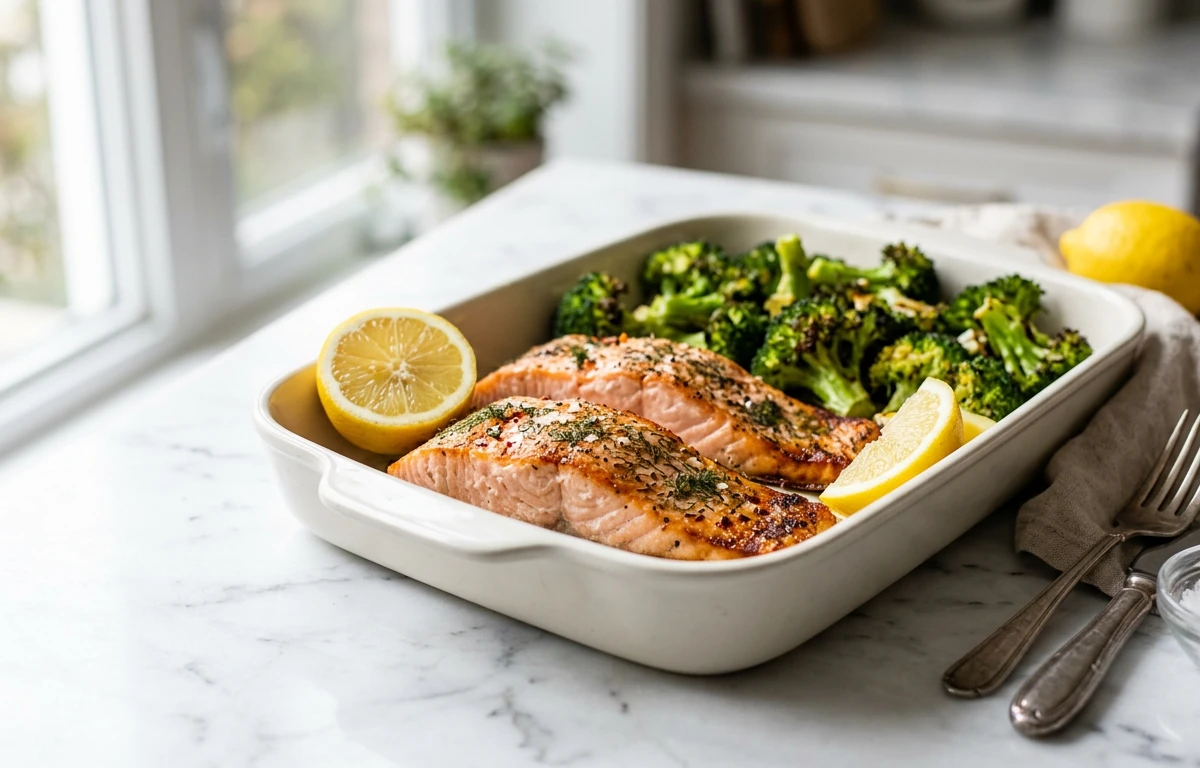
One-Pan Salmon and Roasted Broccoli
Flaky, tender salmon fillets alongside crisp-tipped, caramelized broccoli florets — all roasted on a single sheet pan. A bright lemon-garlic dressing ties everything together, making this a weeknight hero that's big on flavor and light on cleanup.
For 4 servings
- prep
Preheat the oven and prepare the sheet pan.
Preheat the oven to 400°F (200°C). Line a large sheet pan with parchment paper for easier cleanup, or leave it bare.
- mix
Make the lemon-garlic dressing.
In a small bowl, whisk together the olive oil, minced garlic, lemon juice, dijon mustard, salt, black pepper, and red chili powder.
- prep
Coat the broccoli.
Place the broccoli florets on the sheet pan. Drizzle with half of the dressing and toss with your hands until the florets are evenly coated. Spread them out across one half of the sheet pan.
TIPSpread them in a single layer so they roast instead of steam. - prep
Coat the salmon.
Pat the salmon fillets dry with a paper towel. Place them on the empty half of the sheet pan. Brush the remaining dressing over the top of each fillet.
- bake · ~18 min
Roast the salmon and broccoli.
Place the sheet pan in the preheated oven. Roast for 15 to 18 minutes, until the salmon is cooked through and flakes easily with a fork, and the broccoli is tender with crispy, caramelized edges.
TIPIf you prefer crispier broccoli, remove the salmon after 15 minutes and let the broccoli roast a few minutes longer. - serve
Serve with fresh lemon wedges.
Transfer the salmon and broccoli to plates. Serve immediately with lemon wedges on the side for squeezing over the top.
What to keep in mind.
7 tips from the recipe — small details that make a real difference to the final dish.
- 1Pat the salmon dry with paper towels before brushing on the dressing; this ensures the fillets sear and flake, not steam.
- 2Arrange the broccoli in a single layer with a bit of space between florets for maximum caramelization and crispy edges.
- 3If your fillets are thinner (less than 1 inch thick), check for doneness at the 13-minute mark to avoid overcooking.
- 4For even cooking, place the thicker end of the salmon fillets toward the back of the oven, where it's slightly hotter.
- 5Make the dressing up to a day ahead and refrigerate; whisk again just before using to re-emulsify.
- 6Leftover salmon and broccoli keep in an airtight container in the fridge for up to 2 days; reheat gently in a low oven or microwave.
- 7Line the sheet pan with parchment for effortless cleanup and to prevent the dressing from sticking and burning.
Adapt it for your goals.
Low-oil
Reduce olive oil to 1 tablespoon and use a spray oil for the broccoli; the moisture from the broccoli and the salmon's natural oils will keep the dish from drying out. Great for lighter calorie control.
high proteinHigh-protein
Swap the salmon for skinless chicken breast (cut into 150g portions) and roast for 20-22 minutes until internal temp reaches 165°F. Adds more lean protein per serving for muscle-building meals.
veganVegan
Replace salmon with thick slices of firm tofu or chickpeas tossed in the dressing; roast tofu for 20 minutes (flip halfway) and chickpeas for 25-30 minutes. A plant-based twist with the same bold lemon-garlic flavor.
jainJain
Omit the garlic and onion-family ingredients; use a pinch of asafoetida (hing) and extra lemon juice for a comparable savory depth. Suitable for Jain dietary restrictions that avoid root vegetables.
Why this is on our healthy list.
Rich in Omega-3s
Salmon is a top source of omega-3 fatty acids (EPA and DHA), which support heart and brain health.
High in Vitamin C
Broccoli and fresh lemon juice provide a substantial amount of vitamin C, an antioxidant that aids immune function and collagen production.
Good Source of Protein
Each salmon fillet delivers about 25-30g of high-quality protein, helping with muscle repair and satiety.
Low in Saturated Fat
This meal uses just 2 tablespoons of olive oil and relies on the natural fats in salmon, keeping saturated fat content moderate.
Frequently asked questions
The salmon is done when it flakes easily with a fork and the center is just opaque; an instant-read thermometer should read 125-130°F (52-54°C) for medium, or 135°F (57°C) for well-done.