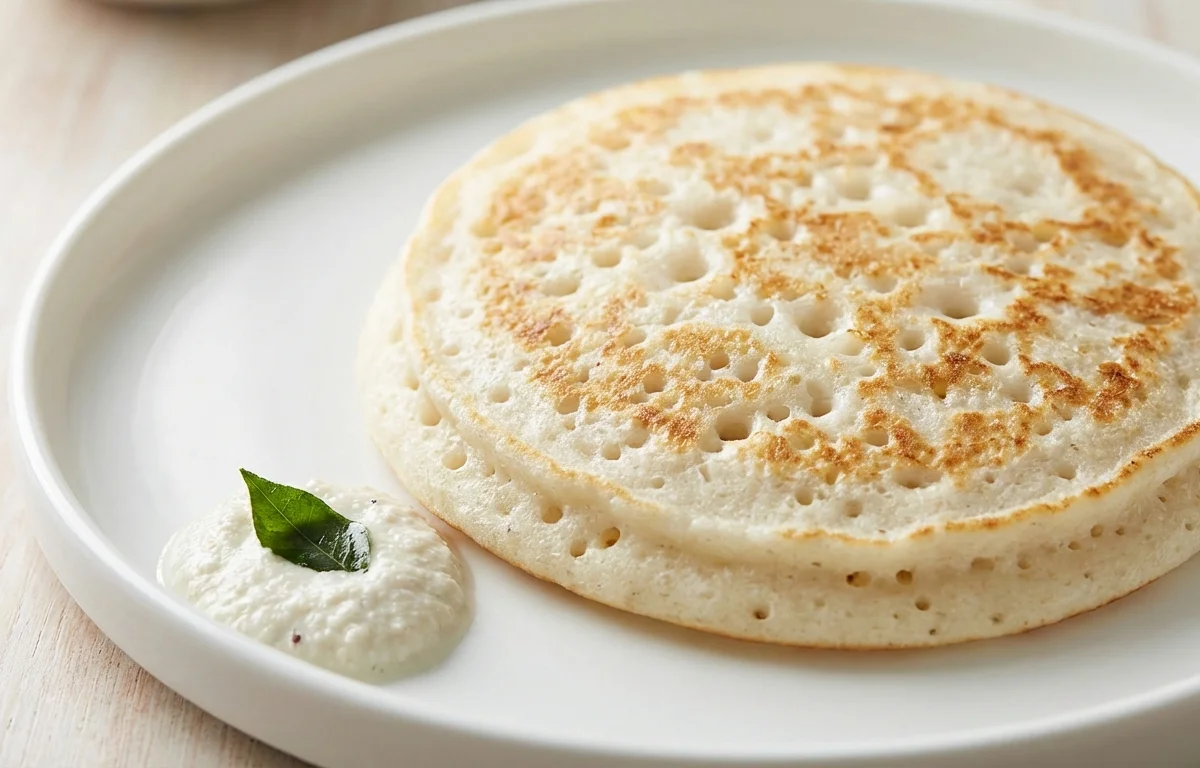
Panpole
Thin, soft rice crepes from the Konkan coast, made with a simple soaked rice batter and cooked like delicate dosas. They are light, mildly sweet from the rice, and lovely with coconut-based curries or chutney.
For 8 servings
- prep · ~240 min
Soak the rice.
Rinse the rice well, then soak it in plenty of water for 4 hours. Drain completely before grinding.
TIPA good soak helps the batter grind smooth and keeps the panpole soft. - mix · ~7 min
Grind the batter.
1.Add the soaked rice and grated coconut to a blender.2.Pour in a little water and grind to a very smooth batter.3.Transfer to a bowl and add salt.4.Stir in the remaining water little by little to make a thin, pourable batter.TIPThe batter should be thinner than regular dosa batter so it spreads easily when the pan is tilted. - rest · ~15 min
Rest the batter.
Let the batter sit for 15 minutes so the rice settles and hydrates evenly. Stir well again before cooking.
- fry · ~2 min
Cook the first panpole.
1.Heat a flat pan over medium heat and grease it very lightly with oil.2.Pour a small ladle of batter into the center.3.Lift and swirl the pan quickly so the batter forms a thin crepe.4.Cover and cook until the surface looks set and the edges release easily.TIPDo not spread with the back of a ladle like a dosa; swirling the pan gives panpole its delicate texture. - fry · ~15 min
Cook the remaining panpole.
Repeat with the remaining batter, stirring the batter before each crepe. Cook each one for about 1 minute; there is usually no need to flip. Stack them gently on a plate.
- serve
Serve warm.
Serve the panpole warm with coconut chutney, jaggery-coconut mixture, or a mild coconut curry.
What to keep in mind.
7 tips from the recipe — small details that make a real difference to the final dish.
- 1Grind the soaked rice and coconut until completely smooth; any graininess makes the crepes tear when swirled.
- 2Keep the batter thinner than dosa batter and stir before every panpole, because the rice settles quickly at the bottom.
- 3Use a well-heated but not smoking pan; if the pan is too hot, the batter will set before it spreads into a thin layer.
- 4Grease the pan very lightly only for the first few crepes, or excess oil will make swirling uneven.
- 5Covering while cooking traps steam, which keeps panpole soft and helps the top surface set without flipping.
- 6Remove the crepe as soon as the edges release; overcooking makes panpole dry instead of soft and pliable.
- 7Stack cooked panpole and keep them covered with a cloth or plate so they stay supple until serving.
Adapt it for your goals.
Jaggery-filled
Spread a thin layer of grated coconut mixed with jaggery inside each warm panpole for a simple sweet breakfast or festive snack.
savory breakfastSavory-breakfast
Serve with coconut chutney and a mild vegetable or coconut-based curry for a more filling, traditional meal.
thicker softThicker-soft
Make the batter slightly less thin if you prefer softer, slightly thicker panpole that are easier to fold and serve.
fermented styleFermented-style
Rest the batter a few hours longer in warm weather for a faint tang and lighter texture, if you enjoy a more dosa-like note.
Why this is on our healthy list.
Naturally Gluten-Free
Made from rice and coconut, this dish suits those avoiding wheat while still giving a soft, satisfying crepe.
Light and Easy to Pair
Because panpole is thin and simply cooked, it works well with chutneys or curries without feeling overly heavy.
Includes Coconut Goodness
Fresh coconut adds flavor, texture, and natural richness that can make a simple rice batter more nourishing and satisfying.
Frequently asked questions
The pan may not be seasoned or heated properly, or the batter may be too thick. Use a lightly greased hot pan and keep the batter thin and smooth.