
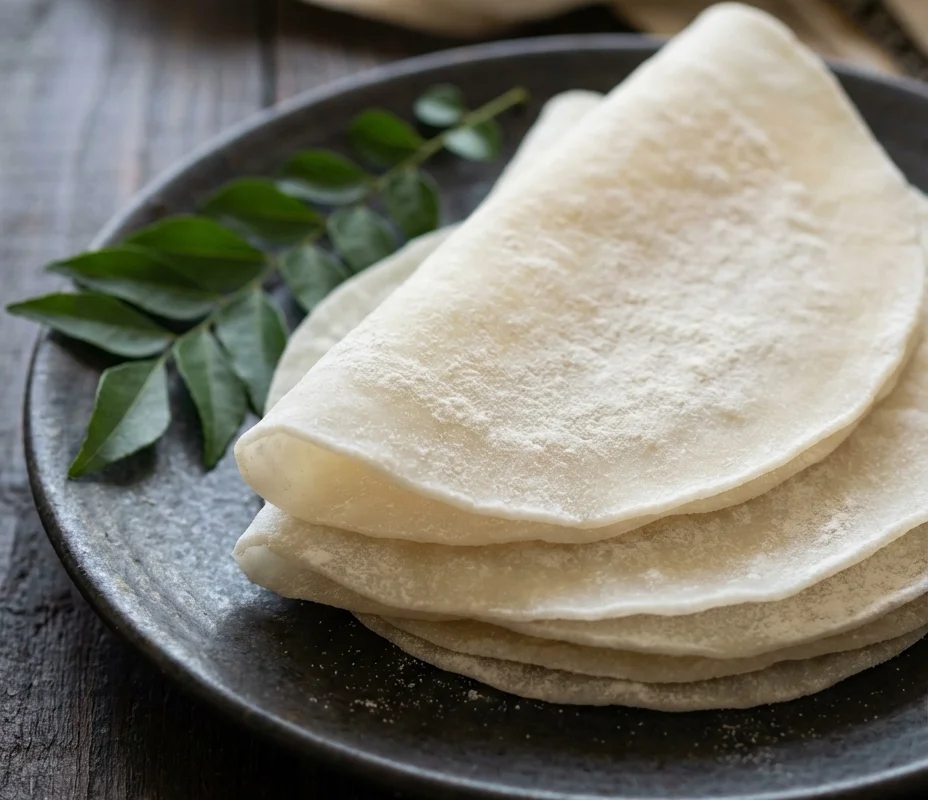
Pathiri
Thin, soft rice flatbreads from Kerala made with a simple hot-water dough. They cook quickly on a tawa and pair beautifully with chicken curry, vegetable stew, or a mild coconut-based gravy.
For 8 servings
- boil · ~5 min
Boil the water with salt.
Add water and salt to a saucepan and bring it to a steady boil over medium heat.
- mix · ~2 min
Mix in the rice flour.
Lower the heat and add the rice flour all at once. Stir quickly until it comes together into a rough mass with no dry patches.
TIPWork quickly once the flour goes in so the dough stays smooth and easy to shape. - rest · ~5 min
Rest the dough briefly.
Turn off the heat, cover, and let the dough sit until cool enough to handle but still warm.
- knead · ~5 min
Knead the warm dough.
Transfer the dough to a plate or board. Grease your hands lightly with oil and knead until the dough is smooth, soft, and crack-free.
TIPKnead while the dough is still warm; cold dough tends to crack when rolled. - prep · ~4 min
Divide and shape the dough.
1.Divide the dough into 8 equal portions.2.Roll each portion into a smooth ball.3.Keep the dough balls covered with a cloth so they do not dry out. - prep · ~8 min
Roll the pathiri.
1.Take one dough ball and flatten it slightly.2.Dust very lightly with rice flour if needed.3.Roll it into a thin round about 6 to 7 inches wide.4.Repeat with the remaining dough balls.TIPRoll gently and evenly; too much extra flour can make the bread dry. - saute · ~10 min
Cook the pathiri on a hot pan.
1.Heat a tawa or flat pan over medium heat.2.Place one rolled pathiri on the hot pan.3.Cook until small bubbles appear and pale spots form, about 30 to 40 seconds.4.Flip and cook the other side for 30 to 40 seconds more.5.Press lightly with a cloth or spatula until it puffs in places.TIPDo not overcook or the pathiri will turn hard instead of staying soft. - serve
Stack and serve the pathiri warm.
Transfer each cooked pathiri to a plate and keep them covered with a cloth to stay soft. Serve warm with curry or stew.
What to keep in mind.
7 tips from the recipe — small details that make a real difference to the final dish.
- 1Add the rice flour all at once to boiling water and stir immediately to avoid lumpy dough.
- 2Knead while the dough is still warm; once it cools fully, the pathiri is more likely to crack at the edges.
- 3Keep the dough balls covered with a cloth the whole time so the surface does not dry out before rolling.
- 4Use only a very light dusting of rice flour when rolling, or the cooked pathiri can turn dry and powdery.
- 5Cook on medium heat just until bubbles and pale spots appear; overcooking makes pathiri stiff instead of soft.
- 6Stack the cooked pathiri under a cloth right away so trapped steam keeps them supple.
- 7If a rolled pathiri tears, gather it back into a ball and reroll rather than patching, which cooks unevenly.
Adapt it for your goals.
Jaggery pathiri
Add a little melted jaggery and a pinch of cardamom to make a lightly sweet version for tea-time or breakfast.
coconut pathiriCoconut pathiri
Mix in a little finely grated coconut for a more traditional Kerala-style aroma and softer bite.
mini pathiriMini pathiri
Roll them smaller for easier handling and serving alongside multiple curries in a festive meal.
oil freeOil-free
Skip the oil and use a well-seasoned tawa plus slightly damp hands for shaping if you want a very simple everyday version.
Why this is on our healthy list.
Naturally Gluten-Free
Made with rice flour rather than wheat, pathiri is a useful flatbread option for those avoiding gluten-containing grains.
Light, Simple Ingredient List
This dish uses only rice flour, water, salt, and very little oil, making it a minimally rich accompaniment to curry.
Easy to Pair with Balanced Meals
Because pathiri is mild and plain, it works well with protein-rich curries and vegetable stews to build a fuller meal.
Frequently asked questions
The dough is usually too cool or a bit dry. Knead it while still warm and keep the portions covered so they stay soft.



.webp)
.webp)