
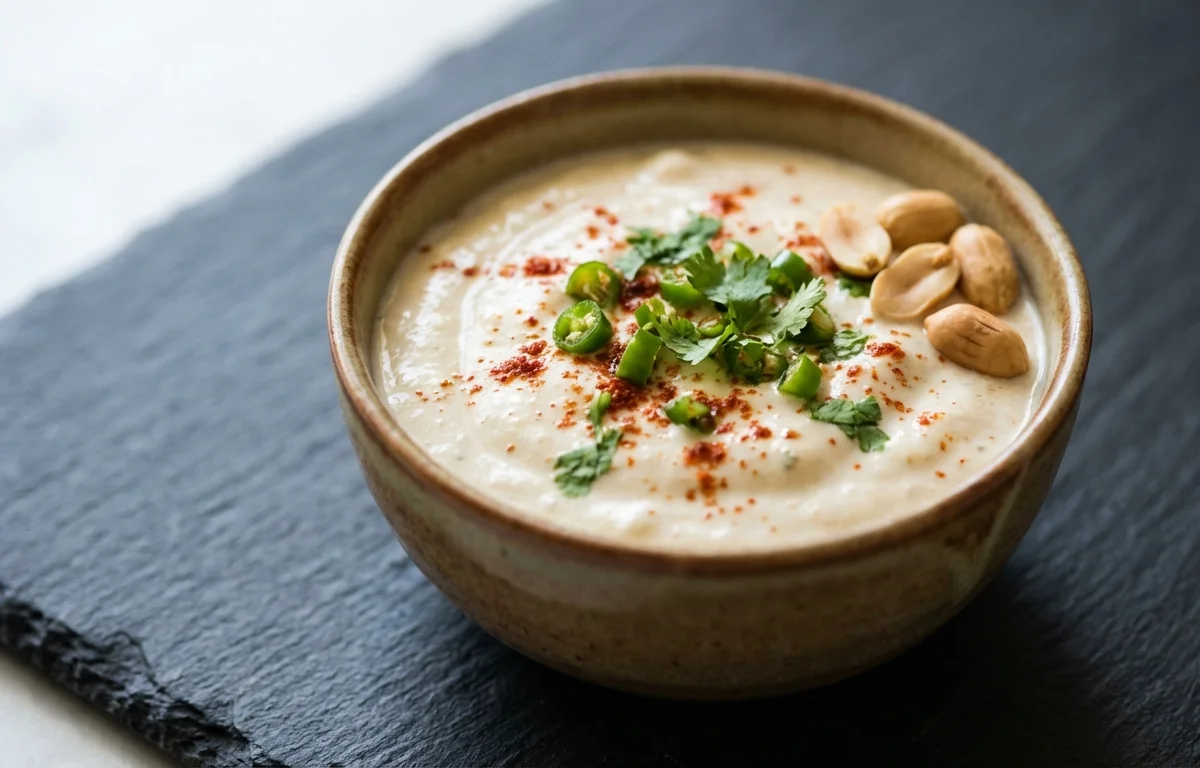
Peanut Curd
Creamy, tangy, dairy-free curd made from raw peanuts. This South Indian style vegan curd is thick, smooth, and perfect with rice, roti, or as a refreshing chilled drink. Soaked and blended peanuts ferment overnight into a protein-rich probiotic delight.
For 4 servings
- prep · ~240 min
Soak the peanuts.
Rinse 1 cup raw peanuts thoroughly. Soak in 2 cups water for at least 4 hours or overnight until they plump up. Drain the soaking water.
TIPSoaking longer makes blending easier and yields creamier curd. - prep · ~3 min
Blend into smooth peanut milk.
Add the soaked, drained peanuts to a blender with 1 cup fresh water and 1 green chili (stem removed). Blend on high until completely smooth and creamy. Strain through a muslin cloth to extract the thickest milk. Squeeze well.
TIPReserve the peanut pulp for chutneys or gravies. Don't discard it. - mix · ~1 min
Mix and prepare for fermentation.
Pour the extracted peanut milk into a clean ceramic or glass bowl. Add a pinch of salt and whisk gently to combine. The consistency should be slightly thick, like a smoothie. If it's too thick, add 2-3 tbsp water to adjust.
- rest · ~540 min
Ferment the peanut curd.
Cover the bowl with a lid or clean cloth. Place in a warm, draft-free spot (like an oven with just the light on) for 8-10 hours or overnight until it sets and develops a slightly tangy aroma. The curd should appear thick and cracked slightly at the sides.
TIPIn cold climates, wrap the bowl in a warm kitchen towel to help fermentation. - prep · ~60 min
Whisk and chill.
Once the curd is set, whisk it gently to a smooth, creamy consistency. Refrigerate for at least 1 hour before serving to let the flavors develop and the texture firm up.
TIPDo not whisk too vigorously as it might thin out the curd. - serve
Serve chilled.
Scoop into a serving bowl and enjoy plain, with steamed rice and pickle, or use as a base for buttermilk and raitas.
What to keep in mind.
6 tips from the recipe — small details that make a real difference to the final dish.
- 1Use peanuts with skin on for a thicker, more flavorful curd, as the skin contains natural thickening agents.
- 2Soak peanuts for at least 8 hours to ensure they are plump and blend into an ultra-smooth milk without grit.
- 3Strain the blended peanut milk through a muslin cloth, squeezing well to extract maximum creaminess.
- 4In cooler weather, place the bowl inside an oven with the light on or near a warm stove to maintain a steady fermentation temperature.
- 5If the curd doesn't set after 10 hours, leave it for another 2-3 hours; over-fermentation can make it overly sour.
- 6For a tangier flavor, add a teaspoon of lemon juice or a little leftover curd from a previous batch as a starter.
Adapt it for your goals.
No-chili starter (mild)
Skip the green chili for a milder, non-spicy curd; ideal for those with sensitive palates or for children, while still allowing natural fermentation.
spiced curd (savory)Spiced curd (savory)
After fermentation, mix in finely chopped coriander, grated ginger, and a pinch of roasted cumin powder for a savory flavored curd perfect for raitas.
sweet curd (dessert)Sweet curd (dessert)
After setting, whisk in jaggery or palm sugar and a pinch of cardamom powder to create a sweet peanut curd, perfect as a dessert or fruit dip.
high protein (peanut pulp reused)High-protein (peanut pulp reused)
Use the leftover peanut pulp (not the milk) to make chutney or bhaji, reducing waste and adding extra protein to other meals.
buttermilk (chaas)Buttermilk (chaas)
Thin the set curd with chilled water, add salt, roasted cumin, and mint leaves for a refreshing dairy-free buttermilk (peanut chaas).
Why this is on our healthy list.
Rich in Plant Protein
Peanuts provide high-quality plant protein, supporting muscle health and satiety, making this curd a great dairy-free alternative.
Natural Probiotics
The fermentation process cultivates beneficial lactic acid bacteria, aiding digestion and gut health without any commercial cultures.
Heart-Healthy Fats
Peanuts contain monounsaturated and polyunsaturated fats, which support cardiovascular health when consumed as part of a balanced diet.
No Added Preservatives
This homemade curd is free from artificial thickeners, stabilizers, or preservatives, offering a clean, whole-food probiotic option.
Frequently asked questions
If the curd didn't set, it may have been too cold during fermentation. Keep the bowl in a warm spot (around 30-35°C) and ensure the milk is not too thin after blending.


