
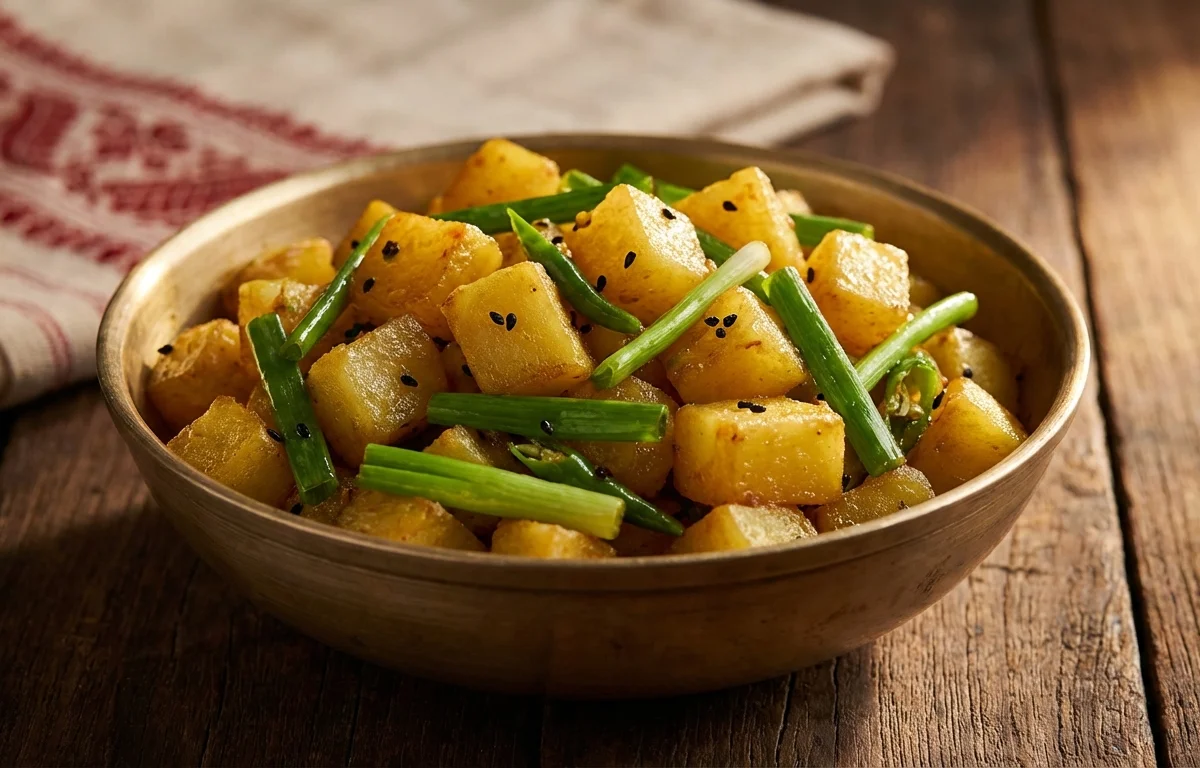
Peyajkoli Aloo Bhaja
A simple, rustic Bengali stir-fry where tender spring onion stalks meet golden potatoes. Mildly spiced with panch phoron and finished with a hint of mustard oil, this dry sabzi is pure comfort—best enjoyed with hot steamed rice and dal.
For 4 servings
- prep
Prep the vegetables.
1.Wash the peyajkoli thoroughly and cut into 2-inch pieces.2.Peel the potatoes and cut into thin batons, like thick matchsticks. - fry · ~5 min
Fry the potato batons.
1.Heat 1 tbsp mustard oil in a kadai or wok until it smokes lightly.2.Add the potato batons and fry on medium heat until golden and crisp-tender (4-5 min).3.Remove with a slotted spoon and set aside. - temper · ~2 min
Temper the spices.
1.In the same pan, add the remaining 1 tbsp mustard oil and heat until shimmering.2.Add panch phoron and dried red chili, let the seeds crackle and pop (30 sec).3.Add grated ginger and sauté until fragrant (20 sec).TIPDon't let the panch phoron burn — it turns bitter. Keep the heat at medium. - saute · ~4 min
Cook the peyajkoli.
1.Add the peyajkoli stalks and a pinch of turmeric powder.2.Sprinkle a pinch of salt — this helps the stalks release moisture.3.Stir-fry on medium-high heat until the stalks wilt and turn bright green (3-4 min). - saute · ~2 min
Combine and finish.
1.Return the fried potatoes to the pan and toss everything together.2.Sauté for another 2 minutes until well combined and any moisture has evaporated.3.Check seasoning and adjust salt if needed. - serve
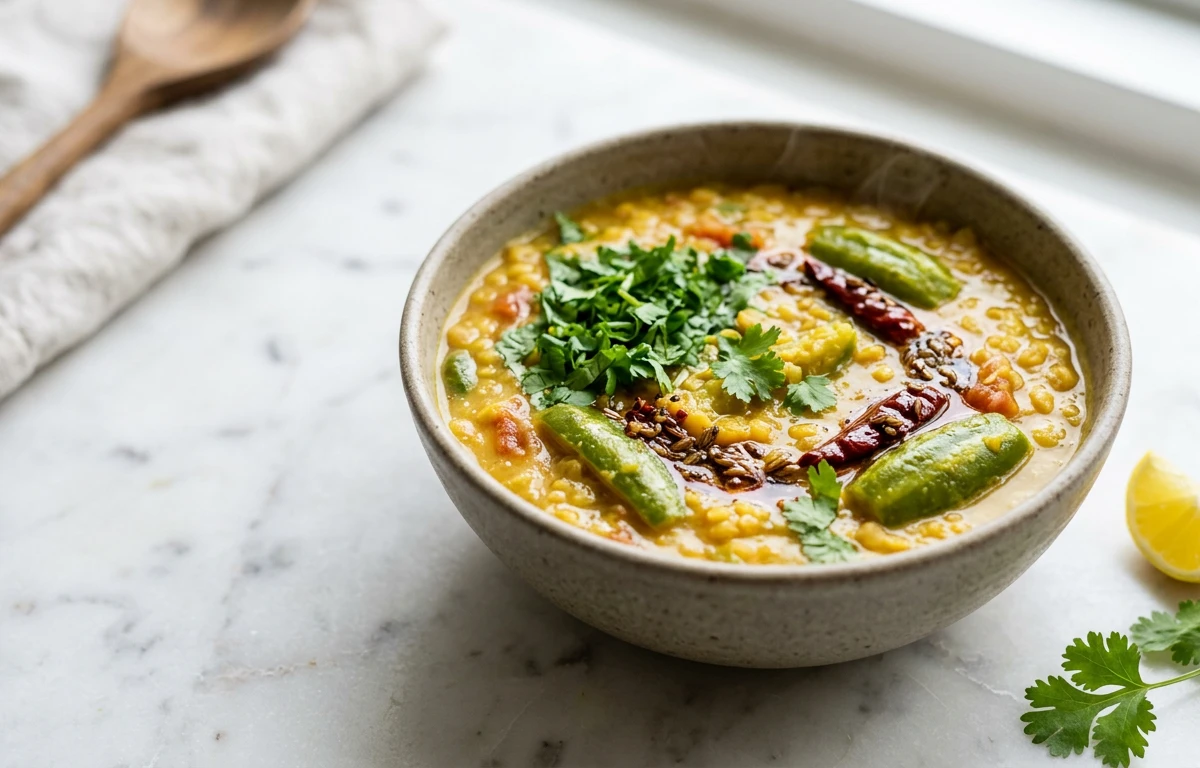
Serve hot with steamed rice and dal.
Transfer to a serving bowl. This dry curry is at its best when fresh and piping hot, paired with a simple Bengali dal-bhaat.
What to keep in mind.
7 tips from the recipe — small details that make a real difference to the final dish.
- 1Use fresh, tender peyajkoli stalks for the best texture and mild onion flavor.
- 2Let the mustard oil reach its smoking point before frying to mellow its pungency.
- 3Cut potato batons uniformly to ensure even cooking and consistent doneness.
- 4Don't overcrowd the pan when frying potatoes; work in batches if needed for crispness.
- 5Add salt to peyajkoli early to draw out moisture, which helps it cook without burning.
- 6Return potatoes only after peyajkoli has wilted to keep them crisp and distinct.
- 7This dish is best served immediately; leftover moisture can make it soggy.
Adapt it for your goals.
Vegan
This recipe is already vegan as written, but you can swap mustard oil for any neutral oil if you prefer a milder flavor.
low oilLow-oil
Reduce oil to 1 tablespoon total and steam-sauté the peyajkoli with a splash of water; the potatoes can be boiled until tender instead of fried.
protein add inProtein add-in
Add 100g of cubed paneer or tofu along with the potatoes for a more substantial meal.
Why this is on our healthy list.
Rich in Antioxidants
Spring onions and turmeric provide natural antioxidants that support cellular health and reduce inflammation.
Good Source of Fiber
Potatoes with skin (if peeled thinly) and spring onion stalks contribute dietary fiber for digestive wellness.
Low in Fat
With only 2 tablespoons of oil for the entire dish, this stir-fry is a light, heart-friendly side.
Frequently asked questions
No, peyajkoli are tender spring onion stalks with a mild flavor; regular onion will be too harsh and lack the right texture.



-curry.webp)
.webp)