Rice Bhakri
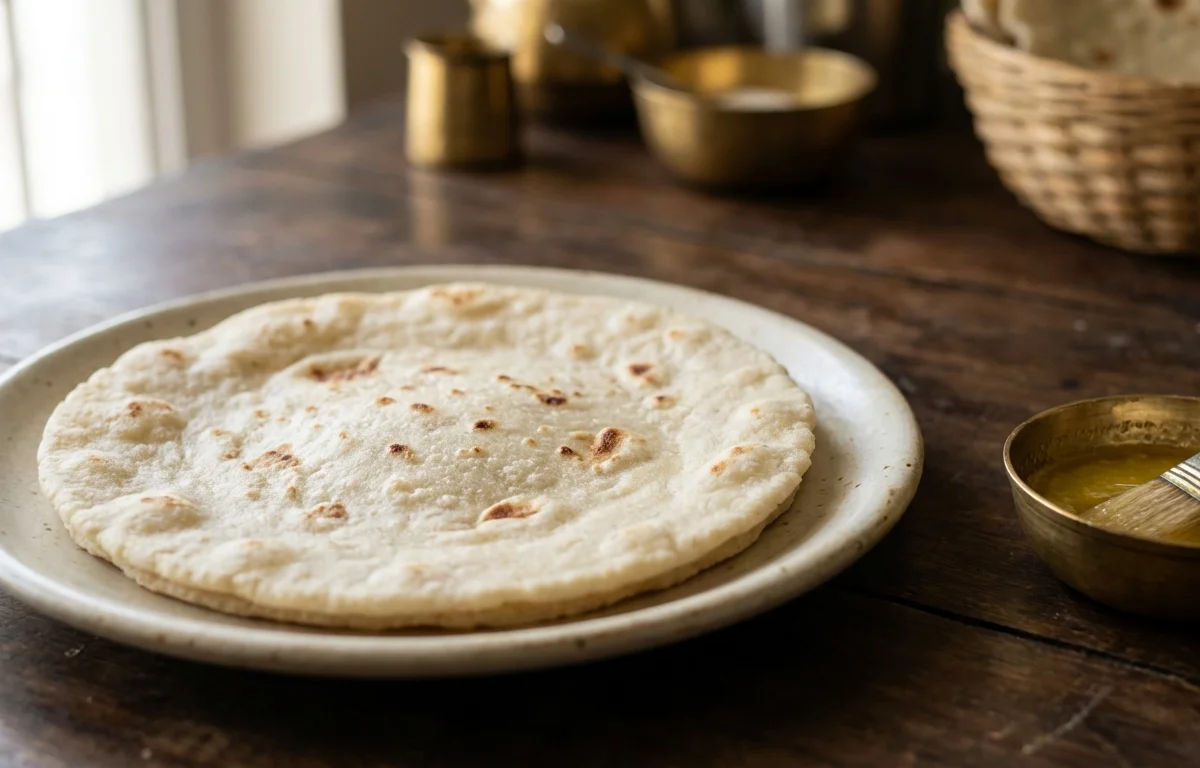
Soft yet rustic flatbreads made with rice flour and hot water, gently patted by hand and cooked on a hot tawa. Common in western India, rice bhakri is simple, comforting, and especially good with spicy chutney, pithla, or vegetable curries.
For 4 servings
- boil · ~4 min
Heat the water.
Bring the water to a gentle boil in a saucepan. Keep it hot but not rapidly bubbling when you add it to the flour.
TIPVery hot water helps the rice flour hydrate well and makes the dough easier to pat without cracking. - mix · ~5 min
Mix the flour, salt, and hot water.
1.Place the rice flour and salt in a wide bowl.2.Pour in most of the hot water gradually while mixing with a spoon.3.Add the remaining water as needed until the flour comes together.4.Cool just enough to handle comfortably. - knead · ~5 min
Knead the dough.
Knead the warm dough for 3 to 4 minutes until smooth and soft, with no dry patches. Divide it into 4 equal balls and keep them covered with a damp cloth.
TIPIf the dough feels dry, wet your palm lightly and knead again instead of adding too much extra water. - prep · ~7 min
Pat the bhakri.
1.Dust a clean surface or parchment lightly with rice flour.2.Place one dough ball on it and flatten gently with your fingers.3.Pat outward from the center to form a thin round bhakri.4.Smooth any cracks along the edges with damp fingers.TIPPat gently and evenly so the bhakri cooks through without becoming dry in some spots. - fry · ~2 min
Cook the first side on a hot tawa.
Heat a tawa over medium-high heat and carefully place the bhakri on it. Cook until the surface changes color and light spots appear underneath.
- fry · ~2 min
Flip and finish cooking the bhakri.
1.Flip the bhakri and cook the second side until light brown spots appear.2.Brush a little ghee on the surface.3.Flip once more and press lightly with a cloth or spatula so it cooks evenly.4.Remove when both sides are cooked and soft. - rest · ~8 min
Wrap and keep warm.
Repeat with the remaining dough balls, stacking the cooked bhakris in a clean cloth to keep them soft and warm.
- serve
Serve the rice bhakri hot.
What to keep in mind.
7 tips from the recipe — small details that make a real difference to the final dish.
- 1Use the water while still very hot; lukewarm water makes rice bhakri crack when patting.
- 2Knead the dough while it is warm, not cold, so the flour hydrates fully and the bhakri stays soft.
- 3Keep the divided dough balls under a damp cloth the whole time; rice dough dries out quickly.
- 4If the edges split while patting, dab your fingers with water and smooth them before lifting the bhakri.
- 5Dust very lightly with rice flour; too much dry flour on the surface can make the bhakri tough and dusty.
- 6Cook on a properly hot tawa so the first side sets fast; a cool pan makes the bhakri stick and harden.
- 7Stack cooked bhakris in a cloth-lined container right away to trap steam and keep them pliable.
Adapt it for your goals.
Vegan
Skip the ghee and cook or finish with a few drops of peanut oil for a dairy-free bhakri that still stays supple.
jowar mixJowar-mix
Replace part of the rice flour with jowar flour for a more earthy taste and slightly heartier texture.
no gheeNo-ghee
Cook the bhakri completely dry and serve with chutney or pithla if you want a lighter everyday version.
spicedSpiced
Add cumin, green chili, or chopped coriander to the warm dough for extra aroma when serving with plain dal or curd.
Why this is on our healthy list.
Naturally Gluten-Free
Made primarily from rice flour, this bhakri is a practical flatbread option for people avoiding wheat and gluten.
Light, Simple Ingredients
With just rice flour, hot water, salt, and a little ghee, the recipe is minimal and easy to pair with wholesome curries and vegetables.
Lower in Add-Ins
Because the dough uses no yeast, sugar, or rich fats, the bhakri keeps the focus on a simple grain-based staple.
Frequently asked questions
The dough is usually too dry or too cool. Knead it while warm, keep it covered, and smooth cracks with lightly wet fingers.



.webp)