
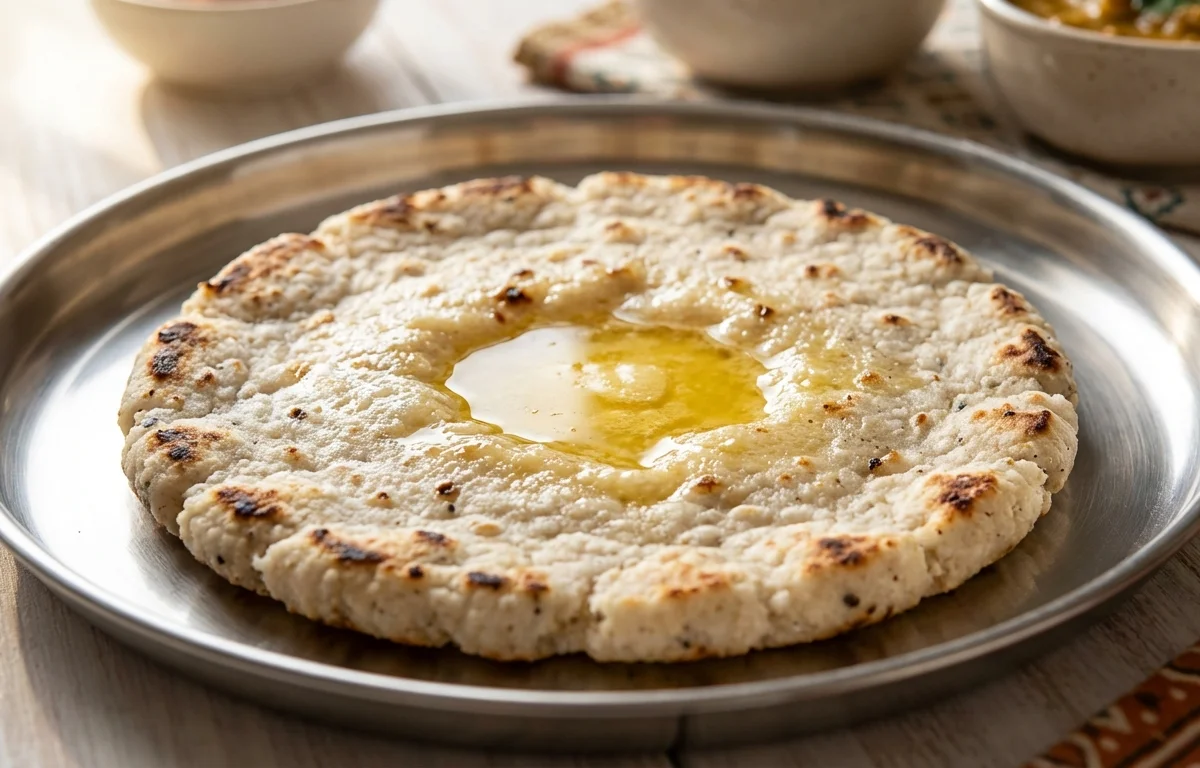
Rice Rotla
A rustic Gujarati flatbread made with rice flour and hot water, rice rotla has a soft center, delicate edges, and a comforting homemade feel. It is best served warm with curry, dal, or a little ghee on top.
For 8 servings
- boil · ~5 min
Boil the water with salt.
Heat water in a pan until it comes to a steady boil. Stir in the salt so it dissolves fully.
- mix · ~2 min
Mix in the rice flour.
Lower the heat and add the rice flour all at once. Stir quickly with a spoon until the mixture comes together into a rough, thick dough with no dry patches.
TIPWork quickly once the flour goes in so the dough stays smooth and lump-free. - rest · ~5 min
Cover and rest the dough.
Take the pan off the heat, cover, and let the dough rest until cool enough to handle but still warm.
- knead · ~4 min
Knead the dough until smooth.
Transfer the warm dough to a plate or board and knead well for 3 to 4 minutes until soft and smooth. Divide it into 8 equal balls.
TIPKnead while the dough is warm, not cold, or the rotla may crack at the edges. - prep · ~8 min
Pat each rotla into a flat disc.
1.Dust a clean surface lightly with rice flour.2.Place one dough ball on the surface and flatten it gently with your fingers.3.Pat it outward into a thin round disc about 5 to 6 inches wide.4.Keep the edges neat and press any small cracks back together.TIPUse light hands and a little dusting flour; too much pressure can make the rotla break. - fry · ~4 min
Cook the rotla on a hot tawa.
1.Heat a tawa over medium heat until evenly hot.2.Place one rotla on the tawa and cook until the surface looks dry and light spots appear.3.Flip and cook the second side until small golden spots form.4.Brush with a little ghee and cook both sides briefly until done.TIPKeep the heat medium; high heat cooks the outside too fast and leaves the center underdone. - serve
Cook the remaining rotla and serve warm.
What to keep in mind.
7 tips from the recipe — small details that make a real difference to the final dish.
- 1Add the rice flour to boiling water all at once and stir immediately to avoid stubborn lumps.
- 2Knead the dough while it is still warm; once fully cool, rice dough dries out and cracks more easily.
- 3If the dough feels dry while kneading, wet your palm lightly instead of adding extra water directly.
- 4Pat the rotla with gentle, even pressure from the center outward so the middle does not stay thick.
- 5A properly heated tawa should dry the top surface in seconds without scorching the bottom.
- 6Stack cooked rotla in a cloth-lined container to keep them soft and prevent the edges from turning brittle.
- 7Rice rotla is best eaten fresh, but you can rewarm it on a tawa with a touch of ghee to soften it again.
Adapt it for your goals.
Vegan
Skip the ghee and brush with peanut oil or sesame oil instead for a fully plant-based rotla.
jainJain
This recipe is already Jain-friendly as written; serve with simple dal or plain yogurt-free sides if desired.
spicedSpiced
Add crushed cumin, black pepper, or green chili paste to the dough for a more savory rotla to pair with mild dal.
softerSofter
Cook with a little extra ghee and keep the finished rotla covered in cloth for a softer, more supple texture.
Why this is on our healthy list.
Naturally Gluten-Free
Made from rice flour alone, this rotla suits people who avoid wheat and want a simple grain-based flatbread.
Light, Simple Ingredients
With just rice flour, water, salt, and a little ghee, the dish is uncomplicated and easy to pair with protein-rich dals or vegetable curries.
Gentle Energy Base
Rice flour provides easily digestible carbohydrates that make this rotla a comforting staple alongside everyday Gujarati meals.
Frequently asked questions
The dough is usually too cool or too dry. Knead it while still warm and smooth any small cracks as you pat the disc.



.webp)
.webp)
.webp)