
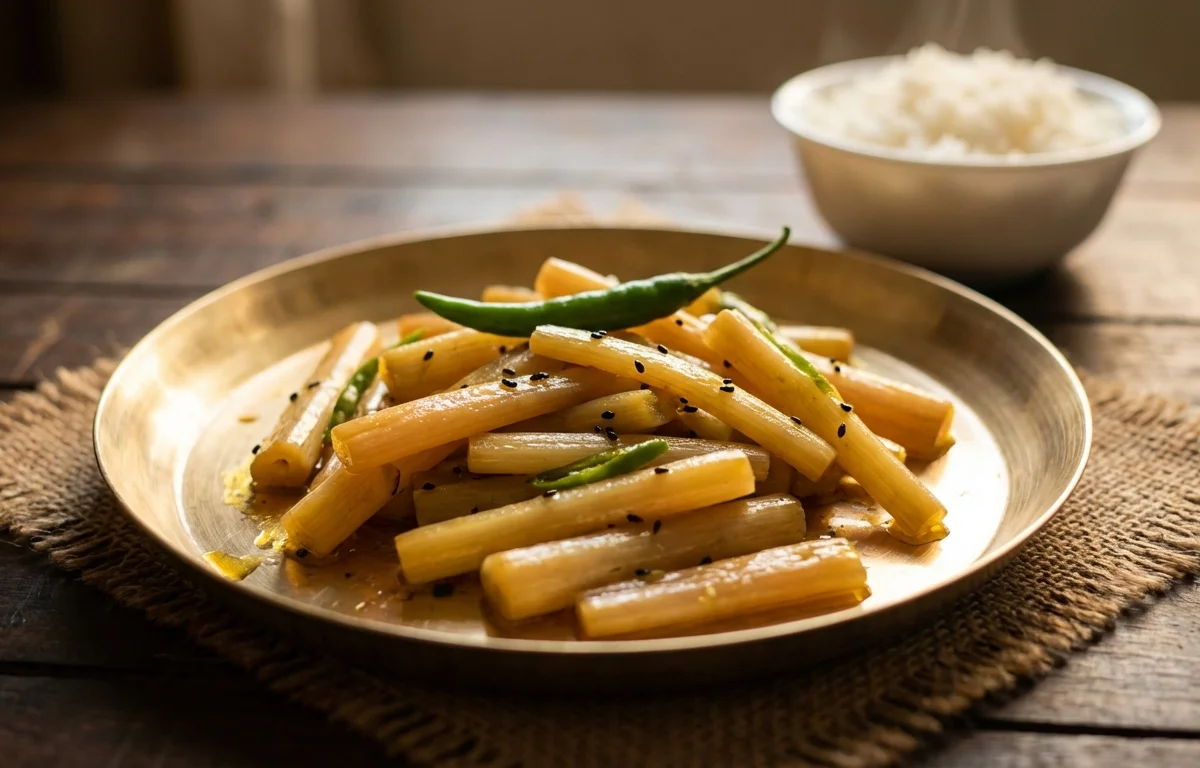
Shapla Bhaja
A homestyle Bengali-style stir-fry made with tender water lily stems, onion, and a few simple spices. It cooks quickly, stays lightly crisp, and tastes wonderful with plain rice and a wedge of lime.
For 4 servings
- prep · ~15 min
Clean and cut the shapla stems.
1.Wash the shapla stems very well under running water.2.Pull away the fibrous outer strings until the stems feel clean and tender.3.Cut the stems into 2 inch pieces and keep them ready. - saute · ~4 min
Start the bhaja with onion and spices.
1.Heat mustard oil in a pan over medium heat.2.Add nigella seeds and let them sizzle for a few seconds.3.Add garlic and green chili, then cook until fragrant.4.Add sliced onion and cook until lightly softened.TIPKeep the heat moderate so the nigella seeds and garlic do not burn. - saute · ~3 min
Cook the shapla stems.
1.Add the cut shapla stems to the pan and mix well.2.Add turmeric powder and salt, then toss to coat evenly.3.Cook for 2 to 3 minutes, stirring often, until the stems start to soften. - simmer · ~5 min
Cover and soften the stems.
Add water, cover the pan, and cook on low heat until the shapla is tender but not mushy. Remove the lid and cook off any extra moisture so the bhaja stays semi-dry.
TIPShapla should stay slightly crisp. Do not overcook it. - garnish
Finish with lemon juice.
Turn off the heat and drizzle in the lemon juice. Toss once more to brighten the flavor.
- serve
Serve the Shapla Bhaja hot.
Serve as a side with plain rice and other simple Bengali meal dishes.
What to keep in mind.
7 tips from the recipe — small details that make a real difference to the final dish.
- 1Remove all the stringy outer fibers from the shapla before cutting, or the stir-fry will feel chewy.
- 2Heat the mustard oil until it just reaches smoking point, then lower the heat before adding nigella seeds.
- 3Slice the onion thin so it softens quickly and blends into the shapla instead of staying chunky.
- 4Cook the stems only until tender-crisp; they should bend slightly but still keep a little bite.
- 5After covered cooking, always dry off extra moisture on open heat so the bhaja stays semi-dry, not watery.
- 6Add the lemon juice only after switching off the flame to keep its fresh, sharp brightness.
- 7Shapla Bhaja tastes best fresh, but leftovers can be reheated briefly on a dry pan to restore texture.
Adapt it for your goals.
Low-oil
Use less mustard oil and a splash more water for softening; good if you want a lighter everyday version while keeping the same Bengali flavors.
spicierSpicier
Add extra slit green chilies or a pinch of red chili powder for a hotter bhaja that pairs especially well with plain steamed rice.
with potatoWith-potato
Add thin potato batons with the onion for a heartier home-style variation that makes the dish more filling.
jainJain
Skip onion and garlic, temper only nigella and green chili, and finish with lemon for a simpler but still fragrant version.
Why this is on our healthy list.
Vegetable-Forward Side Dish
Made mainly with water lily stems, this bhaja is a simple way to include more vegetables in a Bengali meal.
Lightly Cooked and Minimal Oil
The dish uses a small amount of mustard oil and quick cooking, so it stays relatively light compared with richer fried sides.
Contains Aromatic Plant Ingredients
Garlic, green chili, onion, nigella seeds, and lemon juice add flavor from plant ingredients rather than heavy sauces.
Frequently asked questions
It should be tender enough to bite easily but still slightly crisp. If it turns limp and mushy, it has cooked too long.



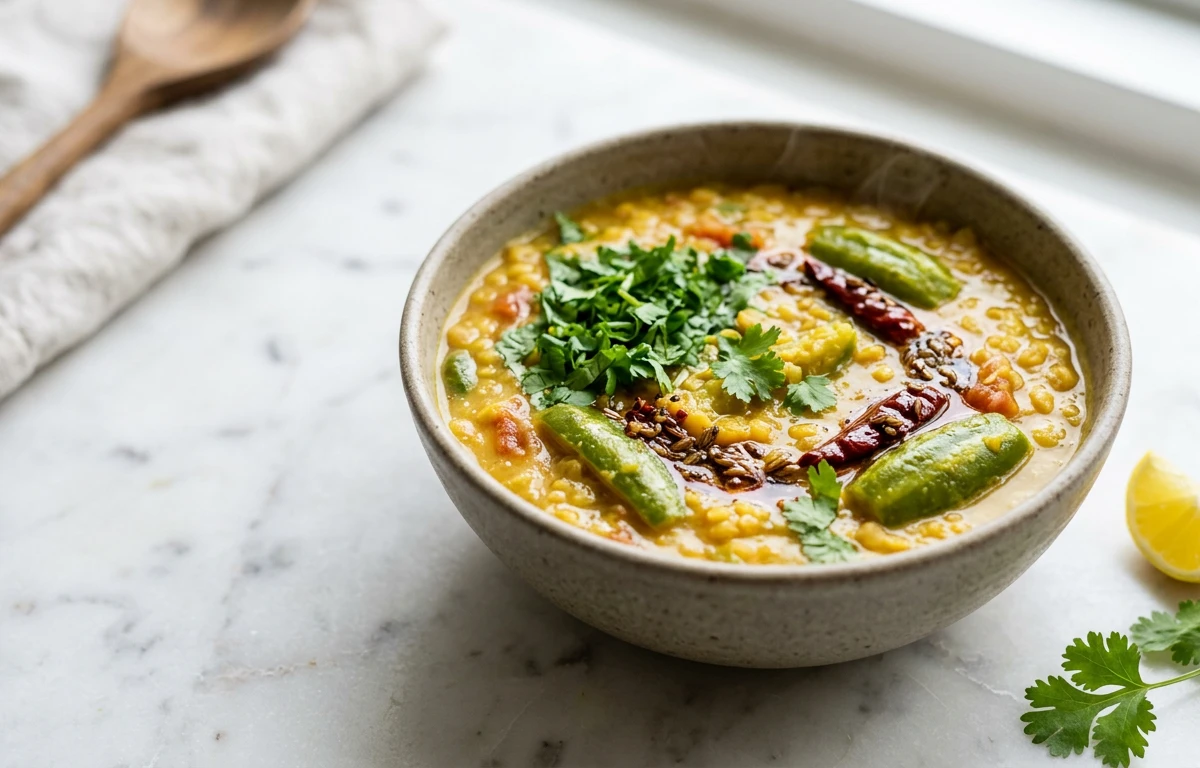
-curry.webp)
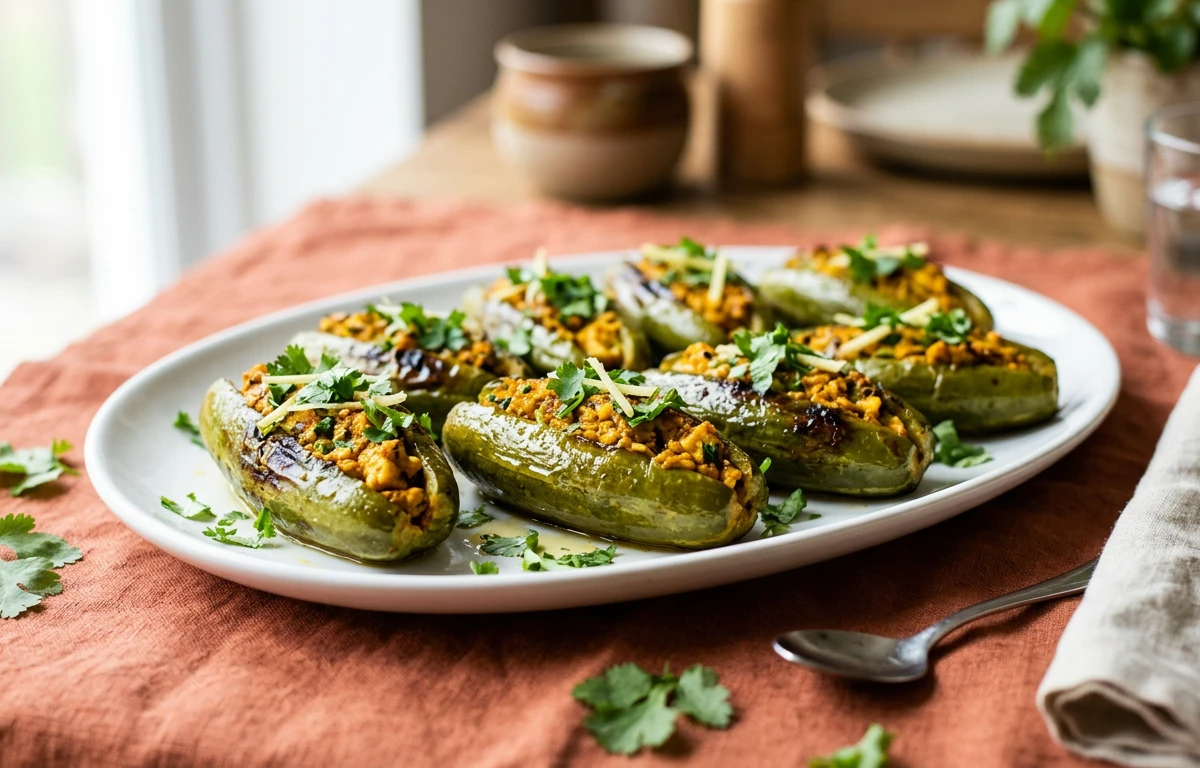
.webp)