Simple Poached Salmon
Delicate, moist salmon fillets gently poached in a fragrant bath of water, lemon, and fresh herbs. This foolproof method yields perfectly flaky fish with a buttery texture, ideal for quick weeknight dinners or a light, protein-rich lunch.
For 4 servings
- prep
Season the salmon fillets.
Pat the salmon fillets dry with paper towels. Let them rest at room temperature for 10 minutes while you prepare the poaching liquid.
TIPRoom-temperature fish cooks more evenly and won't shock the poaching liquid. - boil · ~5 min
Create the poaching liquid.
1.Pour 4 cups of water into a large skillet.2.Add a pinch of salt, black peppercorns, lemon slices, and parsley sprigs.3.Bring the liquid to a gentle simmer over medium heat, not a rolling boil. - simmer · ~10 min
Poach the salmon.
1.Gently slide the salmon fillets into the barely simmering liquid, skin-side down.2.Ensure the fillets are fully submerged. Add more warm water if needed.3.Cover the skillet and poach for 8-10 minutes, until the salmon flakes easily with a fork.TIPKeep the liquid below a gentle bubble. Boiling will make the salmon dry and tough. - other · ~2 min
Remove the salmon and rest.
Lift the fillets out of the liquid with a slotted spatula and transfer to a plate. Let them rest for 2 minutes.
- garnish
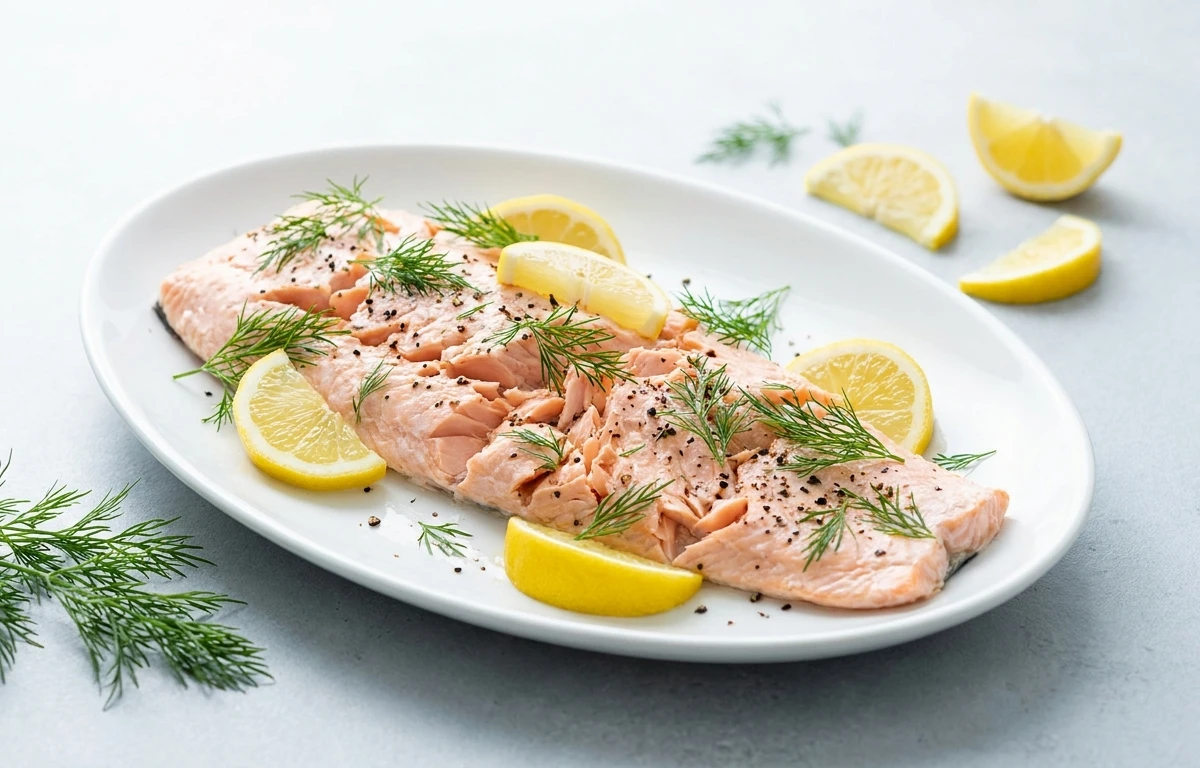
Garnish with fresh dill and serve with lemon wedges.
What to keep in mind.
6 tips from the recipe — small details that make a real difference to the final dish.
- 1Always start with cold water and bring to a gentle simmer; a rolling boil will toughen the salmon.
- 2Use a wide skillet so the fillets lie in a single layer and cook evenly.
- 3Check doneness at 8 minutes by inserting a paring knife into the thickest part — it should feel just warm and flake easily.
- 4Reserve the poaching liquid to cook vegetables or grains for extra flavor.
- 5Pat the salmon dry before poaching to ensure a clean, silky exterior.
- 6For best texture, let the poached salmon rest 2 minutes before serving so juices redistribute.
Adapt it for your goals.
Citrus-herb twist
Replace the water with a mix of white wine and fish stock, and add fennel fronds and tarragon for a more aromatic, sophisticated version.
low sodiumLow-sodium
Omit the salt entirely and season the finished dish with a sprinkle of flaky sea salt and fresh herbs, perfect for those watching their sodium intake.
coconut poachedCoconut-poached
Substitute half the water with unsweetened coconut milk, add a lime leaf and a small knob of ginger for a creamy, Southeast-Asian-inspired poach.
high protein meal prepHigh-protein meal prep
Poach double the amount of salmon, refrigerate in the poaching liquid for up to 3 days, and use cold on salads, grain bowls, or sandwiches.
spicy poachSpicy poach
Add 1 sliced red chili or ½ teaspoon red pepper flakes to the liquid for a gentle heat that pairs beautifully with the salmon's richness.
Why this is on our healthy list.
Rich in Omega-3s
Salmon is one of the best sources of the long-chain omega-3s EPA and DHA, which support heart, brain, and eye health.
Lean Protein Source
Each serving provides about 25–30 grams of high-quality protein with minimal saturated fat, ideal for muscle repair and satiety.
Naturally Low-Carb
This poached dish contains no added sugars or starches, making it suitable for low-carb and keto-friendly meals.
Packed with B Vitamins
Salmon is an excellent source of B6, B12, niacin, and pantothenic acid, which help convert food into energy and support nerve function.
No Added Oil or Butter
The poaching method requires no fats, keeping the dish light, low-calorie, and suitable for those on a heart-friendly diet.
Frequently asked questions
The thickest part of the fillet should flake easily when gently pressed with a fork, and the internal temperature should reach 125°F (52°C) for medium or 135°F (57°C) for well-done.