Slow-Roasted Mutton Head with Root Vegetables
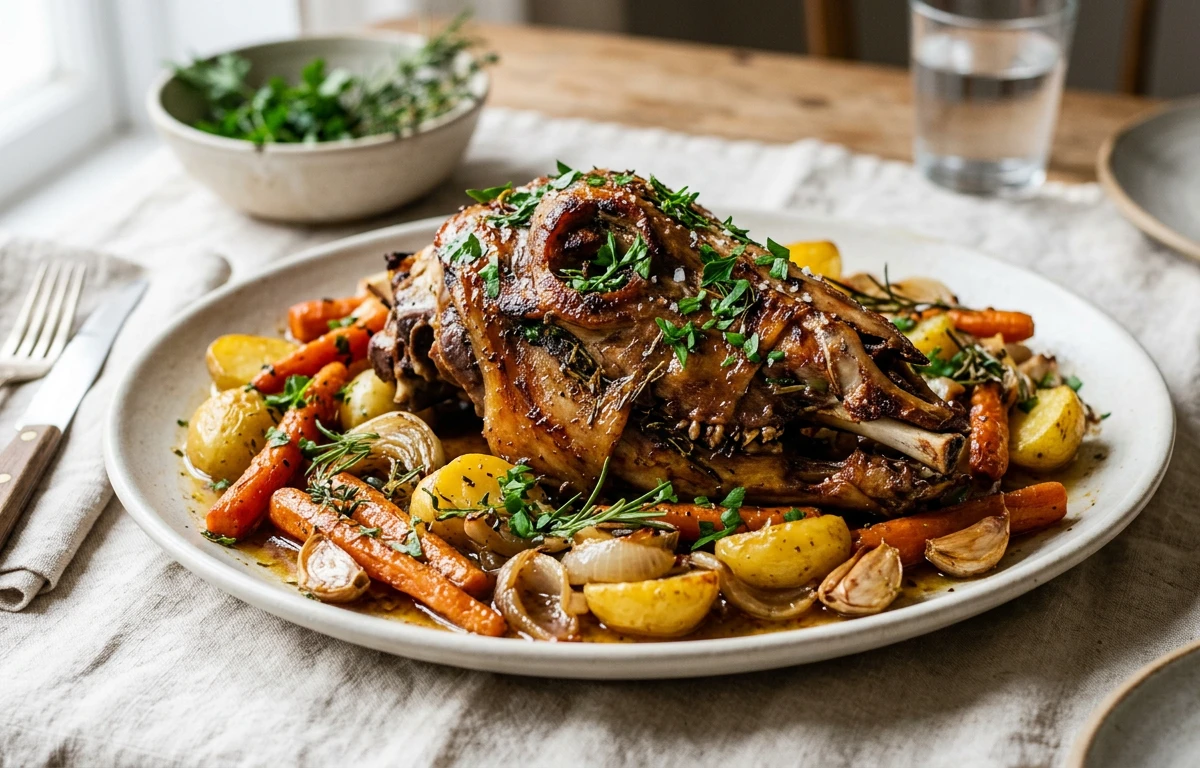
A rustic, show-stopping roast where a whole mutton head is slow-cooked until the meat falls off the bone. Nestled with earthy root vegetables that soak up all the rich, savoury juices. This old-world dish transforms a humble cut into tender, flavour-packed morsels perfect for pulling and sharing.
For 4 servings
- prep · ~10 min
Preheat oven and prep the mutton head.
1.Preheat the oven to 160°C (320°F).2.Rinse the mutton head halves under cold water and pat completely dry.3.Mix cumin powder, coriander powder, smoked paprika, black pepper, and salt in a small bowl.4.Rub the spice mix all over the mutton head, getting into every crevice.TIPPatting the meat very dry helps the spices adhere and encourages a better crust during roasting. - prep · ~5 min
Season the root vegetables.
1.Place potato chunks, carrot batons, turnip quarters, onion quarters, and garlic cloves in the roasting pan.2.Drizzle with olive oil and the lemon juice.3.Toss well to coat and season lightly with a pinch of salt. - assemble · ~2 min
Assemble the roast in the pan.
1.Nestle the seasoned mutton head halves on top of the vegetables, cut side up.2.Tuck the bay leaves underneath the head halves.3.Pour the water carefully into the corner of the roasting pan without washing the spice rub off the meat.TIPKeeping the water at the bottom, not poured over the head, helps maintain the spice crust on top. - roast · ~210 min
Cover and slow-roast until tender.
Seal the roasting pan tightly with a double layer of aluminum foil. Place in the preheated oven and roast undisturbed for 3 hours and 30 minutes.
TIPThe seal is crucial for keeping the steam in, which braises the meat until it's spoon-tender. - roast · ~30 min
Uncover and roast to a beautiful color.
Carefully remove the foil. Increase the oven temperature to 200°C (400°F) and roast for an additional 30 minutes, until the skin is bubbly and the exposed meat is deeply browned.
TIPWatch the vegetables at this stage. If they look very dry, add a splash more water to the pan. - rest · ~10 min
Rest the meat briefly.
Remove the roasting pan from the oven. Cover loosely with the foil again and let the mutton head rest in the pan for 10 minutes.
- garnish
Serve the roast with the vegetables.
Transfer the head halves and roasted vegetables to a large wooden board or platter. Scatter generously with the chopped fresh parsley and serve immediately.
TIPUse two forks to pull the incredibly tender meat from the cheeks, tongue, and skull for everyone to share.
What to keep in mind.
6 tips from the recipe — small details that make a real difference to the final dish.
- 1Ask your butcher to split the head in half lengthwise for even cooking.
- 2Pat the mutton head extremely dry before applying the spice rub for better adhesion.
- 3Rest the roast for 10 minutes after baking so the juices redistribute evenly.
- 4Use two forks to pull tender meat from the cheeks, tongue, and skull after resting.
- 5Add a splash more water during the final roast if vegetables look dry.
- 6Seal the foil tightly to trap steam and braise the meat to spoon-tender perfection.
Adapt it for your goals.
Spicier
Add 1 teaspoon of cayenne pepper or harissa paste to the spice rub for a North African-inspired heat.
herb forwardHerb-forward
Replace smoked paprika with dried rosemary and thyme, and add a handful of fresh mint leaves before serving for a Levantine twist.
lamb versionLamb version
Substitute the mutton head with a whole lamb head for a milder, slightly sweeter flavour; reduce cooking time by about 30 minutes.
extra vegetablesExtra vegetables
Include parsnips, sweet potatoes, or celery root for a more complex, earthy sweetness that complements the rich meat.
Why this is on our healthy list.
Rich in Collagen
Mutton head is naturally high in collagen and gelatin from the bones and connective tissue, which supports joint and skin health.
High in Satiating Protein
This cut provides a generous amount of protein from the cheek and tongue meat, helping keep you full longer.
Packed with Root Vegetable Fibre
Potatoes, carrots, and turnips contribute dietary fibre, vitamins A and C, and slow-release energy.
Naturally Grain-Free
This dish contains no grains or gluten, making it suitable for grain-free or paleo-style diets.
Frequently asked questions
Visit a halal butcher or a specialty meat market and ask them to split it in half lengthwise for you.