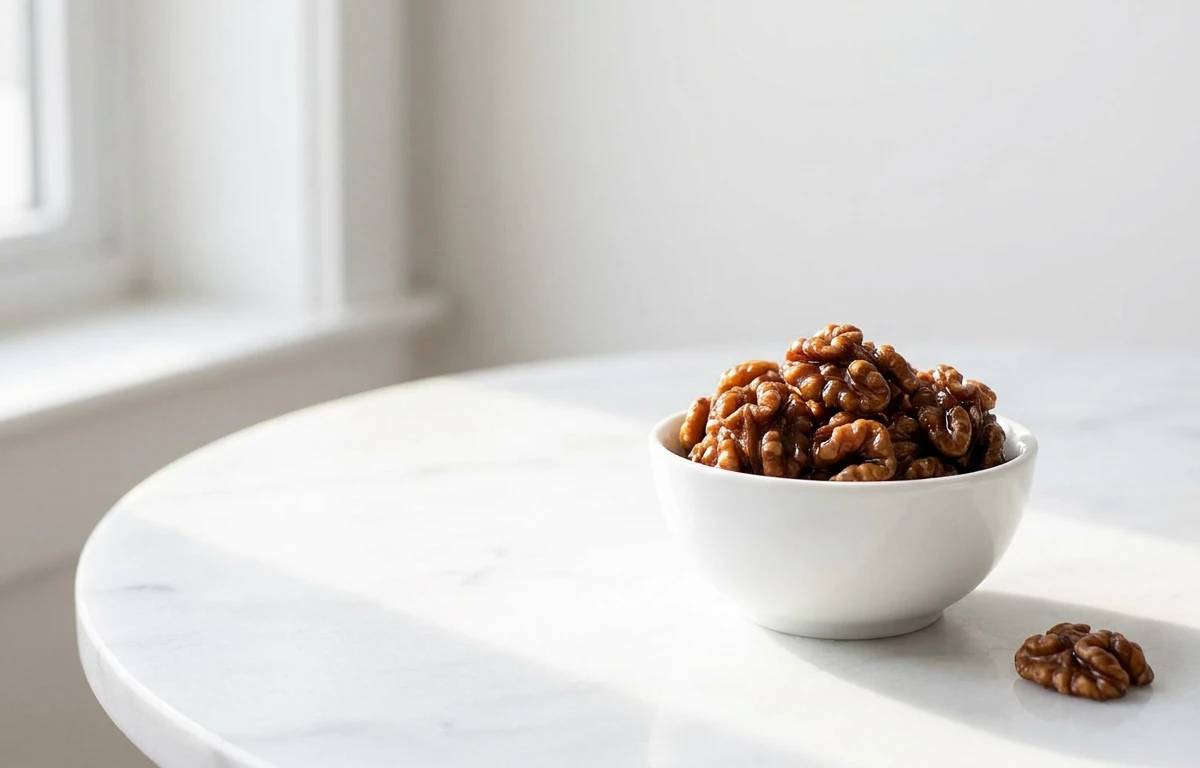
Soaked Walnuts
Plump, tender walnut halves that have been soaked overnight, making them easier to digest and releasing their natural creamy sweetness. A simple, wholesome morning ritual enjoyed across Indian households — just grab a handful and start your day.
For 4 servings
- prep · ~1 min
Pick and rinse the walnuts.
1.Pick through the walnuts, discard any broken or shriveled pieces.2.Place walnuts in a strainer and rinse briefly under running water. - prep
Soak the walnuts overnight.
1.Transfer rinsed walnuts to a medium bowl.2.Pour 2 cups of water over them until fully submerged.3.Add a pinch of salt to help neutralize enzyme inhibitors, if desired.4.Cover and leave on the counter for 7 to 8 hours, or overnight.TIPUse room-temperature water for the best texture — cold water slows absorption. - prep · ~1 min
Drain and rinse the soaked walnuts.
1.Pour walnuts into a strainer and discard the soaking water.2.Rinse walnuts gently under fresh running water for a few seconds.3.Pat dry lightly with a kitchen towel if eating immediately.TIPThe soaking water will be dark and slightly bitter — always discard it. - serve
Serve the soaked walnuts.
Enjoy immediately as a morning snack, or refrigerate in an airtight container for up to 2 days.
TIPThe skin peels off easily after soaking if you prefer a milder, creamier bite.
What to keep in mind.
6 tips from the recipe — small details that make a real difference to the final dish.
- 1Use room-temperature water for soaking; cold water slows absorption and results in a firmer texture.
- 2Discard the soaking water — it contains bitter tannins and enzyme inhibitors released during the process.
- 3Soak walnuts for exactly 7–8 hours; longer soaking can make them mushy and reduce shelf life.
- 4After draining, pat walnuts dry with a clean towel if eating right away to avoid a watery mouthfeel.
- 5Store soaked walnuts in an airtight container in the fridge; they stay fresh for up to 2 days.
- 6The thin brown skin slips off easily after soaking — remove it for a milder, creamier bite.
Adapt it for your goals.
Spiced-soaked walnuts
Add a small cinnamon stick, 2 green cardamom pods, or a pinch of fennel seeds to the soaking water for a subtly aromatic, Indian-inspired flavor that pairs well with morning chai.
sweetened soaked walnutsSweetened soaked walnuts
Soak walnuts in water mixed with a teaspoon of jaggery or raw honey (dissolved first) for a mildly sweet treat that tastes like a dessert.
Why this is on our healthy list.
Rich in Omega-3s
Walnuts are an excellent plant-based source of alpha-linolenic acid (ALA), an essential omega-3 fatty acid that supports heart and brain health.
Better Nutrient Absorption
Soaking reduces phytic acid content, allowing your body to more effectively absorb minerals like magnesium, zinc, and iron from the walnuts.
Easy on Digestion
The overnight soak neutralizes enzyme inhibitors, making walnuts gentler on the stomach and easier to break down, especially for those with sensitive digestion.
Antioxidant Boost
Walnuts are packed with polyphenols and vitamin E, which help combat oxidative stress and inflammation when consumed regularly.
Frequently asked questions
Yes, but 4–6 hours will still soften them somewhat; however, 7–8 hours is ideal for fully neutralizing enzyme inhibitors and achieving the creamiest texture.