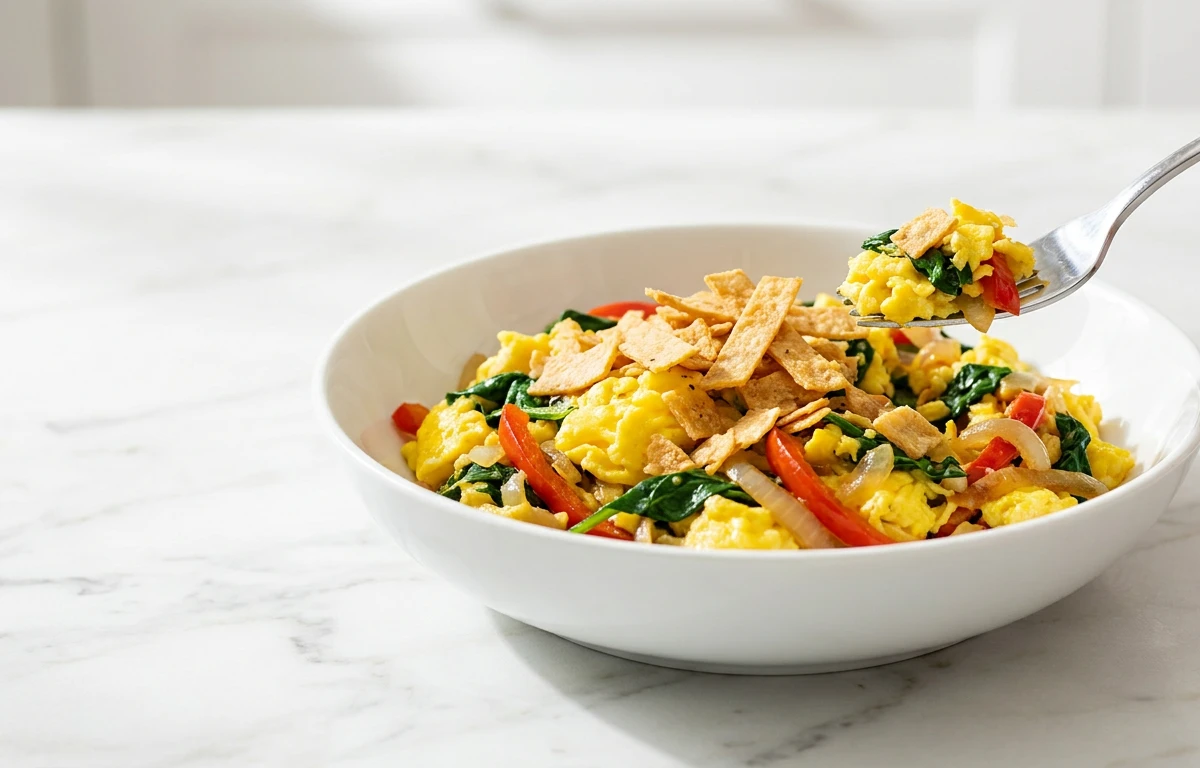
Soft Scrambled Eggs
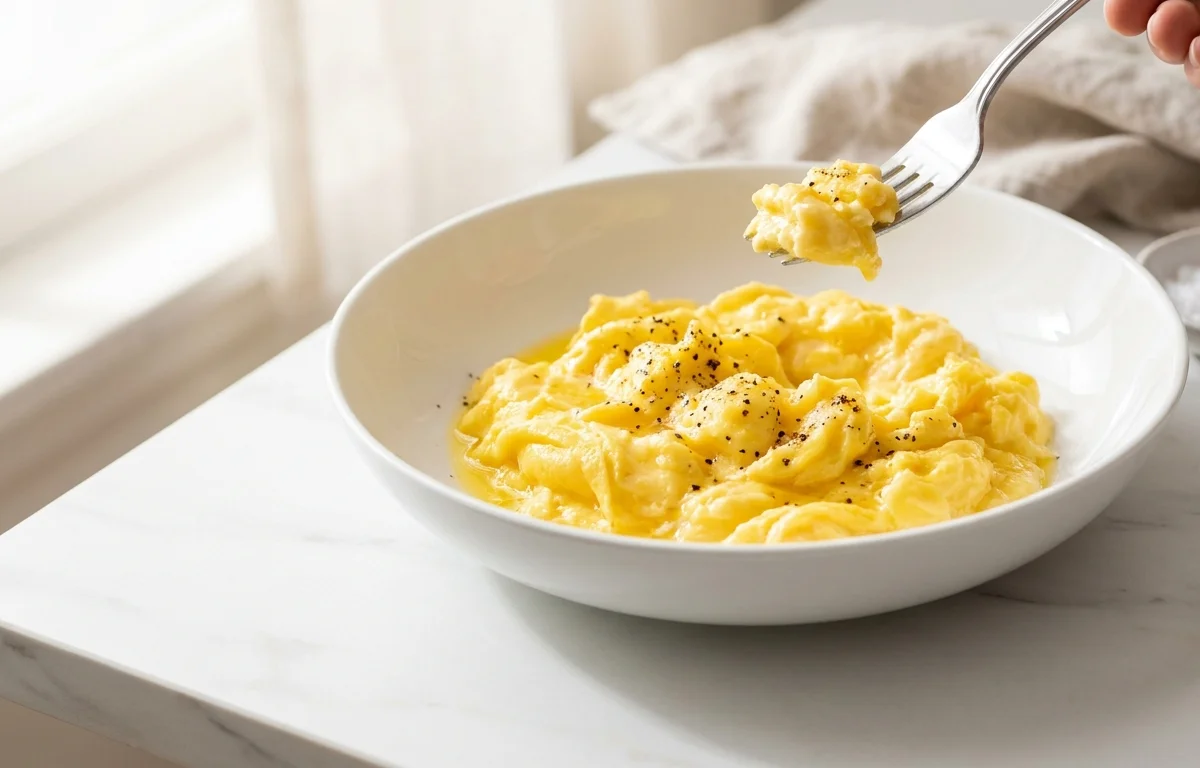
Silky, custard-like scrambled eggs cooked low and slow with butter until just set. These soft, creamy curds melt on the tongue and turn ordinary toast into something special. Ready in under 10 minutes.
For 2 servings
- prep · ~1 min
Crack and whisk the eggs.
Crack all 4 eggs into a mixing bowl. Add the pinch of salt. Whisk thoroughly for 30 seconds until the whites and yolks are fully combined and the mixture looks uniform with no streaks of white.
TIPWhisk until you see a few bubbles on the surface — that means the proteins are properly broken down for creamier curds. - other · ~2 min
Melt butter in the skillet over low heat.
Place the cold butter in a cold nonstick skillet. Set the pan over low heat. As the butter melts, use the silicone spatula to coat the bottom and sides of the pan evenly. The butter should foam gently — if it browns or sizzles aggressively, the heat is too high.
TIPStarting with a cold pan and butter together prevents the butter from browning before the eggs go in. - other · ~3 min
Pour in eggs and stir constantly.
Pour the whisked eggs into the center of the skillet. Let them sit undisturbed for 10 seconds until a thin layer sets at the edges. Using the spatula, gently push the set curds from the edges toward the center in slow, sweeping motions. Tilt the pan slightly to let uncooked egg flow into the gaps. Continue this gentle push-and-tilt rhythm.
TIPKeep the heat low — if you hear any sizzling, lift the pan off the burner for a few seconds to cool down. - other · ~1 min
Finish cooking until just set.
When the eggs are about 80% cooked — still glossy with some visible liquid but mostly formed into soft, custardy curds — remove the skillet from the heat. The residual heat will finish cooking them. The eggs should look moist and creamy, never dry.
TIPPull the pan off the heat a little earlier than you think — carryover cooking does the rest. Dry eggs are overdone eggs. - garnish
Season and serve immediately.
Give the eggs one final gentle fold with the spatula. Grind the black pepper over the top. Serve immediately on warmed toast or a plate — soft scrambled eggs set and lose their creaminess as they cool.
What to keep in mind.
6 tips from the recipe — small details that make a real difference to the final dish.
- 1Use a rubber or silicone spatula to gently fold curds without breaking them into small pieces.
- 2Resist the urge to salt the eggs too early — salt added after cooking keeps curds extra tender.
- 3For extra creaminess, replace 1 tablespoon of egg white with a splash of whole milk or cream.
- 4Pull the pan off the heat when eggs still look slightly wet — carryover cooking firms them perfectly.
- 5Warm your serving plates or toast beforehand so the eggs don't cool down instantly.
- 6If eggs start to set too fast, lift the pan off the burner for a few seconds to slow the cooking.
Adapt it for your goals.
Cheesy
Add 1/4 cup of finely grated Parmesan or Gruyère right after removing the pan from the heat. The residual heat melts it into the curds for a rich, savory upgrade.
herb freshHerb-fresh
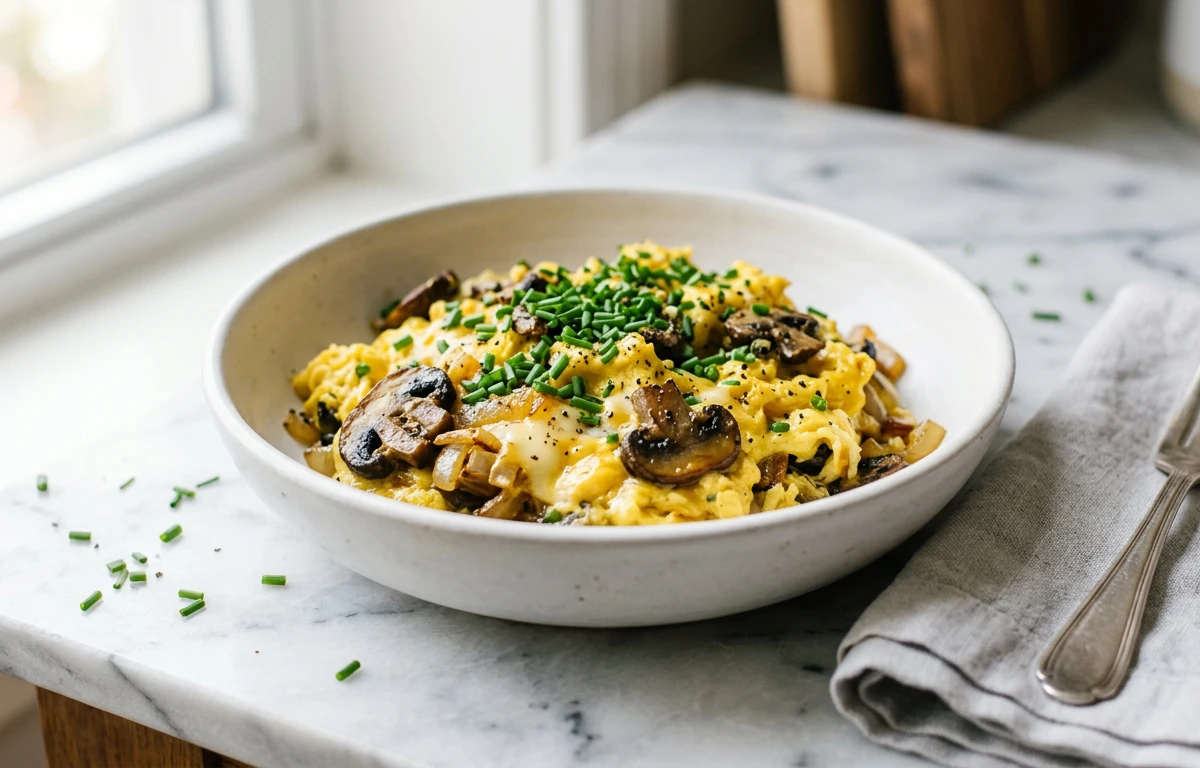
Fold in 1 tablespoon of finely chopped chives or dill just before serving for a bright, fresh contrast to the buttery richness.
smokySmoky
Mix in a pinch of smoked paprika or a few drops of liquid smoke with the whisked eggs for a subtle campfire flavor that pairs beautifully with toast.
dairy freeDairy-free
Replace butter with a high-quality vegan butter or ghee (if lactose-intolerant) to maintain richness without dairy.
Why this is on our healthy list.
High-Quality Protein
Eggs provide all nine essential amino acids, making them a complete protein source that supports muscle repair and satiety.
Rich in Choline
Egg yolks are one of the best dietary sources of choline, a nutrient important for brain health and cell membrane function.
Contains Vitamin D
Eggs are a natural source of vitamin D, which aids calcium absorption and supports bone health.
Low in Carbs
With virtually no carbohydrates, these scrambled eggs fit easily into low-carb and keto eating patterns.
Frequently asked questions
Rubbery eggs are caused by high heat and overcooking. Cook over low heat and remove the pan when eggs are still glossy and about 80% set — carryover cooking finishes them gently.