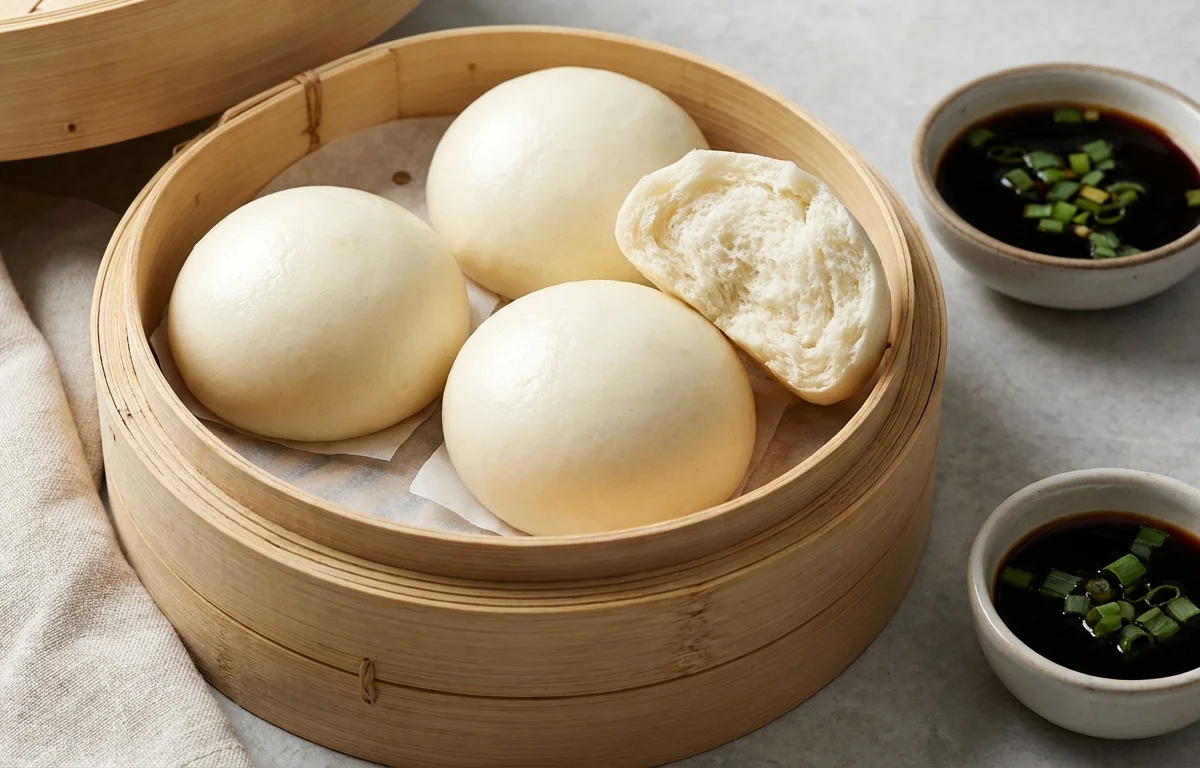
Steamed Bao Buns
These soft, pillowy bao buns are lightly sweet with a tender chew and a snowy white finish. Steam them fresh for a versatile bread that works beautifully with savory fillings, vegetables, or spicy sauces.
For 8 servings
- mix
Mix the dry ingredients.
Add all-purpose flour, instant yeast, sugar, salt, and baking powder to a large bowl. Mix well so the yeast and baking powder are evenly spread through the flour.
- knead · ~10 min
Knead the dough.
Pour in lukewarm milk, lukewarm water, and oil. Mix into a shaggy dough, then knead for 8 to 10 minutes until smooth, soft, and slightly tacky but not sticky.
TIPAdd only a little extra water if needed; a soft dough gives lighter bao. - rest · ~60 min
Let the dough rise.
Place the dough in a lightly greased bowl, cover, and let it rise in a warm spot until doubled in size.
- prep · ~15 min
Divide and shape the buns.
1.Punch down the risen dough and knead briefly for 1 minute.2.Divide the dough into 8 equal pieces.3.Roll each piece into a smooth ball, then flatten into an oval about 4 inches long.4.Lightly brush the surface with oil and fold each oval in half to create the classic bao shape.5.Place each shaped bun on a square of parchment paper.TIPKeep the folded edge loose so the buns open easily after steaming. - rest · ~30 min
Proof the shaped buns.
Cover the shaped buns loosely and let them puff up until slightly enlarged and airy.
- steam · ~12 min
Steam the bao buns.
1.Bring water to a gentle boil in a steamer.2.Arrange the buns in the steamer with space between them for expansion.3.Cover and steam over medium heat until the buns are puffed and cooked through.TIPDo not overcrowd the steamer or the buns may stick together and lose shape. - rest · ~2 min
Rest the buns before opening the steamer.
Turn off the heat and let the buns sit covered for 2 minutes. Then open the lid slowly to prevent the buns from shrinking.
- serve
Serve the bao buns warm.
What to keep in mind.
8 tips from the recipe — small details that make a real difference to the final dish.
- 1Keep the milk and water just lukewarm; hot liquid can weaken or kill the yeast.
- 2Knead until the dough looks satin-smooth, since a rough dough gives wrinkled buns after steaming.
- 3If the dough feels sticky, resist adding much extra flour; slightly tacky dough steams up softer.
- 4Brush only a thin film of oil inside each oval so the folded bao opens easily after steaming.
- 5Proof the shaped buns until they look airy and slightly jiggly; underproofed bao can split.
- 6Wrap the steamer lid with a clean towel to catch condensation and help keep the buns white and smooth.
- 7Let the steamed buns rest covered for 2 minutes before uncovering, or they can collapse from sudden temperature change.
- 8Cool leftovers completely, then freeze in a bag and re-steam for a few minutes to restore their soft texture.
Adapt it for your goals.
Dairy-free
Replace the milk with lukewarm water or unsweetened soy milk for a softer vegan-friendly dough without changing the steaming method.
whole wheatWhole-wheat
Swap in a portion of whole-wheat flour for a nuttier flavor and slightly heartier texture; keep most of the flour white for softness.
mini baoMini-bao
Divide the dough into smaller pieces for party-size buns that steam faster and work well for sliders or appetizer platters.
filled baoFilled-bao
Instead of folding into tacos, wrap the dough around a cooked savory filling to make closed steamed buns for a more substantial snack.
Why this is on our healthy list.
Lower-Fat Bread Option
Because the buns are steamed rather than baked with added butter or fried, they stay light and tender with relatively little oil.
Simple, Digestible Ingredients
Made from flour, milk, water, yeast, and a small amount of sugar, these bao are a straightforward base that is easy to pair with balanced fillings.
Energy-Providing Carbohydrates
The flour-based dough offers carbohydrates that make these buns a useful vehicle for protein- and vegetable-rich fillings.
Frequently asked questions
Wrinkles usually come from overproofing, rough dough, or condensation dripping from the lid. Knead until smooth, proof only until airy, and open the lid slowly after resting.