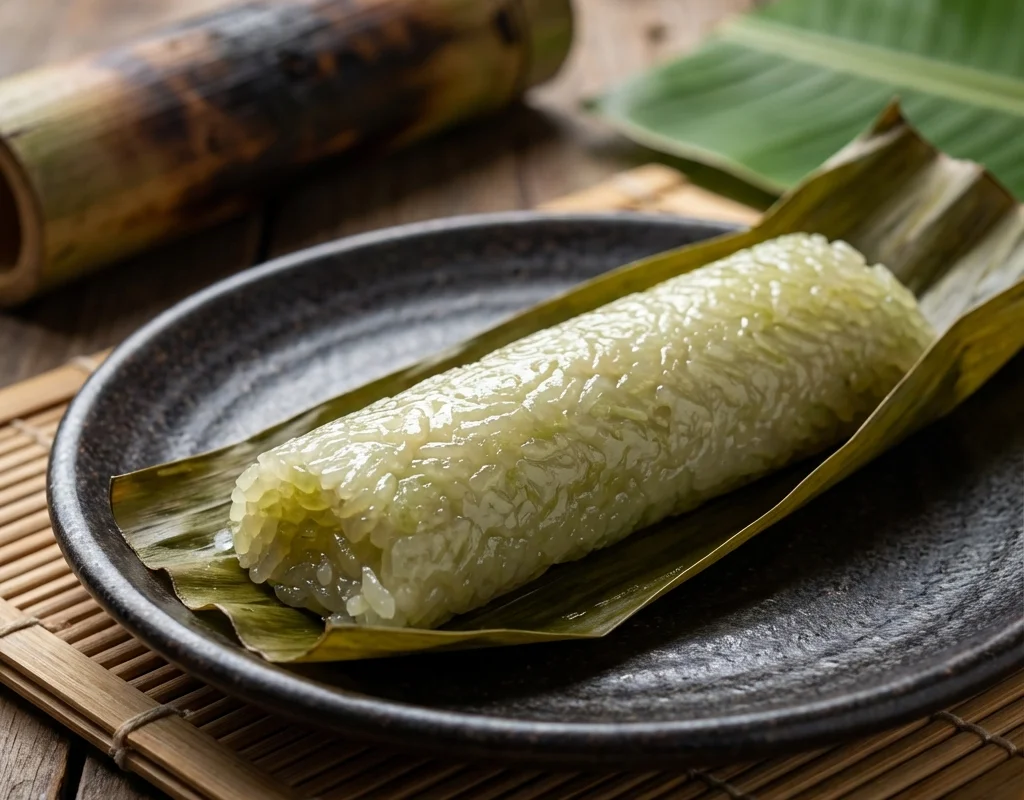
Sunga Saul
A traditional Assamese bamboo tube rice made by slow-cooking glutinous rice inside fresh bamboo. The bamboo lends a grassy, smoky aroma, and the rice turns soft, sticky, and wonderfully fragrant.
For 4 servings
- prep · ~240 min
Soak the rice.
Wash the glutinous rice well and soak it in enough water for 4 hours. Drain completely before filling the bamboo tubes.
- prep · ~5 min
Prepare the bamboo tubes.
1.Rinse the green bamboo tubes well inside and out.2.Check that one end of each tube is closed, or seal one end tightly with banana leaf.3.Keep a few extra banana leaf pieces ready to plug the top after filling. - assemble · ~7 min
Fill the bamboo tubes.
1.Divide the drained rice between the two bamboo tubes, filling each about halfway.2.Add a small pinch of salt to each tube.3.Pour in water so the rice is just covered with a little space left for expansion.4.Plug the open end tightly with banana leaf.TIPDo not overfill the tube. The rice swells as it cooks and needs room to expand. - roast · ~35 min
Cook the bamboo tubes over gentle heat.
Place the filled bamboo tubes over a low wood fire, charcoal fire, or open flame, turning often so they cook evenly on all sides. Cook until the outer bamboo is charred and the rice inside is tender.
TIPKeep the heat gentle. Very high heat can burn the bamboo before the rice cooks through. - rest · ~5 min
Rest the tubes briefly.
Take the tubes off the heat and let them rest for 5 minutes so the steam settles and the rice firms up slightly.
- assemble · ~5 min
Open and portion the Sunga Saul.
Carefully split or peel away the charred outer bamboo layer. Slide out the cooked rice cylinder and cut it into 4 equal pieces.
- serve
Serve warm.
What to keep in mind.
7 tips from the recipe — small details that make a real difference to the final dish.
- 1Drain the soaked glutinous rice very well so excess water does not make the rice gummy inside the bamboo.
- 2Fill each bamboo tube only halfway with rice and just cover with water; the grains need headroom to swell.
- 3Turn the tubes frequently over low heat to avoid one scorched side and help the rice cook evenly through the center.
- 4If the banana leaf plugs loosen, push them back in with tongs so steam stays trapped inside the tube.
- 5The rice is done when the bamboo is well charred, a toasty grassy aroma develops, and a skewer meets tender grains.
- 6Let the tubes rest before splitting them open so the sticky rice firms slightly and slides out in a neat cylinder.
- 7Leftover Sunga Saul can be wrapped and reheated by steaming, which keeps the glutinous rice soft better than dry heat.
Adapt it for your goals.
Sweet
Serve the cooked rice with jaggery or a drizzle of warm milk for a traditional sweet-style snack or breakfast.
savorySavory
Add a little more salt and pair it with roasted fish, chutney, or pickle for a more savory Assamese-style meal.
no banana leafNo-banana-leaf
If banana leaf is unavailable, use a clean natural fiber plug or food-safe foil only as a practical sealing substitute.
stovetop adaptationStovetop-adaptation
Cook the filled bamboo over a gas flame diffuser or very low stovetop flame when an outdoor fire is not possible.
Why this is on our healthy list.
Simple Ingredient Dish
Made with glutinous rice, water, salt, and banana leaf, this preparation is free from heavy frying fats and rich sauces.
Naturally Gluten-Free Grain
Glutinous rice is a rice variety and does not contain wheat, making the dish suitable for those avoiding gluten ingredients.
Low in Added Fat
Because the rice is slow-cooked in bamboo with water rather than oil, the final dish stays light and clean-tasting.
Frequently asked questions
You can cook the rice by other methods, but it will not have the same smoky, grassy aroma that fresh bamboo gives this dish.