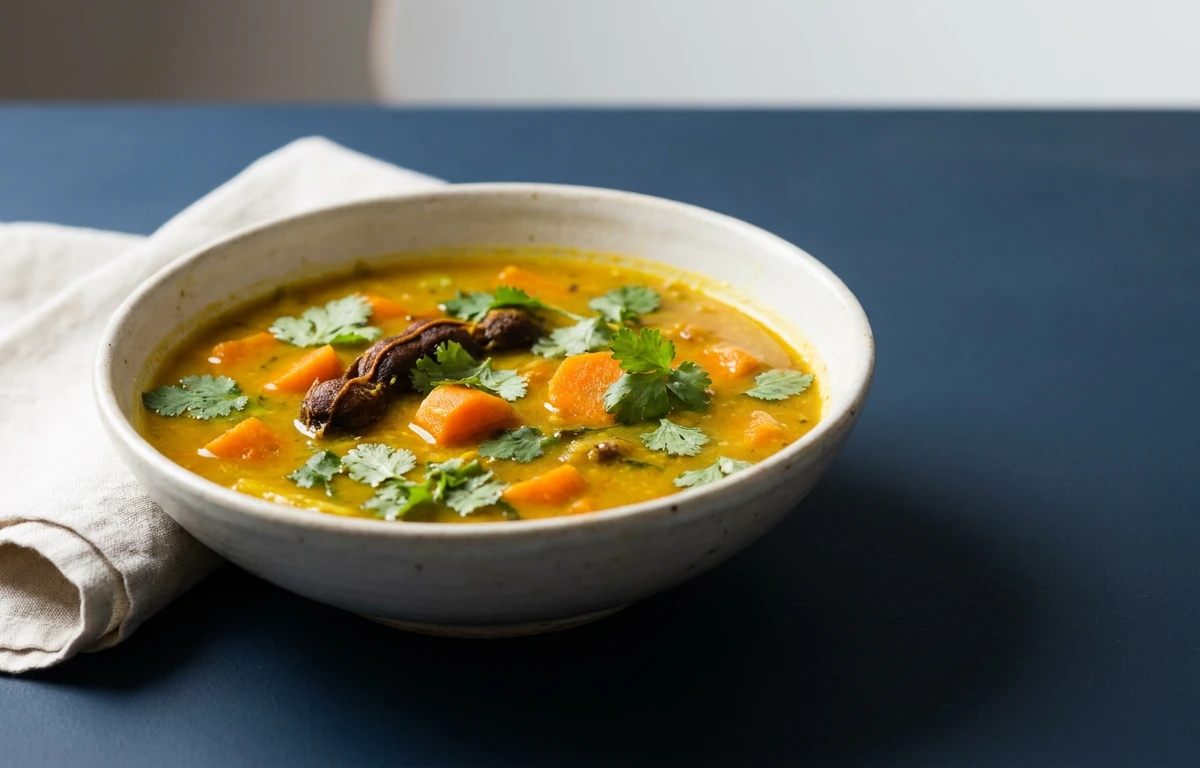
Turmeric Sambhar
A golden, tangy lentil stew from South India, infused with fresh turmeric and roasted spices. This aromatic sambhar combines toor dal with vegetables, tamarind, and freshly ground sambhar powder for a comforting bowl that pairs perfectly with steamed rice or idli.
For 4 servings
- prep · ~30 min
Soak tamarind and prep vegetables.
1.Soak the tamarind ball in 0.5 cup warm water for 15 minutes, then squeeze and extract the pulp. Discard the fiber and seeds.2.Wash and soak the toor dal in water for 30 minutes, then drain.3.Cut drumsticks into 3-inch pieces, slice carrot into rounds, cube the eggplant, quarter the tomato, and halve the shallots.TIPSoaking toor dal reduces cooking time and improves digestibility. - pressure cook · ~15 min
Pressure cook the dal.
1.Add the soaked toor dal to the pressure cooker with 2 cups of water and a pinch of turmeric powder.2.Pressure cook on medium heat for 4 whistles or until the dal is soft and mushy.3.Let the pressure release naturally, then mash the dal lightly with a ladle. Set aside.TIPNatural pressure release keeps the dal creamy. Don't quick-release. - roast · ~4 min
Dry roast the sambhar masala spices.
1.Heat 1 tsp oil in a small pan over medium-low heat.2.Add chana dal, urad dal, coriander seeds, cumin seeds, fenugreek seeds, dried red chilies, and black peppercorns.3.Roast, stirring constantly, until the dals turn golden and the spices release their aroma (2-3 minutes).4.Add the grated coconut and roast for another minute until lightly golden.5.Remove from heat and let the mixture cool completely.TIPKeep the heat medium-low and stir continuously — the dals can burn in seconds. - prep · ~2 min
Grind the fresh sambhar masala.
1.Transfer the cooled roasted spice-coconut mixture to a blender or spice grinder.2.Add the grated fresh turmeric root.3.Grind to a smooth paste, adding 2-3 tablespoons of water as needed.TIPA coarse paste works fine — it will dissolve and thicken the sambhar as it simmers. - simmer · ~10 min
Cook the vegetables in tamarind water.
1.In a heavy-bottomed pot, combine the extracted tamarind pulp with 2 cups of water.2.Add the drumstick pieces, carrot slices, and eggplant cubes.3.Add salt and bring to a boil, then reduce to a simmer and cook until the vegetables are tender but still hold their shape (8-10 minutes). - mix · ~10 min
Combine dal, vegetables, and masala.
1.Add the mashed toor dal to the pot with the cooked vegetables.2.Stir in the ground sambhar masala paste.3.Add the quartered tomatoes and halved shallots.4.Mix well and adjust water to reach a pouring consistency — about 1-1.5 cups more if needed.5.Bring to a gentle boil, then simmer for 8-10 minutes to meld the flavors.TIPLet it simmer uncovered — this thickens the sambhar slightly and deepens the flavor. - temper · ~2 min
Make the tempering.
1.Heat the remaining 1 tsp oil in a small tadka pan over medium heat until shimmering.2.Add mustard seeds and let them splutter completely (30 seconds).3.Add asafoetida and curry leaves — stand back, they'll crackle.4.Immediately pour the tempering over the simmering sambhar and stir in.TIPPour the tempering while it's still sizzling — that's when the aroma transfers best. - simmer · ~2 min
Final simmer and adjust seasoning.
Let the sambhar simmer for 2 more minutes after adding the tempering. Taste and adjust salt if needed. The sambhar should be tangy, savory, with a warm golden glow from the fresh turmeric.
- garnish
Garnish with fresh coriander leaves and serve hot.
Ladle into bowls and top with chopped coriander leaves. Serve immediately with steamed rice, idli, or dosa.
What to keep in mind.
7 tips from the recipe — small details that make a real difference to the final dish.
- 1Soaking toor dal for 30 minutes reduces cooking time and makes it easier to mash.
- 2Roast the sambhar masala spices on medium-low heat until the dals turn golden for a deep, nutty aroma.
- 3Use freshly grated turmeric root instead of powder for a vibrant golden color and earthy flavor.
- 4Let the dal pressure cook naturally to keep it creamy; avoid quick-release as it can make the dal grainy.
- 5Add the sizzling tempering directly into the hot sambhar to maximize the release of mustard seed and curry leaf aromas.
- 6Simmer the sambhar uncovered after adding the masala paste to let it thicken and intensify in flavor.
- 7Adjust the water to achieve a pouring consistency—sambhar should be slightly thick but pourable, not watery.
Adapt it for your goals.
Low-oil
Reduce oil to 1 tsp total by dry-roasting the masala spices without oil and skipping the oil in the tempering; sauté mustard seeds and curry leaves in a splash of water instead. This cuts calories while keeping the authentic flavor.
high proteinHigh-protein
Add 1/2 cup of cooked, cubed paneer or tofu along with the vegetables. This boosts the protein content without altering the sambhar's texture or flavor profile.
jainJain
Omit the shallots and asafoetida (if your version contains onion/garlic compounds); use a pinch of hing (asafoetida) that is pure. Replace drumsticks with extra carrots and squash to maintain the vegetable bulk.
veganVegan
This recipe is already vegan as written (no dairy, no animal products). Serve with steamed rice, idli, or dosa to keep it plant-based.
Why this is on our healthy list.
Rich in Plant Protein
Toor dal (pigeon pea lentils) is a excellent source of plant-based protein, helping with muscle repair and satiety in a balanced meal.
Anti-Inflammatory Properties
Fresh turmeric root contains curcumin, a compound known for its potent anti-inflammatory and antioxidant effects.
Supports Digestion
Fenugreek seeds and asafoetida (hing) are digestive aids commonly used in Indian cooking, helping to reduce bloating and improve gut health.
Rich in Fiber
The combination of lentils, drumsticks, carrots, and eggplant provides a good dose of dietary fiber, promoting healthy digestion and stable blood sugar levels.
Low in Fat
With only 2 teaspoons of oil total, this sambhar is a low-fat dish that relies on spices and fresh vegetables for its satisfying flavour.
Frequently asked questions
Yes, you can substitute 1 teaspoon of turmeric powder for the 2-inch piece of fresh root, but the fresh root gives a brighter color and a milder, earthier flavor. Add the powder when grinding the masala.