Eggs Over Easy
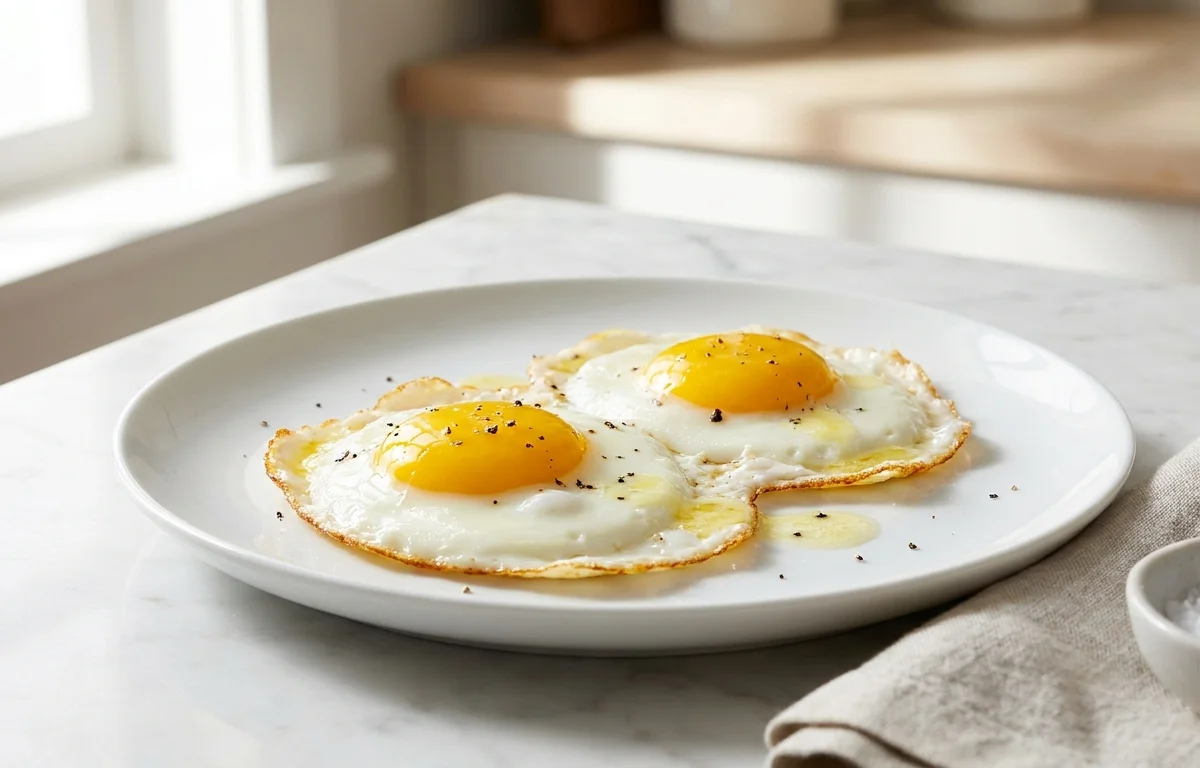
Perfectly fried eggs with set whites and an irresistibly runny yolk. A classic American breakfast staple, these eggs are flipped for just a few seconds to create a delicate film over the yolk while keeping that golden center deliciously liquid. Ready in under 5 minutes.
For 2 servings
- prep · ~1 min
Preheat the skillet.
Place an 8-inch nonstick skillet over medium-low heat. Add the butter and let it melt slowly, swirling the pan so it coats the surface evenly. The butter should be foamy but not browning.
TIPMedium-low heat is key — too hot and the whites will turn rubbery and brown before the yolk sets. - fry
Crack the eggs into the pan.
Crack one egg into a small ramekin or cup, then gently slide it into the skillet from a low height. Repeat with the second egg, spacing them apart. Listen for a gentle sizzle — not a violent crackle.
TIPCracking into a ramekin first avoids broken yolks and shell fragments in the pan. - fry · ~2 min
Cook until whites are nearly set.
Let the eggs cook undisturbed. You'll see the whites turn opaque from the outside in. When the whites are set around the edges but still have a thin translucent layer over the yolk, they're ready to flip. Season lightly with salt and pepper.
TIPDon't rush — wait until you see only a small ring of jelly-like white around the yolk. Flipping too early tears the egg. - fry
Flip the eggs gently.
Slide a thin spatula under one egg, tilting the pan to help. Lift confidently and flip it in one smooth motion — yolk side down. Repeat with the second egg immediately.
TIPKeep the spatula flat and low. A jerky flip breaks the yolk. - fry
Cook for 20 to 30 seconds on the second side.
Let the eggs cook for just 20 to 30 seconds — long enough for the thin white film to seal over the yolk, but short enough to keep the yolk runny. The eggs should slide freely in the pan when they're done.
TIPPress the yolk gently with the spatula. It should feel soft and wobbly — firm means over-medium or over-hard. - serve
Serve immediately.
Slide the eggs onto a warm plate, yolk side up. Serve right away with toast, hash browns, or on a breakfast sandwich while the yolks are still liquid.
TIPWarm the plate in advance — eggs cool fast and cold plates set the yolk prematurely.
What to keep in mind.
6 tips from the recipe — small details that make a real difference to the final dish.
- 1Use the freshest eggs you can find; their whites hold together better and the yolks stay plump.
- 2A nonstick skillet is essential for clean flipping and easy release of the eggs.
- 3Crack each egg into a small cup first to avoid broken yolks and shell bits in the pan.
- 4Cook over medium-low heat so the whites set slowly without browning or turning rubbery.
- 5Flip only when a thin ring of jelly-like white remains around the yolk — this ensures the white is fully set.
- 6Warm your serving plate in the microwave or oven to keep the yolks runny on the table.
Adapt it for your goals.
Garlic-herb
Add a smashed garlic clove and a sprig of thyme or rosemary to the butter while it melts; remove before cracking eggs for a subtle aromatic infusion.
cheesyCheesy
Sprinkle a tablespoon of grated Parmesan or sharp cheddar over the whites just before flipping for a lacy, savory crust.
spicySpicy
Add a pinch of red pepper flakes or a dash of hot sauce to the butter before cooking for a gentle heat that complements the runny yolk.
avocado toast styleAvocado-toast-style
Serve the eggs over a slice of toasted sourdough topped with smashed avocado, a squeeze of lime, and a sprinkle of chili flakes.
Why this is on our healthy list.
High-Quality Protein
Eggs provide complete protein with all essential amino acids, supporting muscle repair and satiety.
Rich in Choline
Egg yolks are one of the best dietary sources of choline, a nutrient important for brain health and memory.
Vitamin D Boost
Eggs are one of the few natural food sources of vitamin D, which supports bone health and immune function.
Low-Calorie Foundation
With just a teaspoon of butter, this preparation keeps calories moderate while delivering satisfying fat and protein.
Frequently asked questions
Use a good nonstick skillet and enough butter (at least 1 teaspoon) over medium-low heat. Let the butter foam but not brown before adding eggs.