Green Cabbage: Weight Loss, Gut Health, Glycemic Index & Why It's a Kitchen Staple: verified nutrition facts, glycemic context, serving guidance, and practical cooking ideas.
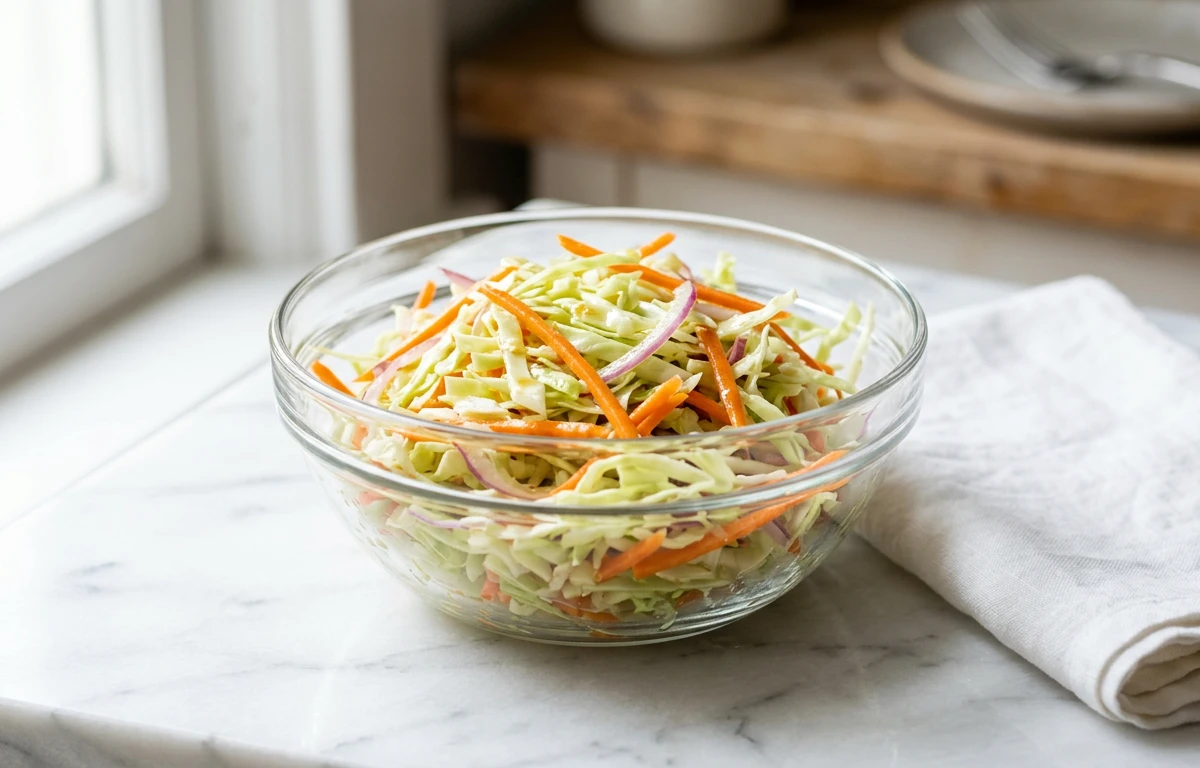
↑ Green cabbage: a low-calorie, high-fibre kitchen staple.
The Underrated Kitchen Workhorse
Cabbage is a member of the Brassica family, alongside broccoli, kale, and cauliflower. It’s been a dietary staple for centuries for a simple reason: it's cheap, it grows almost anywhere, and it stores for weeks in the fridge. But its utility goes far beyond convenience. It's a crisp, hydrating, and incredibly low-calorie vehicle for nutrients. Whether you're eating it raw in a slaw, stir-frying it, or fermenting it into sauerkraut, you're getting a fantastic nutritional return on your investment.
IN ONE LINE
Green cabbage is an incredibly low-calorie, low-carb vegetable packed with fibre and vitamin C, making it a star for weight loss, gut health, and blood sugar control.
Green Cabbage Nutrition Facts
Here's what a standard 100-gram serving of raw green cabbage — about a cup, shredded — provides. The numbers speak for themselves.
The numbers are almost comically good. For just 22 calories, you get a solid dose of fibre and over a third of your daily vitamin C. That's more vitamin C, gram for gram, than an orange. The carbohydrate count is tiny, and once you subtract the fibre, the net carbs are practically zero. This is what makes it such a powerhouse for low-carb diets and blood sugar management.
Cabbage and the Glycemic Index
There's no official, widely published glycemic index (GI) for green cabbage, and there's a good reason for that: it barely has enough digestible carbohydrate to measure. Its GI is presumed to be very low, likely under 15. Its glycemic load (GL), which considers portion size, is effectively zero. This means cabbage has a negligible effect on blood sugar levels, making it one of the best vegetables you can eat for metabolic health.
GLYCEMIC INDEX · CABBAGE vs COMMON FOODS
Cabbage Has a Negligible Glycemic Impact
Green Cabbage
non-starchy veg (est.)
LOW
Cherries
whole fruit
LOW
Apple
whole fruit
LOW
Pineapple
whole fruit
MEDIUM
White bread
refined
HIGH
SCALE 0–90
04590
How to Get the Most From It
Cabbage is versatile, but a few simple tricks can maximize its benefits and flavor.
01
Eat it raw.
Shredded into slaws or salads is the best way to preserve its vitamin C, which is sensitive to heat.
02
Don't overcook it.
If you are cooking it, a quick stir-fry or steam is best. Cooking to a mushy state destroys nutrients and texture, and releases that sulfur smell.
03
Use it as a wrap.
Large cabbage leaves, either raw or quickly blanched, make a fantastic, crunchy, low-carb substitute for bread or tortillas.
04
Add acid.
A squeeze of lemon juice or a splash of vinegar in a slaw or stir-fry cuts through the slight bitterness and brightens the flavor.
05
Ferment it.
Making your own sauerkraut is simple and adds a huge dose of probiotics for gut health, on top of the cabbage's own prebiotic fibre.
What Green Cabbage Is Good For
01
Effortless Weight Management
It's a classic 'high-volume' food. You can eat a large, filling portion for very few calories, thanks to its high water and fibre content.
~22
calories
02
A Happy Gut
The 2.8 grams of fibre per serving act as a prebiotic, feeding the beneficial bacteria in your gut. This is the foundation of a healthy microbiome.
2.8 g
fibre
03
Serious Immune Support
We don't think of cabbage as a vitamin C source, but it's a great one. A single serving provides over a third of your daily needs for immune function and skin health.
37%
vit C DV
04
Excellent Blood Sugar Control
With a negligible glycemic load and very few carbs, cabbage is one of the best vegetables for keeping blood sugar levels stable.
GI <15
very low
05
Bone and Blood Health
Cabbage is an outstanding source of Vitamin K, crucial for blood clotting and directing calcium to your bones.
63%
vit K DV
What to Pair Cabbage With
Cabbage is a neutral team player. Its mild, slightly peppery flavor works with almost anything. The key is to pair it with bold flavors and contrasting textures.
A Fit For Almost Everyone
Three Ways to Use It Beyond Slaw
Think beyond the mayo-drenched picnic side. Cabbage is incredibly versatile.
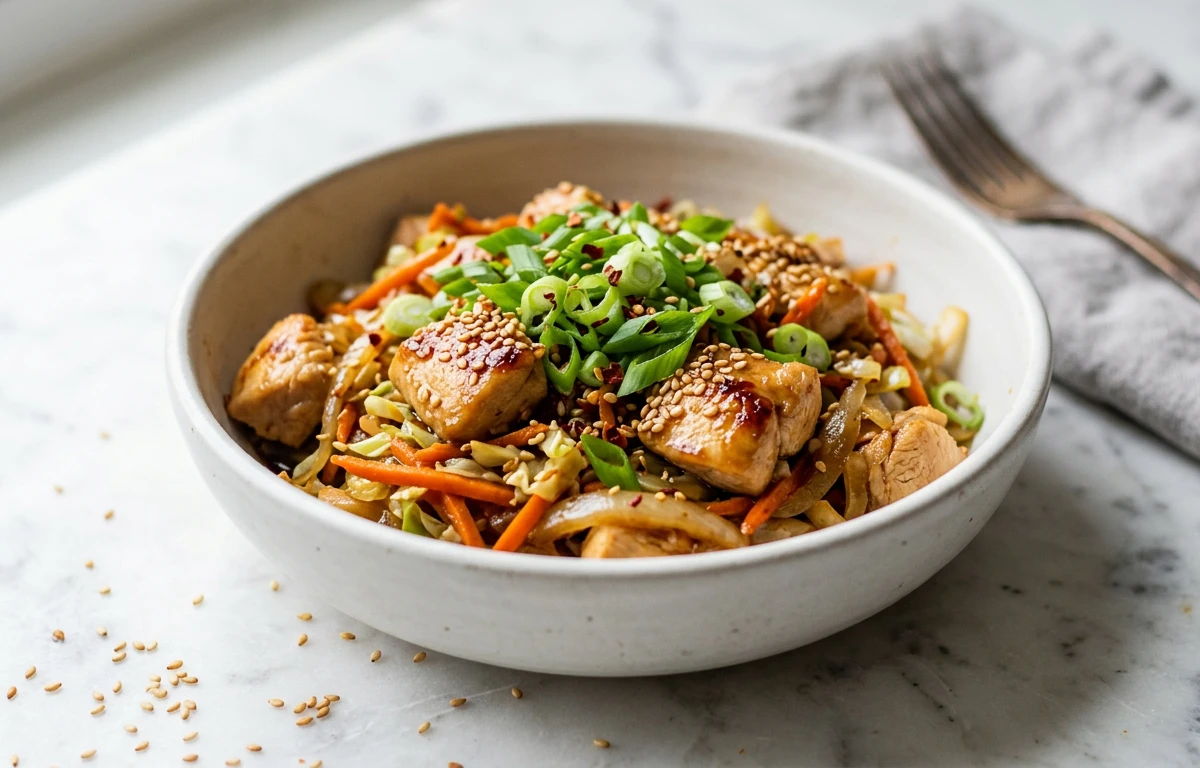
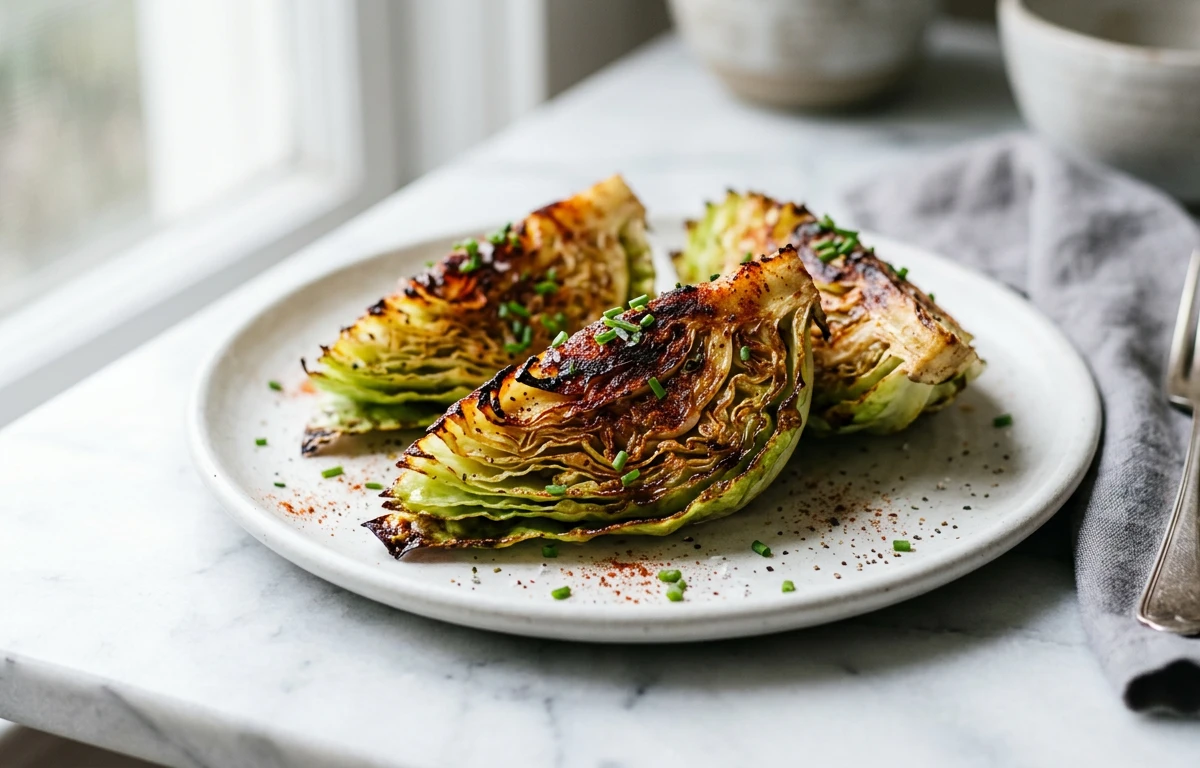
Want vegetables worked into a balanced week — without the planning?
Our meal planner pairs vegetables like cabbage with protein and healthy fats for steady energy, with portions and macros already calculated and a single grocery list at the end.
Build my weekly plan →SOURCES & REFERENCES · 3
One more thing
Eating well is rarely about willpower. It’s about having a short list of dinners you actually want to eat. Pick two from this list. Make them next week. The rest will follow.
If you want these on autopilot, our weekly meal planner can drop the picks above into your calendar with one click and build a single grocery list from the merged ingredients.
FREQUENTLY ASKED QUESTIONS
Frequently Asked Questions
Is raw or cooked cabbage healthier?
It's a trade-off. Raw cabbage has more vitamin C, which is heat-sensitive. Cooked cabbage is easier for many people to digest and can make nutrients like Vitamin K more available. A mix of both is ideal.
Does cabbage cause gas and bloating?
It can. Cabbage contains both fibre and a type of sugar called raffinose, which can be hard for some people to digest, leading to gas. Cooking helps break these down. If you're sensitive, start with small, cooked portions.
Is cabbage good for weight loss?
It's one of the best foods for weight loss. It's very low in calories but high in fibre and water, which helps you feel full. You can eat a large volume of it without consuming many calories.
Can eating too much cabbage be bad for your thyroid?
This is a common concern that's mostly overblown. Cabbage contains goitrogens, which can interfere with thyroid function in theory. However, you would need to eat an enormous and unrealistic amount of raw cabbage every day for it to be a problem for most people. Cooking deactivates most of these compounds. If you have a thyroid condition, it's always best to speak with your doctor.
METHODOLOGY
How this article was created
Built using verified nutrition databases, culinary research, and traditional cooking knowledge — every claim is cross-referenced against the sources listed in the article.
· USDA data· Culinary research· Quality reviewed
Read our methodology →TRANSPARENCY
About this content
Articles are curated using trusted food databases (USDA FoodData Central, IFCT), culinary literature, and dietary guidelines, then structured by our editorial team for clarity, accuracy, and usefulness.
· Verified data sources· Culinary research· Quality reviewed
Read our editorial policy →RELATED RECIPES
Cook from this article
EXPLORE OUR MEALS
Meals that fit this article

AMERICAN · 1677 CAL
Almonds with Sliced Apple + supplement + iron

MEDITERRANEAN · 809 CAL
Greek Yogurt with Berries Almonds and Granola + supplement + iron

GENERAL_HEALTHY · 705 CAL
Banana with Peanut Butter Pregnancy + supplement + iron

MODERN · 982 CAL
Hummus with Crudits and Pita with Fresh Orange Snack + supplement + iron
TAGGED
KEEP READING