Let's get one thing straight right away: you cannot, under any circumstances, eat taro leaves raw. They're packed with sharp, needle-like crystals of calcium oxalate that will make your mouth and throat feel like they're on fire. But cook them properly — and it's not hard — and they transform into something wonderful: a silky, deep green vegetable with a flavour somewhere between spinach and kale, but richer. And nutritionally? They're a quiet superstar.
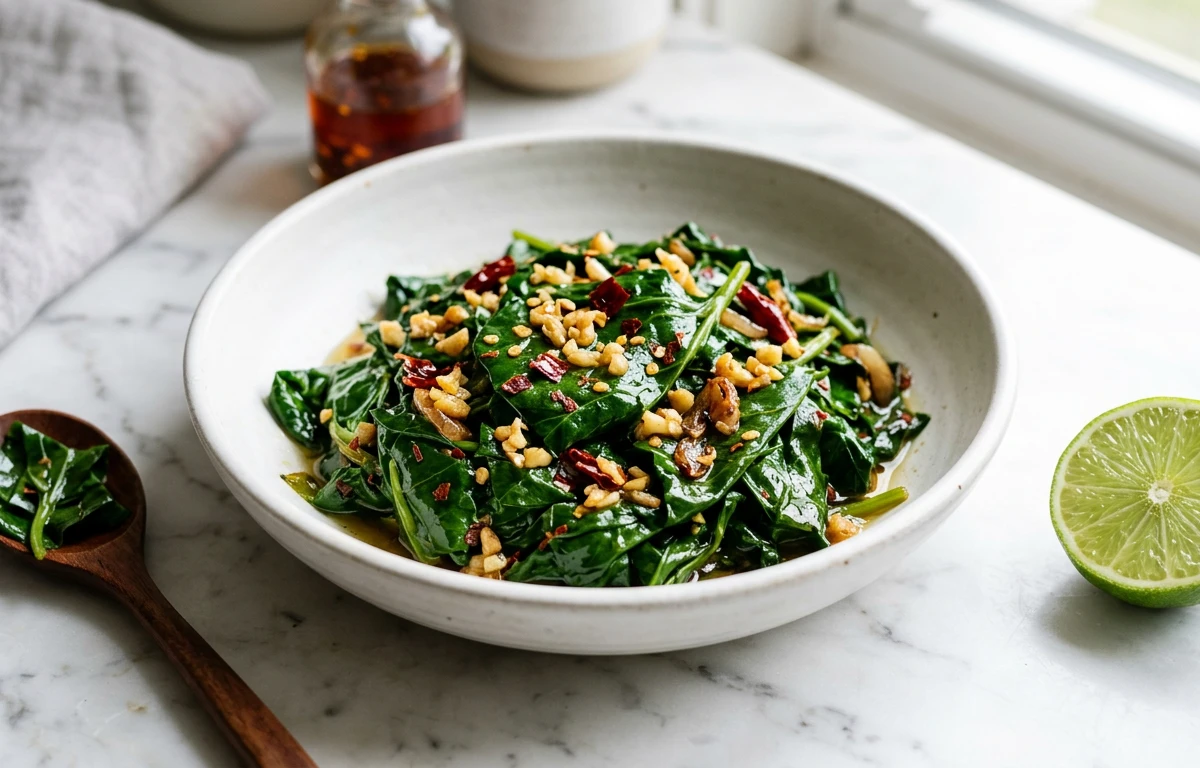
↑ Properly cooked taro leaves are silky, nutritious, and safe. Never eat them raw.
The delicious, must-cook green
In many parts of the world—from the Caribbean to West Africa to India and Polynesia—taro leaves (also known as colocasia leaves or arbi ke patte) are a staple green. They're not just 'edible,' they're prized for a rich, earthy flavor and a wonderfully silky texture when cooked down. The catch, and it's a big one, is that they contain calcium oxalate crystals. These tiny, sharp particles are a plant's natural defense, and they'll cause intense irritation if you eat the leaves raw or undercooked.
The good news? A proper cooking—boiling, steaming, or long simmering—completely neutralizes the oxalates, making the leaves perfectly safe and unlocking their impressive nutrition.
THE BOTTOM LINE
Cook them well and taro leaves are a low-calorie, high-fiber, vitamin C-rich green. But eaten raw? They're genuinely dangerous.
Taro leaf nutrition facts
Here's the nutritional profile for a 100-gram (about 3.5 ounce) serving of cooked taro leaves. For a leafy green, the protein content is unusually high.
The numbers speak for themselves. This is a low-calorie food that packs a real punch. 5 grams of protein is more than you'd find in the same amount of spinach or kale, and 52 mg of vitamin C is over half of what you need in a day. The fiber content is also excellent, which contributes to fullness and gut health.
Taro leaves have a very low glycemic index
Glycemic index (GI) isn't really a concern with taro leaves. As a low-carbohydrate, high-fiber leafy green, its effect on blood sugar is negligible. The GI is so low that it's not typically measured or reported—it simply doesn't contain enough available carbohydrate to cause a spike. For anyone managing blood sugar, taro leaves are an excellent, worry-free choice.
GLYCEMIC INDEX · TARO LEAVES vs COMMON FOODS
Taro leaves have a negligible glycemic impact
Taro Leaves
cooked
LOW
Apple
whole fruit
LOW
Pineapple
whole fruit
MEDIUM
White bread
refined
HIGH
Cornflakes
refined
HIGH
SCALE 0–90
04590
How to cook taro leaves safely
This is the most important part. Don't be intimidated, just be thorough. The goal is to break down the oxalate crystals completely.
01
Wash and prep.
Wash the leaves thoroughly. If the stems are thick, you can peel the outer layer and chop them to cook along with the leaves. They need cooking, too.
02
Cook until completely tender.
This is not a vegetable for a quick stir-fry. Boil, steam, or simmer them for at least 15-20 minutes, or until they are completely limp and silky. Some traditional recipes call for 45 minutes or more.
03
Never taste for doneness early.
Don't 'test' a leaf after just a few minutes of cooking. Wait until they have been cooking for a significant amount of time and appear fully wilted.
04
Add an acidic ingredient.
Many traditional recipes include something acidic like tamarind, lemon juice, or vinegar. This not only brightens the flavor but can also help in breaking down any remaining oxalates.
05
Consider a pre-boil.
If you're unsure, a foolproof method is to boil the leaves in water for 10-15 minutes, discard the water, and then proceed with your recipe. This helps leach out a significant portion of the water-soluble oxalates.
What cooked taro leaves are good for
01
A major vitamin C boost
One 100g serving provides over half your daily vitamin C, crucial for immune function, skin health, and iron absorption.
58%
vit C DV
02
Unusually high in plant protein
With 5 grams of protein per serving, taro leaves contribute to muscle maintenance and satiety more than most other greens.
5 g
protein
03
Excellent for gut health
The high fiber content helps promote regular digestion and feeds beneficial gut bacteria, contributing to overall wellness.
3.7 g
fiber
04
Supports weight management
At only 53 calories, the combination of high fiber, high protein, and high water content makes taro leaves incredibly filling for very few calories.
53
calories
What to pair taro leaves with
Taro leaves' rich flavor and silky texture pair beautifully with creamy, aromatic, and acidic ingredients that complement their earthiness.
Eat freely — or be mindful?
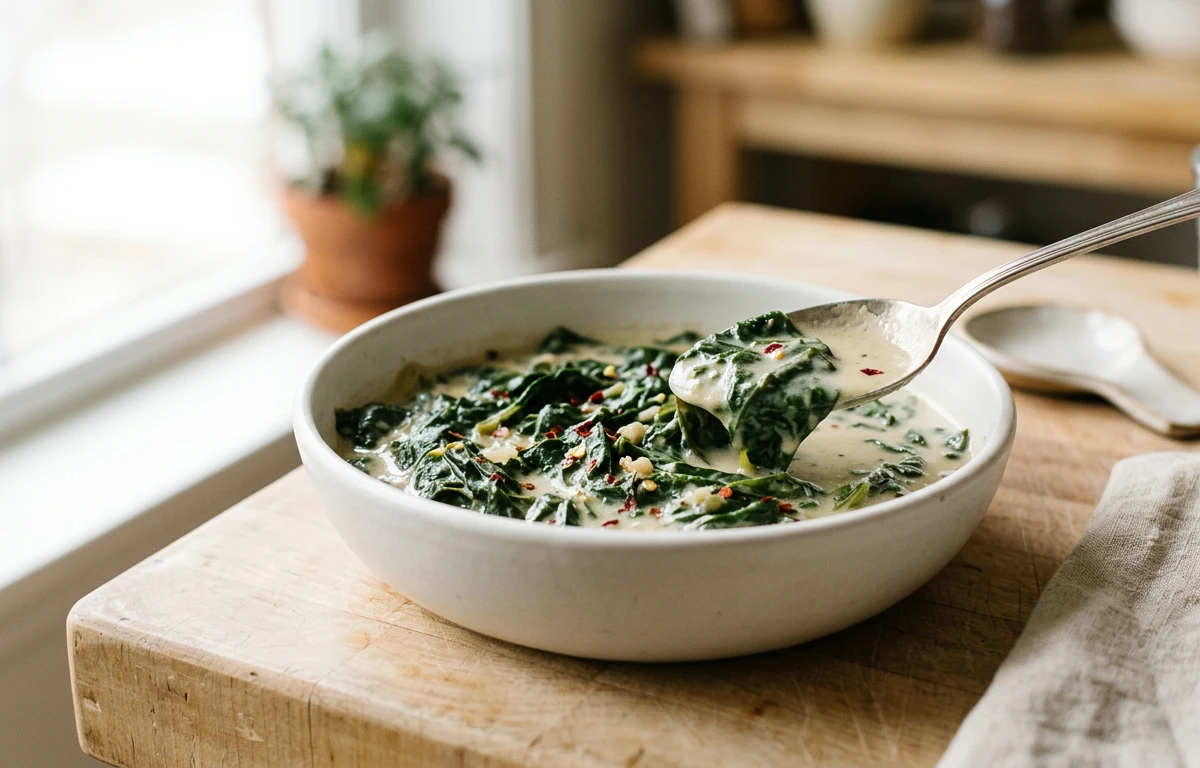
Three ways to cook them
These simple recipes showcase how to safely prepare and enjoy taro leaves, turning them into delicious and nourishing dishes.
.webp)
Want more interesting vegetables in your week?
Our meal planner can help you incorporate a wider variety of nutrient-dense foods like taro leaves into balanced, delicious meals—with portions and macros calculated for you.
Build my weekly plan →SOURCES & REFERENCES · 3
One more thing
Eating well is rarely about willpower. It’s about having a short list of dinners you actually want to eat. Pick two from this list. Make them next week. The rest will follow.
If you want these on autopilot, our weekly meal planner can drop the picks above into your calendar with one click and build a single grocery list from the merged ingredients.
FREQUENTLY ASKED QUESTIONS
Frequently asked questions
Are taro leaves poisonous?
Yes, when raw. They contain calcium oxalate crystals which cause severe irritation. Thorough cooking (boiling, long simmering) completely neutralizes these compounds, making the leaves perfectly safe and delicious to eat.
What do taro leaves taste like?
When cooked, they have a unique, rich, earthy flavor, often compared to a nuttier, deeper version of spinach or kale. Their texture becomes very soft and silky, not stringy.
Can you eat the stems of the taro plant?
Yes, the leaf stems (petioles) are also edible and used in many cuisines. However, like the leaves, they are also full of oxalates and MUST be cooked thoroughly before consumption.
Where can I buy taro leaves?
You can typically find them in international grocery stores, particularly those specializing in Asian, Caribbean, African, or Pacific Islander foods. They may be sold fresh, frozen, or sometimes canned.

ABOUT THE AUTHOR
Shreya Chatterjee
NUTRITION WRITER
Shreya is a nutrition writer and the voice behind The Nutrition Pen, where she turns evidence-based nutrition into simple, repeatable eating habits. Her writing focuses on practical food guidance — what to actually put on the plate — for readers who want to eat well without the noise.
Meet the editorial team →METHODOLOGY
How this article was created
Built using verified nutrition databases, culinary research, and traditional cooking knowledge — every claim is cross-referenced against the sources listed in the article.
· USDA data· Culinary research· Quality reviewed
Read our methodology →TRANSPARENCY
About this content
Articles are curated using trusted food databases (USDA FoodData Central, IFCT), culinary literature, and dietary guidelines, then structured by our editorial team for clarity, accuracy, and usefulness.
· Verified data sources· Culinary research· Quality reviewed
Read our editorial policy →EXPLORE OUR MEALS
Meals that fit this article

AMERICAN · 1677 CAL
Almonds with Sliced Apple + supplement + iron

MEDITERRANEAN · 809 CAL
Greek Yogurt with Berries Almonds and Granola + supplement + iron

GENERAL_HEALTHY · 705 CAL
Banana with Peanut Butter Pregnancy + supplement + iron

MODERN · 982 CAL
Hummus with Crudits and Pita with Fresh Orange Snack + supplement + iron
TAGGED
KEEP READING