Let's be honest: corn gets a bit of a bad rap. It’s often dismissed as a sugary, starchy filler with not much to offer. But that’s a huge oversimplification that mostly applies to its hyper-processed cousins like high-fructose corn syrup. A kernel of sweet corn, on the other hand, is a whole grain. It’s got fiber, a surprising amount of nutrients, and a glycemic index that's much gentler than you'd think. The trick is to see it not as a 'free' vegetable, but as a smart carbohydrate.
↑ Whole kernel corn is a whole grain, not just a sugary vegetable.
The misunderstood whole grain
Here's the most important thing to know about corn: when you eat a whole kernel, you're eating a whole grain. Each kernel is an intact seed of a cereal grass, complete with its bran (the outer skin), germ (the embryo), and endosperm (the starchy part). This is why it behaves so differently from corn flour or corn syrup, where the grain has been pulverized and stripped of its best parts.
So while we treat it like a vegetable on our plates, it's nutritionally closer to other whole grains like brown rice or oats. It's a source of starchy carbohydrate, yes, but that starch is bundled with fiber that slows down its digestion.
IN ONE LINE
Eaten as whole kernels, sweet corn is a low-GI whole grain that's a good source of fiber. It's the processed versions — syrup, refined flour, sugary cereals — that give corn a bad name.
Sweet corn nutrition facts
Here’s the nutritional profile for a 100-gram serving of cooked sweet corn, which is about half a cup of kernels.
The standout number here is the fiber. At nearly 3 grams per 100g serving, it's a significant contributor to your daily needs — more than you'd find in a similar serving of brown rice. The protein content is also decent for a 'vegetable'. This combination of fiber and protein is what makes corn more filling and satisfying than you might expect.
Corn's glycemic index
The glycemic index (GI) tells us how quickly a food's carbohydrates affect blood sugar. Anything under 55 is considered low. Boiled sweet corn has a GI of about 52, placing it firmly in the 'low' category — similar to mango, and much lower than white bread or even potatoes. This is largely thanks to its fiber content, which acts like a brake on sugar absorption. Its glycemic load (which accounts for a typical portion size) is also low, at around 7. It's not a 'free' food, but it won't cause the dramatic spike-and-crash you get from refined carbs.
GLYCEMIC INDEX · CORN vs COMMON FOODS
Corn's glycemic index in context
Apple
whole fruit
LOW
Sweet Corn
whole grain
LOW
Pineapple
whole fruit
MEDIUM
White bread
refined
HIGH
Cornflakes
refined
HIGH
SCALE 0–90
04590
The smart way to eat it
Getting the best from corn is simple. It's mostly about eating the right kind, in the right amount.
01
Stick to whole kernels.
Fresh, frozen, or canned (no salt added) are all great. This ensures you get the fiber. Creamed corn, corn fritters, and corn bread are different foods entirely.
02
Mind the portion.
A half-cup of kernels (about 100g) is a sensible serving size that delivers the benefits without overloading on carbs.
03
Pair it with protein and fat.
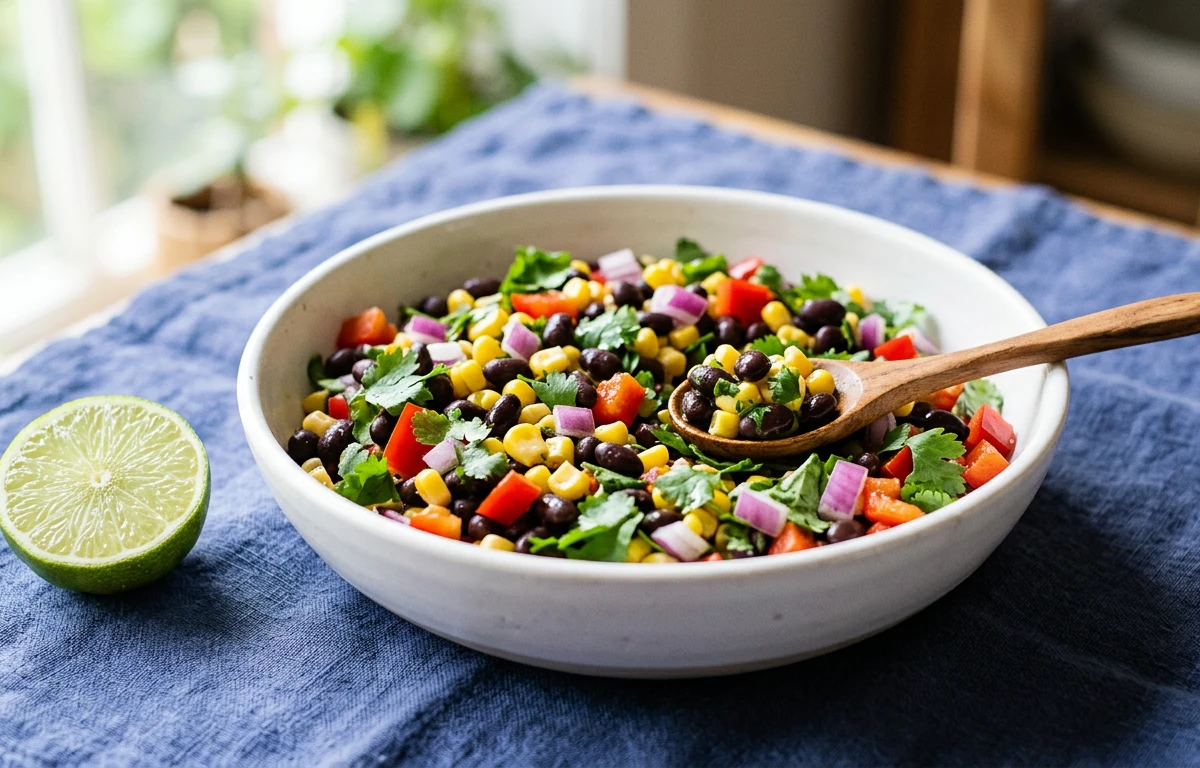
Corn and beans are a classic for a reason. Adding protein (beans, chicken, cheese) or fat (avocado, butter) makes it a balanced meal and slows digestion further.
04
Don't drown it.
A little butter is fine, but loading up on creamy, cheesy sauces can quickly turn a healthy side into a heavy one.
What corn is good for
01
A surprising source of fiber
With nearly 3 grams of mostly insoluble fiber per serving, corn is great for digestive health and keeping you regular.
2.7 g
fiber
02
Antioxidants for eye health
Yellow corn is one of the best sources of lutein and zeaxanthin, two antioxidants that accumulate in the retina and are linked to a lower risk of cataracts and macular degeneration.
Lutein
& Zeaxanthin
03
Steady, whole-grain energy
As a low-GI whole grain, corn provides carbohydrates for energy without the sharp blood sugar spike of refined grains.
GI 52
low
04
Naturally gluten-free
For those with celiac disease or a gluten sensitivity, corn is a safe and versatile grain to include in their diet.
100%
gluten-free
What to pair corn with
Corn's sweetness plays well with savory, spicy, and acidic flavors. Adding protein or healthy fats turns it from a simple side into the base of a satisfying meal.
Eat freely — or be mindful?
Three ways with corn
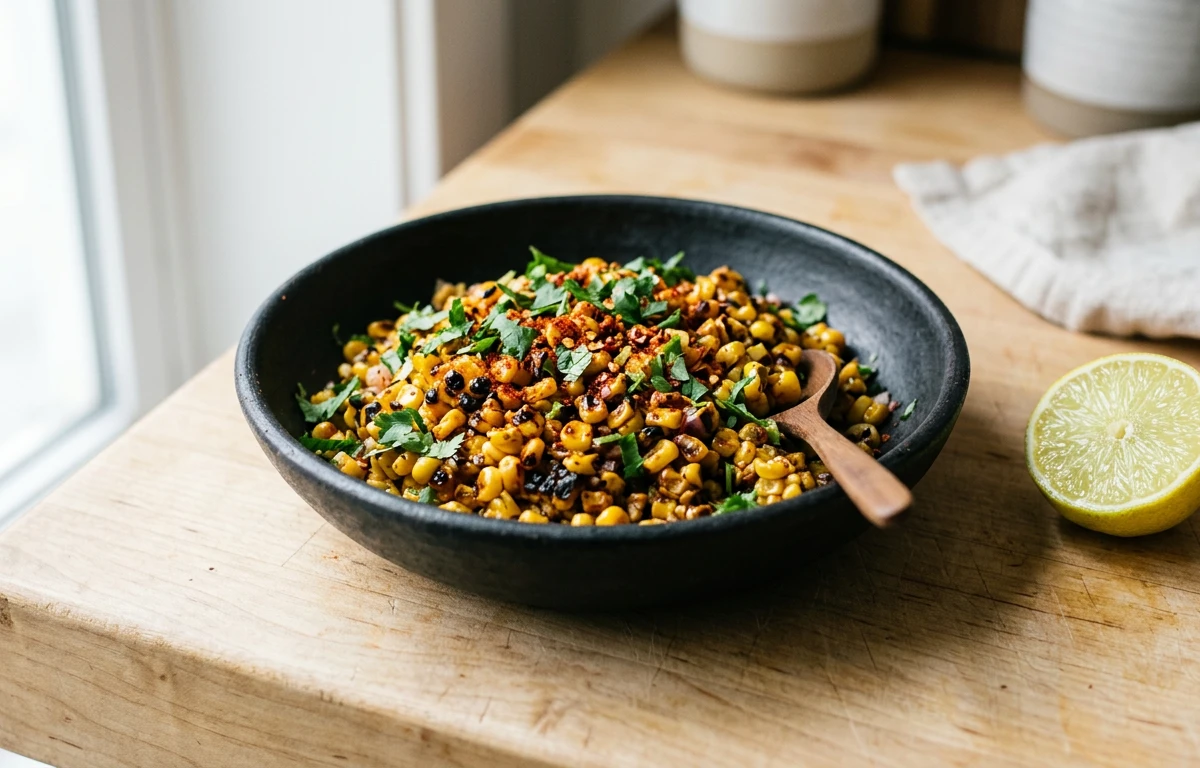
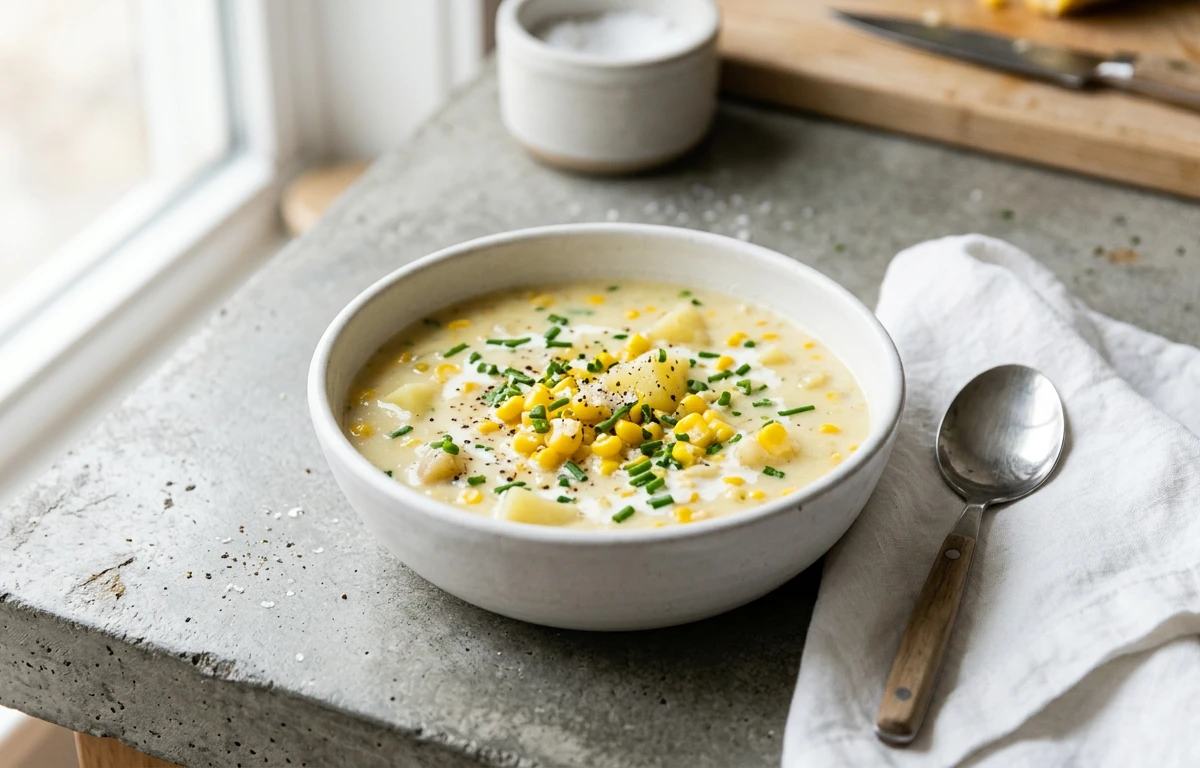
Beyond boiling it and adding butter, here are three simple ways to make whole kernel corn a star.
Want smart carbs worked into a balanced week?
Our meal planner incorporates whole grains like corn into delicious, easy recipes, with portions and macros already calculated. Get a balanced plan and a single grocery list, tailored to you.
Build my weekly plan →SOURCES & REFERENCES · 3
One more thing
Eating well is rarely about willpower. It’s about having a short list of dinners you actually want to eat. Pick two from this list. Make them next week. The rest will follow.
If you want these on autopilot, our weekly meal planner can drop the picks above into your calendar with one click and build a single grocery list from the merged ingredients.
FREQUENTLY ASKED QUESTIONS
Frequently asked questions
Is corn good for people with diabetes?
Yes, in moderation. Whole kernel corn has a low glycemic index (around 52) and contains fiber, which helps manage blood sugar. However, it is a source of carbohydrates, so portion control (around a half-cup serving) is key.
Is corn fattening or good for weight loss?
No single food is inherently 'fattening'. Corn is relatively low in calories (86 per 100g) and its fiber content can help with fullness, which supports weight management. As with any food, excessive portions can contribute to weight gain.
Is corn a vegetable, a fruit, or a grain?
It's technically all three! Botanically, a corn kernel is a type of fruit called a caryopsis. Culinarily, we use it as a vegetable. And nutritionally, because it's the seed of a cereal grass, it's classified as a whole grain.
Is canned corn as healthy as fresh or frozen?
Yes, for the most part. The canning process preserves most of corn's nutrients. The main thing to watch for is added salt or sugar. Opt for cans that say 'no salt added' and rinse the kernels before using.
METHODOLOGY
How this article was created
Built using verified nutrition databases, culinary research, and traditional cooking knowledge — every claim is cross-referenced against the sources listed in the article.
· USDA data· Culinary research· Quality reviewed
Read our methodology →TRANSPARENCY
About this content
Articles are curated using trusted food databases (USDA FoodData Central, IFCT), culinary literature, and dietary guidelines, then structured by our editorial team for clarity, accuracy, and usefulness.
· Verified data sources· Culinary research· Quality reviewed
Read our editorial policy →RELATED RECIPES
Cook from this article
EXPLORE OUR MEALS
Meals that fit this article

AMERICAN · 1677 CAL
Almonds with Sliced Apple + supplement + iron

MEDITERRANEAN · 809 CAL
Greek Yogurt with Berries Almonds and Granola + supplement + iron

GENERAL_HEALTHY · 705 CAL
Banana with Peanut Butter Pregnancy + supplement + iron

MODERN · 982 CAL
Hummus with Crudits and Pita with Fresh Orange Snack + supplement + iron
TAGGED
KEEP READING