It's so easy to sit down with a whole bag of grapes and, before you know it, they're gone. That mindless ease is why they get a reputation for being 'nature's candy' or just little balls of sugar. But that's not the whole story. A cup of grapes is surprisingly low on the glycemic index, deeply hydrating, and packed with interesting antioxidants that you won't find on a standard nutrition label. The key isn't to fear them; it's to see them as a proper snack and eat a portion, not a punnet.
↑ Grapes are over 80% water, making them an incredibly hydrating snack.
The ultimate snack fruit
Grapes are perhaps the most convenient fruit on the planet. No peeling, no chopping, no sticky mess. You just wash, pluck, and pop. This convenience is also their biggest liability. It's why we tend to view them as a treat rather than a serious fruit, and why the 'too much sugar' label has stuck.
But let's be fair. Those sweet little globes are mostly water, and the sugar they contain is packaged in a way that your body handles surprisingly well. A cup of grapes is a low-glycemic food, meaning it won't send your blood sugar on a rollercoaster. The trick is simply to be mindful.
IN ONE LINE
A cup of grapes is a low-GI, hydrating snack rich in antioxidants. Eat them whole and stick to a single portion to get the benefits without the sugar overload.
Grape nutrition facts
Here's what a standard one-cup serving of fresh grapes — about 100 grams — provides, according to the USDA.
The numbers themselves are pretty modest. The calories are low, there's barely any fat or protein, and the fiber and vitamin C content isn't going to win any awards. The real health story of grapes lies in what's not on this label: their high water content (over 80%) and their rich profile of phytonutrients, especially antioxidants like resveratrol, which are concentrated in the skin of red and purple grapes.
Are grapes too sugary?
At around 17 grams of sugar per cup, grapes are certainly sweet. But the idea that they're 'bad' for you because of this sugar is a misunderstanding. The sugar in whole grapes is intrinsic, meaning it's bound within the fruit's fibrous cells and diluted in lots of water. This structure is why a cup of grapes has a low glycemic index of 53. Your body has to work to break down the fruit and release the sugar, leading to a much gentler blood sugar response than you'd get from, say, a cookie with the same amount of sugar.
WATCH OUT
Grape juice and raisins are a different story. Juicing removes the fiber, and drying removes the water. Both processes concentrate the sugar and make it much faster to absorb, turning a healthy fruit into something that behaves more like a sugary drink or candy.
Grapes' glycemic index
The glycemic index (GI) is a 0-100 scale that tells us how quickly a food raises blood sugar levels. Anything under 55 is considered 'low'. Grapes score around 53, placing them firmly in the low-GI category. This means they provide a steadier source of energy than high-GI foods. Compared to other common foods, grapes sit in a very reasonable spot.
GLYCEMIC INDEX · GRAPES vs COMMON FOODS
Grapes sit comfortably in the low-GI band
Cherries
whole fruit
LOW
Apple
whole fruit
LOW
Grapes
whole fruit
LOW
Pineapple
whole fruit
MEDIUM
White bread
refined
HIGH
SCALE 0–90
04590
The smart way to eat them
Enjoying grapes is simple, but a few small habits can help you get the most out of them while keeping the sugar in check.
01
Stick to one cup.
Portion size is everything. Measure out about one cup (a good handful) into a bowl instead of eating straight from the bag.
02
Eat them whole, not juiced.
The fiber and water in whole grapes are your friends. Grape juice is a concentrated source of sugar without the benefits of the whole fruit.
03
Pair with protein or fat.
A handful of nuts or a few cubes of cheese alongside your grapes will slow down sugar absorption and keep you fuller for longer.
04
Try them frozen.
Frozen grapes are a fantastic, healthy alternative to sugary sorbets or ice pops. They take longer to eat, which helps with portion control.
05
Wash them thoroughly.
Always rinse grapes under cool running water before eating to remove any surface residue.
What grapes are good for
01
Serious hydration
At over 80% water, a cup of grapes is a delicious way to contribute to your daily fluid needs, which is great for skin, digestion, and energy.
80%+
water
02
Antioxidant compounds
Grapes, especially red and purple ones, are rich in antioxidants like resveratrol and flavonoids, which help protect your cells from oxidative stress.
Rich in
resveratrol
03
Steady, low-glycemic energy
With a GI of 53, grapes provide carbohydrate for energy without the dramatic spike and crash associated with high-sugar snacks.
GI 53
low
04
Heart and blood pressure support
Grapes are a source of potassium, a mineral that helps balance sodium levels in the body and supports healthy blood pressure.
Source of
potassium
What to pair grapes with
Grapes' sweetness makes them a perfect partner for savory, fatty, or high-protein foods. A good pairing makes for a more balanced, satisfying snack.
Eat freely — or be mindful?
Three ways to eat them
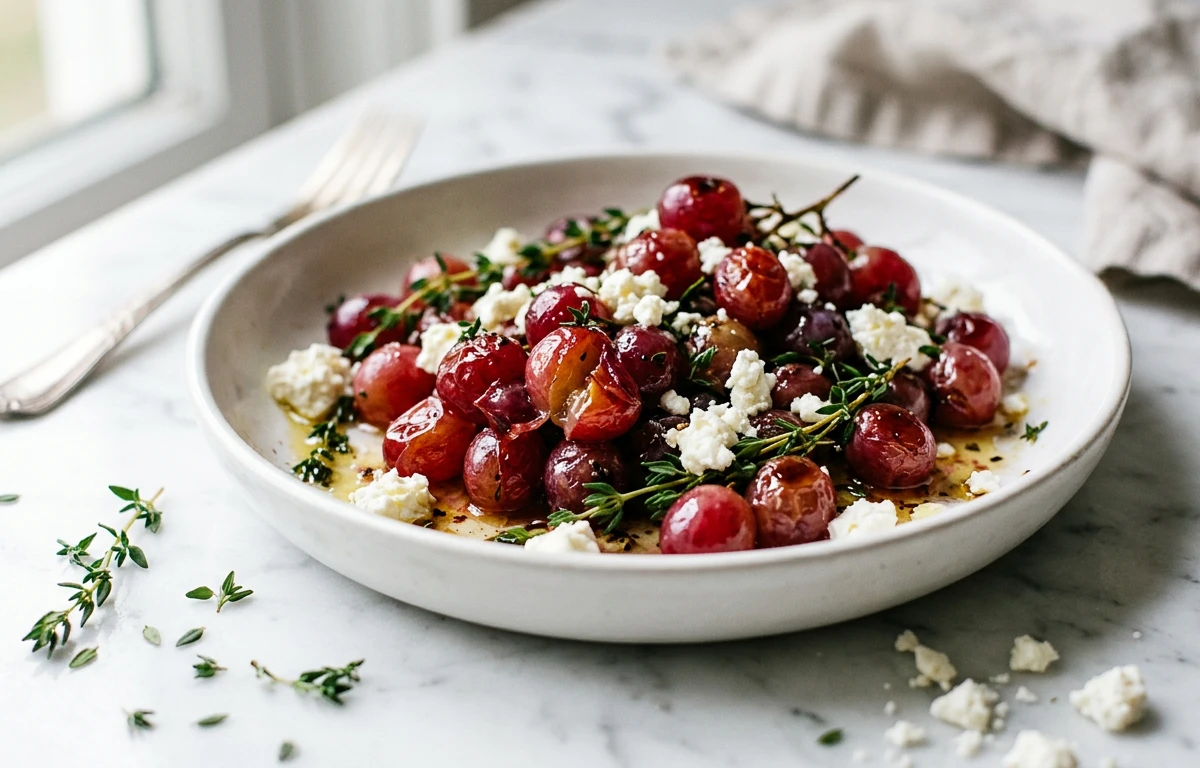
Beyond just snacking, grapes work beautifully in simple recipes that play on their natural sweetness.

Want fruit worked into a balanced week — without the planning?
Our meal planner pairs fruit like grapes with protein and fibre for steady energy, with portions and macros already calculated and a single grocery list at the end.
Build my weekly plan →SOURCES & REFERENCES · 3
One more thing
Eating well is rarely about willpower. It’s about having a short list of dinners you actually want to eat. Pick two from this list. Make them next week. The rest will follow.
If you want these on autopilot, our weekly meal planner can drop the picks above into your calendar with one click and build a single grocery list from the merged ingredients.
FREQUENTLY ASKED QUESTIONS
Frequently asked questions
Can people with diabetes eat grapes?
Yes, in moderation. Grapes have a low glycemic index (GI ≈ 53), which is good. However, they are a source of carbohydrates and have little fiber. A one-cup portion is generally considered safe, but it's crucial to stick to that portion and monitor your own blood sugar response.
Are grapes good for weight loss?
They can be. They are low in calories (about 69 per cup) and hydrating. The main challenge is their snackability, which can lead to mindless overeating. If you portion them out, they can be a great sweet snack in a weight-management plan.
Are red grapes healthier than green grapes?
Both are healthy choices. Red and purple grapes have a higher concentration of certain antioxidants, particularly resveratrol in the skins, which is linked to heart health. Green grapes are still a great source of hydration and other nutrients. The best advice is to eat a variety of both.
Is grape juice as healthy as whole grapes?
No, not at all. Juicing removes the skin and pulp, which strips out the fiber and many of the beneficial antioxidants. What's left is essentially sugar water. Whole grapes are always the superior choice.
METHODOLOGY
How this article was created
Built using verified nutrition databases, culinary research, and traditional cooking knowledge — every claim is cross-referenced against the sources listed in the article.
· USDA data· Culinary research· Quality reviewed
Read our methodology →TRANSPARENCY
About this content
Articles are curated using trusted food databases (USDA FoodData Central, IFCT), culinary literature, and dietary guidelines, then structured by our editorial team for clarity, accuracy, and usefulness.
· Verified data sources· Culinary research· Quality reviewed
Read our editorial policy →EXPLORE OUR MEALS
Meals that fit this article

AMERICAN · 1677 CAL
Almonds with Sliced Apple + supplement + iron

MEDITERRANEAN · 809 CAL
Greek Yogurt with Berries Almonds and Granola + supplement + iron

GENERAL_HEALTHY · 705 CAL
Banana with Peanut Butter Pregnancy + supplement + iron

MODERN · 982 CAL
Hummus with Crudits and Pita with Fresh Orange Snack + supplement + iron
TAGGED
KEEP READING